

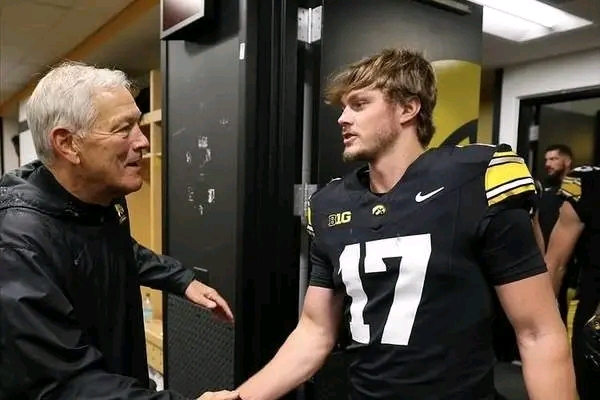
A promising football journey has taken an unexpected turn in Iowa City, as Teegan Davis has officially stepped away from the game after choosing a medical retirement. The former Princeton High School all-stater had been pushing through physical challenges for some time, but ultimately, his body made the final call for him. After returning from Christmas break, Davis met with Iowa Hawkeyes head coach Kirk Ferentz and made the difficult decision to step away from football.
The announcement marks the end of Davis’s playing career with the Iowa Hawkeyes program, a decision described as the result of ongoing medical concerns rather than a single moment or incident. Sources around the program indicate that Davis had been evaluating his condition carefully before and after the winter break, weighing the long-term risks against his future quality of life.
For Iowa, it is a quiet but significant roster shift. For Davis, it is a deeply personal conclusion to a career that once carried strong expectations from his high school dominance through his transition into the college environment.
A promising high school career that built early expectations
Before arriving in Iowa City, Teegan Davis was widely recognized as one of the standout players at Princeton High School, where he earned all-state honors. His performances there helped him build a reputation as a disciplined, hard-working athlete with the ability to compete at a higher level.
Recruiting attention followed, and Iowa ultimately became his landing spot under the leadership of Kirk Ferentz, a coach known for valuing toughness, development, and long-term player growth. Davis entered the program with the mindset of earning his place through consistency and effort rather than instant impact.

While his college playing time remained limited, his presence in the locker room and practice environment was still considered valuable by teammates and staff. He was viewed as a player who approached preparation seriously, even as he faced physical setbacks along the way.
The turning point after Christmas break
The key moment in Davis’s decision came after returning from Christmas break. According to program details, he rejoined the team and sat down with Kirk Ferentz to evaluate his situation moving forward.
That conversation proved to be the defining point. Rather than attempting to push through further uncertainty, Davis made the choice to medically retire from football. The decision was not rushed, but rather the outcome of ongoing evaluations of his physical condition and long-term health outlook.
Medical retirements in college football typically occur when continued participation could pose serious health risks or significantly impact a player’s quality of life. In Davis’s case, the conclusion was clear enough for both player and program to agree that stepping away was the safest and most responsible path.
Iowa’s perspective: development meets difficult reality
For the Iowa Hawkeyes, Davis’s retirement is part of the unpredictable nature of roster management in college football. Even with careful recruitment and development systems in place, not every career follows a linear path.
Kirk Ferentz and his staff have long emphasized player safety and long-term well-being over short-term roster depth. Davis’s decision reflects that philosophy in action, as both sides prioritized health above competitive availability.
While Iowa does not publicly disclose detailed medical specifics, the program’s handling of such situations has traditionally focused on support, respect, and transition assistance for players stepping away from the game.
Davis’s departure opens up space in the roster structure, but more importantly, it underscores how physically demanding the sport remains even for athletes who successfully transition from elite high school programs like Princeton High School to Division I football.
The human side of a football decision
Beyond roster implications, Davis’s medical retirement highlights the emotional and personal weight that comes with decisions of this nature. For many players, football is not just a sport but a defining part of identity, shaped through years of training, sacrifice, and competition.
Stepping away after reaching the collegiate level often means rethinking long-term goals, academic focus, and future career direction. While Davis’s playing career has ended, his time within the Iowa program still contributes to his broader development as a student-athlete.
Teammates and coaches typically describe such moments as difficult but necessary, especially when health considerations are involved. The decision reflects maturity and self-awareness rather than defeat, even if the emotional impact is significant.
What this means going forward for Iowa
From a program standpoint, Iowa continues to maintain its structured approach under Kirk Ferentz, focusing on depth, player development, and resilience. While Davis’s retirement does not drastically alter the team’s competitive outlook, it does serve as a reminder of how quickly roster dynamics can shift.
The Hawkeyes will continue to evaluate depth at every position, particularly with the physical demands of Big Ten football. Players who remain on the roster will likely see incremental adjustments in reps and development opportunities as the coaching staff balances long-term planning with immediate needs.
For incoming recruits and younger players, situations like this also reinforce the importance of adaptability and preparation. College football careers can change direction unexpectedly, and programs like Iowa emphasize readiness at every stage.
Closing reflection
Teegan Davis’s journey with the Iowa Hawkeyes may not have ended the way many once envisioned when he arrived as a decorated Princeton High School all-stater, but his decision reflects a deeper reality of the sport. Health comes first, even in a game built on toughness and endurance.
After his post–Christmas break meeting with Kirk Ferentz, Davis chose clarity over uncertainty, closing one chapter while opening another beyond football. For Iowa, it is a respectful farewell to a player who gave everything he could to the game until his body said otherwise.
