

Gucci’s Moonlit Film from Jonathan Glazer Fuses Slipknot and Couture
In a move that has stunned both the fashion elite and heavy music fans alike, Gucci has unveiled a daring new cinematic campaign that bridges two worlds rarely seen together: high fashion and nu-metal chaos. Directed by Oscar-winning filmmaker Jonathan Glazer, the short film titled “Generation Gucci” is already being hailed as one of the most provocative brand statements of 2026—an artistic gamble that pays off by embracing contradiction, tension, and raw energy.
Running just under two minutes, the film abandons conventional advertising structure in favor of a dreamlike narrative set in a dimly lit motel beneath a glowing full moon. The atmosphere is surreal from the opening frame—time bends, gravity falters, and characters drift through a liminal space where reality feels suspended. According to descriptions released alongside the project, the film “drifts between the real and the surreal,” inviting viewers into a night where strangers intersect and a new, undefined future begins to take shape.
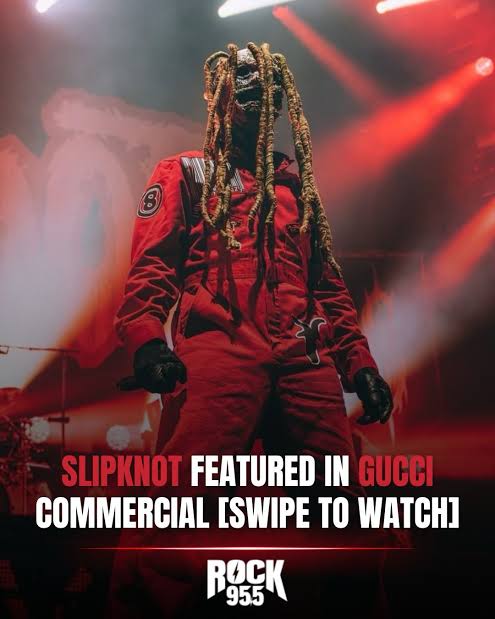
What truly elevates the project from stylish to shocking, however, is its soundtrack. In a bold and unexpected move, Gucci anchors the film’s emotional core with a snippet of Slipknot’s 1999 track “(sic)”—a song synonymous with aggression, rebellion, and the raw ethos of nu-metal. This sonic choice collides violently with the polished visuals of couture fashion, creating a sensory contrast that feels both jarring and deliberate.
The soundtrack itself unfolds in three distinct phases, mirroring the film’s shifting emotional landscape. It opens with the soft nostalgia of Mina’s “Un bacio è troppo poco,” evoking a vintage Italian elegance. Suddenly, the tone fractures as Slipknot’s pounding drums crash into the scene, injecting urgency and chaos. The film then resolves into melancholic reflection with Charles Aznavour’s “Hier encore,” closing the narrative on a hauntingly introspective note.
This deliberate clash of genres—classical pop, extreme metal, and chanson—mirrors Gucci’s evolving identity under its current creative direction. Rather than presenting fashion as static luxury, the brand positions itself as a cultural crossroads, where disparate influences collide to form something entirely new. It’s a strategy that aligns with Gucci’s broader pivot toward cinematic storytelling, following previous experimental projects that replaced traditional runway shows with narrative-driven films.
The inclusion of Slipknot is not as random as it first appears. The band, known for its masked aesthetic and theatrical performances, has long flirted with visual artistry beyond music. Percussionist M. Shawn Crahan has openly expressed admiration for avant-garde fashion, citing designers like Alexander McQueen as key inspirations. He once noted that the risks taken on the runway mirror the intensity and unpredictability of Slipknot’s performances—a philosophy that resonates deeply within Generation Gucci.
Visually, the film is a masterclass in controlled chaos. A car glides impossibly through the night sky. Characters move in slow, almost hypnotic patterns. Light flickers and pulses as if responding to the soundtrack itself. These surreal elements are amplified by the work of acclaimed cinematographer Darius Khondji, whose lens captures both the grit and glamour of the setting with equal intensity. The result is a piece that feels less like an advertisement and more like a fragment of experimental cinema.
For Jonathan Glazer, the project marks a return to the commercial space following his critically acclaimed success with The Zone of Interest, which earned him multiple Academy Awards. Known for his ability to create unsettling, atmospheric worlds, Glazer brings a distinct auteur sensibility to the campaign. His fingerprints are evident in every frame—from the disorienting pacing to the eerie sense of detachment that lingers long after the film ends.
Industry observers are already calling the collaboration one of the boldest brand moves of the year. By pairing the abrasive energy of Slipknot with the refined elegance of Gucci, the campaign challenges preconceived boundaries between subculture and luxury. It suggests that fashion is no longer confined to a single identity but is instead an evolving dialogue between art forms, genres, and generations.
Ultimately, Generation Gucci is more than a promotional film—it is a statement. It dares to ask whether beauty can exist within chaos, whether elegance can coexist with aggression, and whether the future of fashion lies not in harmony, but in collision. In embracing these questions, Gucci has not only captured attention but also redefined what a fashion campaign can be in the modern era.
