The growing debate over how the WNBA protects its biggest stars has now reached the halls of Congress. A group of Republican lawmakers has formally challenged WNBA Commissioner Cathy Engelbert, demanding answers about player safety after a series of controversial incidents involving Indiana Fever superstar Caitlin Clark.
In a letter dated July 7, lawmakers led by Republican Study Committee Chairman Rep. August Pfluger argued that Clark has become the driving force behind women’s basketball but has repeatedly been subjected to unnecessary physical play that they believe the league has failed to address. The lawmakers gave Engelbert until July 24, 2026, to respond to a series of questions about officiating, player discipline and athlete safety.
The congressional letter was signed by Pfluger along with several Members of Congress, including Zach Nunn, Mark Alford, Diana Harshbarger, Sheri Biggs, Marlin Stutzman, Tim Burchett and Pete Sessions. Three Indiana representatives were also among those backing the request, adding further political attention to an issue that has dominated WNBA discussions throughout the season.
Lawmakers praised Clark’s impact on women’s basketball before criticizing the league’s response to repeated physical confrontations involving the Fever guard.
“Caitlin Clark is transforming women’s sports,” the letter stated. “She has inspired a new generation of young girls to participate in athletics and has become one of the most influential figures in the history of women’s basketball.”
The letter also credited Clark with dramatically boosting the WNBA’s popularity, pointing to record television ratings, increased fan interest and the arrival of new corporate sponsors since her arrival in the league.

However, lawmakers argued that many new fans tuning in to watch Clark are witnessing more than just intense competition.
Instead, they claimed the WNBA has allowed repeated acts of unnecessary physical hostility to continue without consistently holding players accountable.
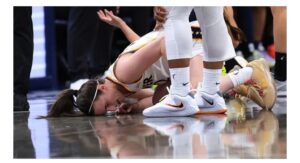
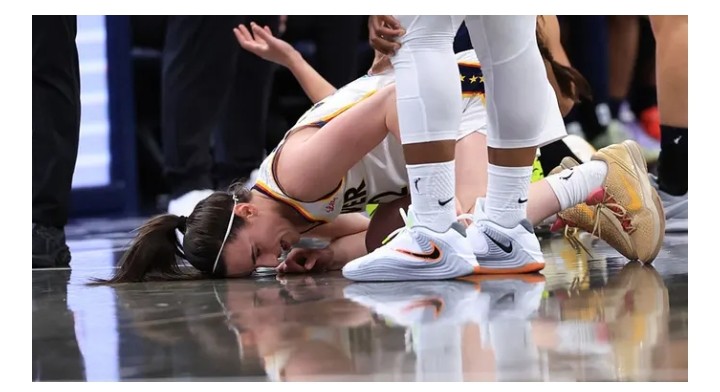
Among the incidents highlighted were the hard hip-check Clark absorbed earlier in her career, being poked in the eye during games and the recent play in which Phoenix Mercury veteran Alyssa Thomas made contact with Clark’s throat during a loose-ball scramble.
That June 24 matchup between the Indiana Fever and Phoenix Mercury became one of the season’s biggest talking points. Officials reviewed the contact during the game but decided not to issue a flagrant foul.
Days later, after further league review, the WNBA upgraded the play to a Flagrant 2 foul and suspended Thomas for one game, acknowledging that stronger discipline was warranted.
Clark didn’t hide her disappointment with how the play was handled on the court.
“I did think it was a flagrant foul,” Clark said after the game.
She also used the incident to call for broader changes to officiating throughout the league.
“It’s kind of been a discussion for three years now, and I think we really need to do a better job protecting the people in this league,” Clark said. “I’ve been involved in a few of those plays, but there’s been plenty of others across the league that haven’t been called. You go back postgame or whatever it is, teams submit clips and nothing changes. I think overall the league has to do better.”
The lawmakers echoed those concerns in their letter, arguing that Engelbert has a responsibility to ensure every player competes in a safe professional environment.
They also raised concerns extending beyond the court, mentioning reports of online hostility and suggesting that if discrimination or retaliation were contributing to a hostile workplace, federal agencies such as the Department of Justice, Department of Labor or Equal Employment Opportunity Commission could potentially investigate if evidence supported such claims.
To address their concerns, lawmakers asked Engelbert to answer three specific questions by July 24.
First, they requested details about the WNBA’s review process for incidents involving physical hostility and violence during games.
Second, they asked how the league plans to hold players accountable for overly aggressive conduct, including actions directed at Clark.
Finally, they sought information about what steps the WNBA is taking to protect players from online harassment and threats away from the basketball court.
The lawmakers concluded by warning that the league risks damaging its opportunity to inspire future generations if its brightest stars are not adequately protected.
Their letter arrives during an already difficult season for WNBA officiating. Before the 2026 campaign began, Engelbert established an officiating task force made up of coaches and league executives to improve consistency, player safety and freedom of movement.
Despite those efforts, criticism has continued to grow. Coaches have questioned inconsistent foul calls, front offices have submitted numerous video reviews after games and players across the league have publicly expressed frustration over missed whistles and uneven enforcement of the rules.
With members of Congress now demanding answers directly from the commissioner’s office, the conversation surrounding officiating has expanded far beyond basketball. Whether Engelbert’s response satisfies lawmakers remains to be seen, but one thing is clear: scrutiny over how the WNBA protects its players especially its biggest star has reached a level the league can no longer ignore.