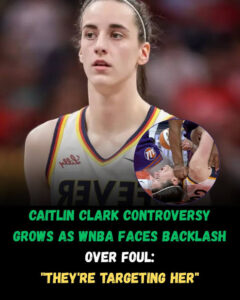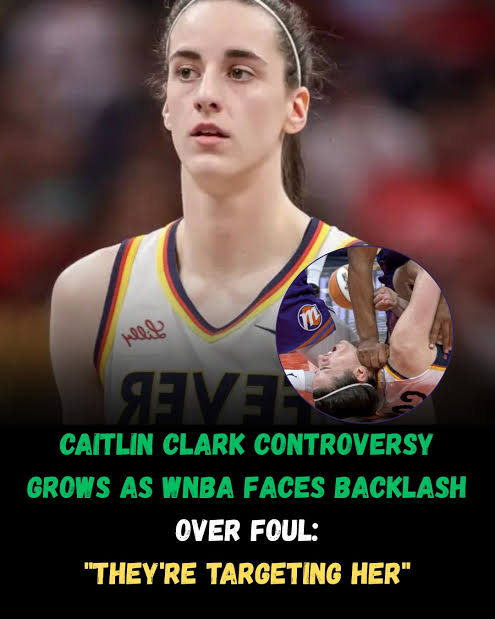
What started as frustration over hard fouls against Caitlin Clark has now escalated into a national political story. A group of members of Congress including three representatives from Indiana has formally challenged the WNBA over player safety, raising questions about how the league protects its biggest stars and even mentioning the possibility of a U.S. Department of Justice investigation if evidence of unlawful discrimination were found.
For Hawkeye fans who watched Clark become one of the greatest players in Iowa history, the development is another sign of how closely every aspect of her professional career is being followed. The congressional letter, led by Republican Study Committee Chairman Rep. August Pfluger of Texas, was signed by 11 lawmakers, including Indiana Representatives Marlin Stutzman, Mark Messmer, and Erin Houchin, along with Iowa Rep. Zach Nunn.
The lawmakers addressed the letter to WNBA Commissioner Cathy Engelbert after several controversial incidents involving Clark during her second professional season with the Indiana Fever. They argued that repeated physical contact directed at Clark has raised legitimate concerns about player safety and whether league discipline has been applied consistently.
Among the incidents cited were Clark being poked in the eye, struck in the throat, and involved in several physical confrontations that quickly became national talking points. Those moments have fueled ongoing debates among fans, analysts, former players, and now politicians over whether officials have done enough to protect one of the league’s biggest attractions.
The letter goes beyond criticizing officiating. Lawmakers asked the WNBA to provide detailed explanations about its player safety policies, disciplinary process, and the measures it uses to prevent repeated dangerous conduct against players.
Rep. Zach Nunn, whose district includes Clark’s hometown of West Des Moines, made it clear why he decided to support the effort.
“Caitlin Clark is one of West Des Moines’ own, and she’s a hero to millions of young girls including my daughters,” Nunn said. “She carried women’s basketball to new heights, and she’s earned the right to compete without being unfairly punched, shoved, and targeted.”
The latest controversy intensified after the Indiana Fever’s June matchup against the Phoenix Mercury. During the game, Mercury forward Alyssa Thomas made contact with Clark around the throat during a loose-ball sequence. Officials did not assess a flagrant foul during the game, but after reviewing the play, the WNBA upgraded the incident to a Flagrant 2 foul and suspended Thomas for one game.
That decision sparked fresh criticism from fans who questioned why stronger action had not been taken immediately during the game. Others argued that the punishment showed the league recognized the seriousness of the contact but needed to improve consistency in real-time officiating.
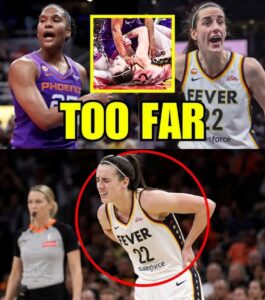
Clark has largely avoided turning the incidents into personal feuds. Instead, she has repeatedly focused on improving officiating while acknowledging that referees have one of the toughest jobs in professional sports.
“I did think it was a flagrant foul,” Clark said after one of the incidents. “Our refereeing just needs to be better. I think the league’s just got to do a better job protecting the people in this league.”
Those comments became one of several examples lawmakers referenced while calling for additional accountability from the league.
One of the most closely watched sections of the congressional letter involves its discussion of potential federal oversight. The lawmakers stated that if evidence suggested players were being targeted because of protected characteristics or subjected to unlawful discrimination that created a hostile workplace, the issue could potentially warrant review by federal authorities, including the Department of Justice.
The letter does not announce a Department of Justice investigation. Instead, it raises the possibility that federal agencies could become involved if credible evidence of legal violations were to emerge. That distinction has become an important part of the national conversation as headlines about the letter spread across the country.
Lawmakers also asked Commissioner Cathy Engelbert to answer several questions, including:
- How the WNBA reviews excessive physical contact.
- Whether disciplinary standards are applied consistently.
- What protections exist for players repeatedly subjected to dangerous plays.
- How the league addresses harassment directed at players on social media.
The group requested a formal response from the commissioner by July 24.
For Indiana fans, the involvement of three members of the state’s congressional delegation adds another layer of significance. Clark now plays for the Indiana Fever, making both Iowa and Indiana deeply invested in her success and well-being.
Clark’s impact on the WNBA extends far beyond basketball. Since entering the league as the No. 1 overall pick in the 2024 WNBA Draft, she has helped produce record-breaking television audiences, sold-out arenas, increased merchandise sales, and unprecedented national attention for women’s professional basketball.
Rep. Nunn’s office cited research estimating Clark has generated nearly 26.5% of the WNBA’s overall economic activity through ticket sales, television ratings, sponsorships, and merchandise. His office also noted that Clark draws an average of 6.7 fouls per game, ranking among the league leaders.
Even as debate continues over the physical nature of the WNBA, Clark has consistently condemned hateful online behavior directed at opponents. After Alyssa Thomas received racist abuse and death threats following her suspension, Clark publicly stated that no player should experience racism or harassment because of events that occur during competition.
“It’s definitely upsetting,” Clark said. “Nobody in our league should be facing any sort of racism, hurtful, disrespectful, hateful comments and threats.”
The Indiana Fever also emphasized that neither Clark nor the organization participated in drafting or requesting the congressional letter. Team officials said they remain committed to working with the WNBA to maintain a safe environment for all players throughout the season.
While opinions remain divided over whether Clark receives unusually physical treatment or simply the attention every superstar attracts, one fact is becoming increasingly difficult to ignore: conversations that once centered on missed whistles and flagrant fouls have now reached the halls of Congress.
For Hawkeye fans, the latest developments represent another remarkable chapter in Clark’s journey from Iowa City to the professional stage. Her influence continues to stretch far beyond the basketball court, prompting discussions that involve sports, politics, player safety, and the future direction of the WNBA.
Now all eyes turn to Commissioner Cathy Engelbert and the league’s response. With lawmakers requesting answers by July 24 and public scrutiny continuing to grow, the WNBA faces increasing pressure to explain how it intends to balance the league’s physical style of play with protecting one of the most influential athletes in women’s basketball.