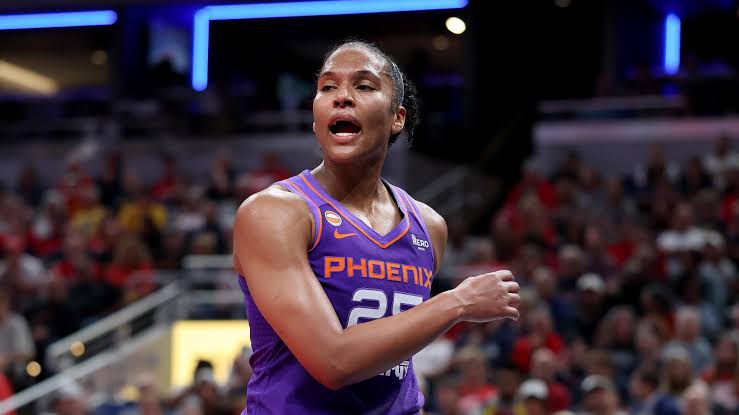
The fallout from Alyssa Thomas’ one-game suspension isn’t dying down anytime soon. Instead, it’s sparked a fresh wave of controversy after Phoenix Mercury head coach Nate Tibbetts publicly criticized the WNBA’s disciplinary process, arguing the league failed to conduct a fair and complete investigation before handing down its decision.
Rather than questioning whether discipline was necessary, Tibbetts focused on how the league reached its conclusion. Speaking after the WNBA announced Thomas’ suspension, the Mercury coach said he believes the investigation was incomplete and left out key voices that could have provided important context surrounding the incident.
“I’m disappointed with the suspension process by our league and our leaders in the W,” Tibbetts said. “This was not a thorough investigation in my opinion. The people involved were not questioned at all.”
Those remarks immediately shifted attention away from the suspension itself and toward the WNBA’s disciplinary procedures. Tibbetts’ comments suggest he believes the league reached its verdict without gathering testimony from everyone directly involved, raising questions about whether all available evidence was considered before the punishment was issued.
Thomas, one of the league’s most accomplished veterans and a centerpiece of the Mercury lineup, was suspended for one game following an on-court incident that drew significant attention across the WNBA. While the league determined that disciplinary action was warranted, Tibbetts argued that the process leading to that decision fell short of the standard expected at the professional level.
His criticism wasn’t aimed solely at the final outcome. Instead, he emphasized that the investigation itself lacked the depth necessary for such an important ruling.
According to Tibbetts, individuals directly connected to the play in question were never interviewed before the league finalized its decision. In his view, that omission prevented investigators from obtaining a complete understanding of what actually happened.
The Mercury coach’s comments are notable because coaches rarely challenge the league’s disciplinary system this directly. While disagreements over suspensions and fines are common in professional sports, public criticism of the investigative process itself is far less frequent.
For Phoenix, the timing of Thomas’ absence couldn’t be much worse. The veteran forward has consistently been one of the team’s most reliable contributors on both ends of the floor, bringing elite playmaking, rebounding, defensive versatility and leadership every time she steps onto the court.
Losing a player of Thomas’ caliber for even one game forces the Mercury to adjust their rotation and redistribute responsibilities across the roster. Her ability to facilitate offense while defending multiple positions makes her difficult to replace, regardless of the opponent.
Tibbetts has repeatedly praised Thomas throughout the season for the impact she brings beyond the box score. That makes his willingness to publicly defend his player unsurprising, even if it puts him at odds with the league office.
His statement also reflects a broader concern shared by many coaches throughout professional sports: transparency. When disciplinary decisions are made, teams often want a clearer explanation of how investigators reached their conclusions and what evidence was considered during the review process.
In this case, Tibbetts believes that process didn’t include enough firsthand accounts.
By saying “the people involved were not questioned at all,” the Mercury coach suggested that interviews with those closest to the incident could have changed or at least strengthened the league’s understanding before issuing discipline.
The WNBA has established rules governing player conduct and reviews incidents that may warrant additional penalties beyond what occurs during games. Those reviews typically involve video analysis and other available evidence before the league announces any supplemental discipline.
However, Tibbetts’ comments indicate he believes those procedures should have included direct conversations with participants involved in the play.
Whether the league responds publicly to those concerns remains to be seen.
The suspension itself will stand, meaning Phoenix must move forward without one of its most influential players for the affected game. But Tibbetts’ remarks have added another layer to the story, shifting the conversation from the incident on the court to the way the WNBA administers discipline behind the scenes.
That debate is likely to resonate beyond Phoenix.
Across professional sports, disciplinary decisions often become flashpoints whenever teams believe the process lacks consistency or transparency. Coaches and players generally accept that leagues have the authority to issue suspensions, but many expect investigations to be comprehensive before penalties are imposed.
Tibbetts made it clear that his frustration centers on exactly that expectation.

His comments weren’t emotional outbursts immediately after a heated game. Instead, they were measured criticisms of what he views as procedural shortcomings within the league’s investigation.
As the Mercury continue their season, they’ll now have to navigate both the competitive impact of Thomas’ absence and the lingering questions surrounding how the suspension was handled.
For Thomas, the suspension means missing valuable playing time during an important stretch of the season. For Tibbetts, it has become an opportunity to publicly call for what he believes should be a more complete and transparent review process.
Whether his criticism leads to changes in future investigations remains uncertain.
What is certain is that Tibbetts has put the spotlight squarely on the WNBA’s disciplinary procedures, arguing that decisions affecting players should be backed by a thorough investigation that includes testimony from everyone directly involved.
His message was unmistakable: the issue isn’t simply that Alyssa Thomas received a one-game suspension it’s that, in his opinion, the league failed to conduct the comprehensive investigation such a decision deserved.