The WNBA is once again at the center of a heated controversy this time involving Caitlin Clark and Alyssa Thomas after a physical play that many believe crossed the line. What began as a hard-fought matchup between the Indiana Fever and the Phoenix Mercury has now turned into one of the league’s biggest talking points of the season.
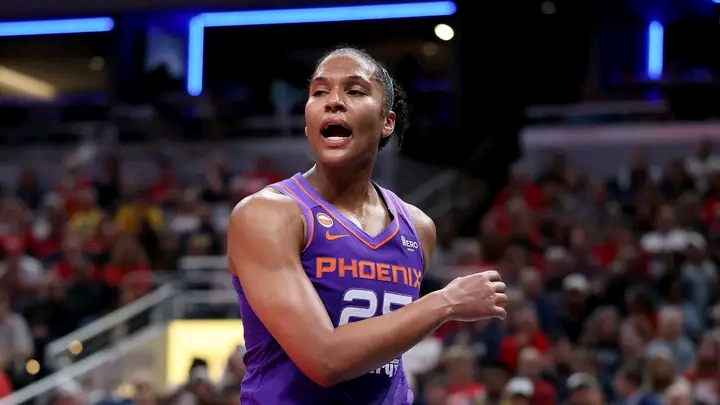
The WNBA announced that Phoenix Mercury star forward Alyssa Thomas will serve a one-game suspension following a Flagrant-2 foul involving Clark during Phoenix’s dramatic 111–109 victory over Indiana on June 24. In addition to the suspension, Thomas was fined $1,000. As a result, the 34-year-old will miss Phoenix’s Saturday matchup against the Toronto Tempo, scheduled for 2:00 p.m. ET on CBS.
The league also upgraded what was originally a non-call during the game to a Flagrant-2 foul after reviewing the play. Thomas will be eligible to return on July 2 when Phoenix hosts the Seattle Storm at 10:00 p.m. ET.
The incident occurred midway through the second quarter during a chaotic loose-ball scramble. Clark had gone to the floor after losing possession while being defended by Lexi Held. As both teams fought for control of the ball, Thomas came down on top of Clark, and her fist appeared to make forceful contact with Clark’s throat.
What shocked many viewers wasn’t just the physical nature of the play it was the fact that officials allowed play to continue without calling a foul. Replays quickly spread across social media, and the moment triggered immediate backlash from fans, analysts, and former players who questioned how such contact went unnoticed in real time.
For many observers, the controversy goes beyond a single collision. It has become part of a larger conversation surrounding player safety and officiating consistency across the WNBA. The league has made player protection a growing priority, but moments like this continue to raise uncomfortable questions about enforcement.
Clark, one of the most heavily defended and closely watched players in basketball, has repeatedly faced intense physical pressure since entering the league. Her presence has brought historic attention, sold-out arenas, and record-breaking television numbers, but it has also made every foul against her a lightning rod for debate.
Indiana head coach Stephanie White did not hide her frustration after the league’s ruling. While she appreciated the WNBA’s decision to review and penalize the play after the fact, she made it clear that retroactive punishment alone is not enough.

“I think the biggest thing for me is that we have to see it in real time,” White said. “Yes, I’m thankful that the league went back and used their ability to review it, but these are things that we can’t miss in real time. We’ve got to be better.”
That quote struck a chord because it reflects what many coaches around the league have quietly expressed for months. Reviews and fines matter, but missed calls during live action can still alter games, momentum, and, most importantly, player health.
Meanwhile, support for Thomas has been strong inside the Mercury organization. Several teammates and coaches publicly defended her character following the suspension, emphasizing that the incident should not define her.
Among the most vocal supporters was Thomas’ wife, DeWanna Bonner. Bonner posted a message of support on Instagram alongside a photo of the couple, writing, “Forever got your front and your back!! We love you!!”
Phoenix assistant coach Tangela Smith also stood firmly behind Thomas. The two-time WNBA champion shared an emotional message defending the veteran forward’s leadership and character.
“We know the person you are, the heart you have, and everything you bring to this team every single day,” Smith said. “We stand with you, we believe in you, and we’ll be right here beside you every step of the way.”
Those statements highlight the difficult reality surrounding controversial plays in professional sports. A player can be deeply respected by teammates and coaches while still being involved in a dangerous moment that deserves punishment. That tension is exactly what makes this situation so divisive.
For Phoenix, losing Thomas even for one game is significant. She remains one of the Mercury’s most important two-way players, contributing leadership, defense, and playmaking. Her absence against Toronto creates an immediate challenge for a team trying to maintain momentum.
For Indiana, however, the conversation remains centered on whether enough is being done to protect Clark and other players from dangerous contact before it escalates.
The Fever have already experienced multiple highly physical contests this season, and this latest incident has intensified calls for clearer officiating standards. Players, coaches, and fans alike want consistency not just after games, but during them.
That may be the biggest takeaway from this controversy.
The suspension sends a message that the league recognizes the seriousness of the contact. But the louder question remains unanswered: Why wasn’t it called in the moment?
That question will continue following the WNBA long after Thomas serves her suspension.
Because in today’s game, every whistle or missed whistle can reshape narratives, standings, and player safety. And as the league continues to grow in popularity, scrutiny around officiating will only intensify.
One thing is certain: this debate isn’t ending anytime soon. The collision between Alyssa Thomas and Caitlin Clark has become far bigger than a single play.
It has become a defining flashpoint in the WNBA’s ongoing battle to balance physical competition with player protection and the entire basketball world is watching closely.