

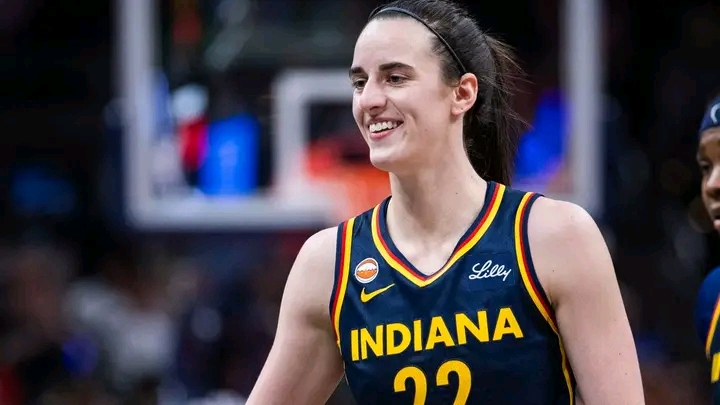
The debate surrounding Caitlin Clark’s treatment on the court has reached a new level, with members of the U.S. Congress now demanding answers from the WNBA over how the league handles physical play involving one of its biggest stars.
A group of 11 lawmakers from the House Republican Study Committee has sent a letter to WNBA Commissioner Cathy Engelbert requesting a response by July 24. In the letter, the lawmakers argue that Clark has repeatedly been subjected to unnecessary physical contact, pointing to incidents in which the Indiana Fever guard has been hip-checked, poked in the eye and struck in the throat during games.
The letter follows a controversial June 24 matchup between the Indiana Fever and the Phoenix Mercury. During that game, Mercury forward Alyssa Thomas made contact with Clark’s throat. Officials did not call a foul during live action, but the WNBA later reviewed the play, upgraded it to a flagrant foul and suspended Thomas for one game after ruling that she had recklessly made contact with her fist.
Thomas has maintained that the play was accidental and later revealed she received death threats following the incident. Both Clark and Fever head coach Stephanie White publicly condemned those threats, emphasizing that no player should face abuse over an on-court play.
As of now, the WNBA has not publicly responded to the congressional letter.
The lawmakers argued that Clark’s growing popularity has brought millions of new viewers to the league and questioned whether current officiating standards are doing enough to protect players. They also suggested that federal agencies, including the Department of Justice, examine whether discrimination or retaliation could be contributing to a hostile work environment within the league.
The Indiana Fever said neither Clark nor the organization had any involvement with the letter before it became public. In a statement, the franchise reiterated that player safety remains one of its highest priorities and said it will continue working with the league to maintain high standards of competition and protection for all players.
Clark has become one of the WNBA’s biggest attractions since entering the league as the No. 1 overall pick in 2024. Her impact has extended far beyond the court, helping drive record television ratings, increased ticket demand and larger crowds across the league. Several opposing teams have even moved games to larger arenas to accommodate fans hoping to watch the former Iowa superstar play.
Yet her rapid rise has also made her one of the sport’s most discussed figures.
Speaking recently, Clark admitted that dealing with constant public attention isn’t always easy.
“I think sometimes people think I’m a robot. I’m not a robot,” Clark said. “I’m 24 years old trying to navigate a lot.”
She acknowledged there are moments when the pressure affects her more than many people realize, while adding that she wouldn’t change the journey she has experienced.
The discussion has expanded beyond officiating into broader conversations involving race, media attention and the league’s future. UConn head coach Geno Auriemma recently argued that Clark has become the center of debates that extend far beyond basketball, saying narratives surrounding race and player recognition have complicated public discussion about routine basketball fouls.
Meanwhile, Hall of Famer Candace Parker recently criticized fellow WNBA players after Clark finished only 11th among guards in player voting for the upcoming All-Star Game despite finishing second in fan voting. Parker questioned how players could rank one of the league’s top performers so low.
On the court, Clark continues to produce elite numbers despite battling injuries throughout the season. She is averaging a career-high 20.5 points per game while ranking second in the WNBA with 7.9 assists per game, trailing only Alyssa Thomas’ 8.3 assists.
Clark’s competitive style has also contributed to the conversation. She frequently challenges officials after missed calls, isn’t afraid to exchange words with opponents and has developed a reputation as one of the league’s most vocal competitors.
That fiery approach has come with consequences. Clark has already accumulated five technical fouls this season, including one after clapping following an exchange with former Fever teammate DeWanna Bonner during a June 22 game against Phoenix. WNBA rules call for an automatic one-game suspension once a player reaches eight technical fouls.
Following that game, Clark jokingly suggested someone should simply choose the date of her suspension if clapping continued to earn technical fouls.
Teammate Aliyah Boston later revealed on her “Post Moves” podcast that she had encouraged Clark to avoid giving officials any reason to issue additional technical fouls, telling her there would be “no more clapping.”
Whether Congress’ involvement leads to changes remains uncertain. What is clear is that the conversation surrounding Caitlin Clark, player safety and WNBA officiating continues to grow, placing even greater attention on how the league balances physical competition with protecting its biggest stars as interest in women’s basketball reaches unprecedented levels.
