

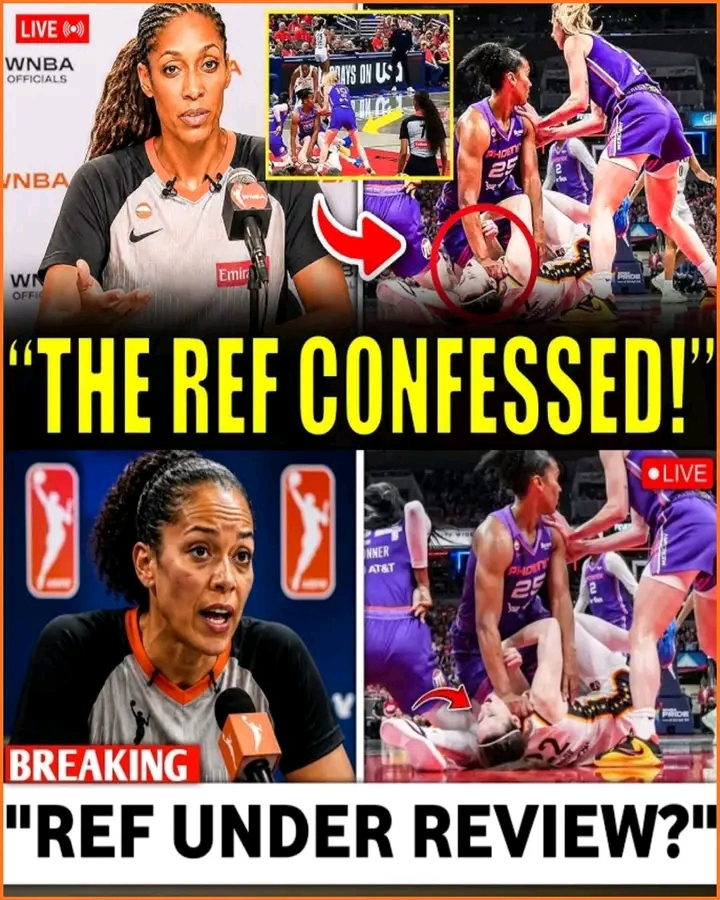
Questions surrounding Caitlin Clark’s treatment on the court aren’t fading away. Instead, they’re growing louder after another physical game involving the Indiana Fever sparked renewed debate over officiating standards, player safety, and whether the WNBA has been consistent in enforcing its rules.
The discussion intensified after a controversial sequence during the Fever’s matchup with the Connecticut Sun. Clark absorbed contact near the head and neck area during the game, yet play continued without an immediate whistle. Replays of the sequence spread rapidly across social media, prompting basketball analysts, former players, and fans to question whether officials missed a foul in real time.
The incident quickly became one of the league’s biggest talking points. While officiating mistakes are part of every professional sport, many observers argued this particular play deserved a closer look because an official appeared to have a clear view of the contact. That has shifted much of the conversation away from the players themselves and toward the consistency of WNBA officiating.
No professional referee is expected to make every call perfectly. Basketball moves at an incredible pace, and split-second decisions often determine whether a whistle is blown. Still, critics argue that high-contact plays involving player safety should receive the highest level of attention, especially when officials have an unobstructed look at the action.
The controversy has also reignited a broader conversation that has followed Clark since she entered the WNBA as the No. 1 overall pick following her record-breaking college career at Iowa.
Throughout her rookie season and beyond, Clark has regularly faced aggressive defensive pressure. Supporters say many of the hits she absorbs deserve additional protection from officials, while others believe she is simply experiencing the physical nature of professional basketball that every elite player eventually encounters.
Former WNBA great Lisa Leslie has been among the respected voices discussing the issue. Leslie has acknowledged that physical basketball has always been part of the league’s identity but has also emphasized that there is an important distinction between hard, competitive defense and unnecessary contact that risks player safety.
According to Leslie, the unwritten code among many veteran players has traditionally been simple: compete with maximum intensity but avoid actions that unnecessarily endanger opponents. Her comments have resonated with many fans who believe the league should continue promoting physical competition while maintaining consistent standards for dangerous plays.
Not everyone agrees.
Phoenix Mercury head coach Nate Tibbetts has defended Connecticut Sun veteran Alyssa Thomas, saying he does not view her as a dirty player. Tibbetts has also questioned aspects of the league’s disciplinary review process, arguing that investigations should include thorough evaluations before conclusions are reached.
Those differing viewpoints illustrate just how divided the basketball community has become.
For some, the central issue is Clark herself. For others, it is the consistency of officiating regardless of which player is involved. Most agree on one point: every athlete deserves equal protection under the league’s rules, whether they are a rookie, a former MVP, or a reserve player coming off the bench.
The conversation extends beyond one regular-season game because of Clark’s enormous impact on the WNBA.
Since arriving in the league, Fever games have consistently produced some of the WNBA’s highest television audiences. Attendance has climbed dramatically, merchandise sales have reached record levels, and several teams have moved games to larger arenas to accommodate increased demand when Indiana visits. Clark’s popularity has introduced millions of new viewers to the league, placing unprecedented attention on every call officials make.
That increased visibility also means every controversial play receives immediate national attention.
Within minutes of the Fever-Sun game, video clips circulated across multiple social media platforms, with former players, broadcasters, and fans breaking down the contact frame by frame. Slow-motion replays fueled ongoing discussions about whether officiating crews are applying the rules consistently from game to game.
The debate has also highlighted a difficult challenge facing the WNBA.
League officials want to preserve the physical, competitive style that longtime fans appreciate while ensuring player safety remains a priority. Finding that balance becomes even more complicated when games involving the league’s biggest stars attract millions of viewers and generate nonstop discussion online.
Regardless of where opinions fall, the controversy has once again placed officiating under an intense spotlight. Every future Fever game involving Clark is likely to receive similar scrutiny, particularly when physical contact becomes part of the story.
As the WNBA continues experiencing unprecedented growth, maintaining confidence in its officiating will remain essential. Fans can accept missed calls they happen in every sport. What they expect is a consistent standard that applies equally to every player on the floor.
With Clark continuing to headline one of the most significant growth periods in league history, each controversial whistle or lack of one will continue to shape the conversation surrounding the WNBA. How the league responds moving forward may prove just as important as the games themselves.
