“Are They Holding Caitlin Clark Back?” Growing Frustration Sparks Fierce Debate Over WNBA’s Biggest Star
For more than a year, Caitlin Clark has been the center of attention in women’s basketball.
She shattered records at the University of Iowa. She packed arenas. She drove television ratings to historic levels. She became the face of a movement that pushed women’s basketball into conversations that extended far beyond the sport itself.
Yet as her second WNBA season unfolds, a growing number of observers are asking a question that would have sounded unthinkable just a few years ago:
Is the league doing enough to support its biggest attraction?
The debate has intensified in recent weeks as Clark and the Indiana Fever continue navigating a season filled with physical play, constant scrutiny, and mounting expectations. What began as ordinary rookie growing pains has evolved into something far more complicated in the eyes of many fans.
For them, the issue is no longer about missed shots, turnovers, or tough nights on the court.
Instead, they believe Clark is facing resistance from nearly every direction.
The Face of a Basketball Boom
Few athletes in modern sports have entered a professional league with the level of attention Clark generated.
Her impact on attendance, merchandise sales, television audiences, and social media engagement has been well documented since she entered the WNBA.
Wherever the Fever travel, arenas fill.
Road games become major events.
Television ratings spike.
Opposing teams often move games to larger venues simply to accommodate the demand created by Clark’s presence.
Those realities have led many supporters to argue that the league was handed a once-in-a-generation opportunity.
In their view, Clark isn’t just another talented player.
She’s the most marketable figure women’s basketball has ever produced.
That’s why some fans find the ongoing controversy surrounding her treatment so difficult to understand.
Rather than celebrating the moment, they see a culture that appears determined to challenge, criticize, and sometimes diminish its brightest star.
Physical Play Continues to Fuel Controversy
One of the biggest points of frustration involves the physical treatment Clark receives during games.
Supporters frequently point to moments where she has been bumped, grabbed, held, or knocked off her path while handling the ball.
Many believe officials have allowed excessive contact compared to what other star players receive.
Every hard foul quickly becomes a talking point.
Every missed whistle sparks debate across sports television and social media platforms.
Critics of the officiating argue that Clark has become a target because of her popularity and visibility.
They contend that opponents recognize the attention surrounding her and raise their intensity whenever they face Indiana.
Others counter that physicality has always been part of professional basketball and that Clark is simply adjusting to the realities of the WNBA.
Regardless of which side fans support, one fact remains clear: discussions about Clark often extend far beyond basketball strategy.
The Double Standard Argument
Another complaint frequently raised by Clark’s supporters centers on what they perceive as a double standard.
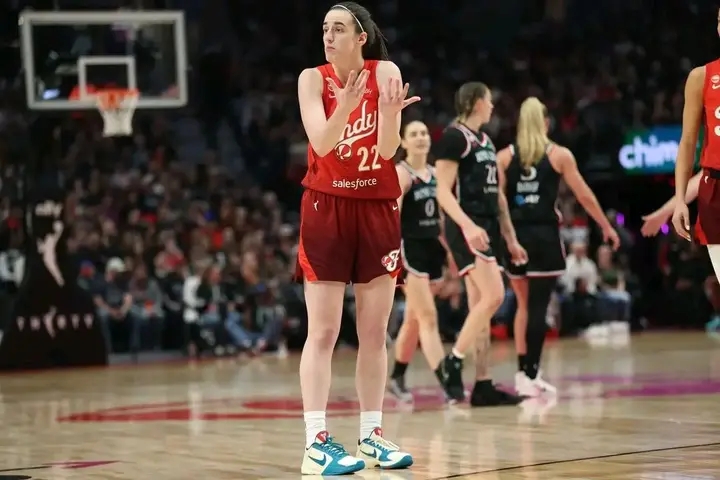
According to that argument, when Clark reacts emotionally during games, frustrations about officiating or physical play quickly become headline material.
Every visible display of emotion is dissected.
Every animated conversation with officials becomes a national discussion.
Supporters argue that competitive fire is celebrated in many superstar athletes across sports.
They point to elite performers throughout basketball history who built their reputations on emotion, intensity, and relentless competitiveness.
From that perspective, Clark’s reactions aren’t signs of poor attitude.
They’re evidence of a player desperate to win.
“The attitude isn’t the story,” many fans insist.
Instead, they believe the real story is the pressure surrounding a player carrying enormous expectations while simultaneously becoming one of the most discussed athletes in America.
Has the Joy Been Lost?
Perhaps the most emotional part of the conversation involves Clark’s body language and overall demeanor.
At Iowa, Clark often appeared fearless and free.
She played with visible confidence.
She took risks.
She celebrated big shots.
She embraced the spotlight.
Many longtime followers now wonder whether some of that freedom has faded.
The smile remains, but observers claim it appears less frequent.
The swagger is still present, but often accompanied by visible frustration.
Instead of focusing solely on basketball, Clark frequently finds herself at the center of debates involving officiating, media narratives, social-media criticism, and league-wide discussions.
To supporters, it can appear as though she is carrying a burden that extends far beyond wins and losses.
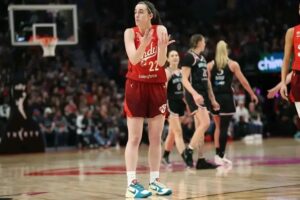
Some compare the situation to a talented young athlete dealing with a coach determined to teach humility rather than maximize talent.
Whether fair or not, that comparison has become increasingly common among those who believe Clark is facing unnecessary obstacles.
Questions Surround Stephanie White’s Decisions
The criticism hasn’t been limited to opponents, officials, or media narratives.
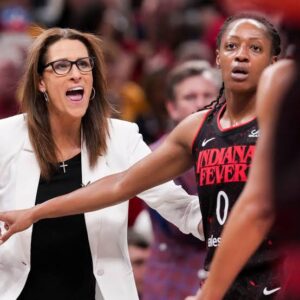
Some fans have also directed frustration toward Fever head coach Stephanie White.
Several coaching decisions have become lightning rods for debate, particularly during close games.
Critics question moments when Clark has spent time on the bench despite appearing to control the pace of play.
Others have voiced concerns about stretches where Indiana’s best perimeter shooting threat was not on the floor during critical possessions.
Those decisions have fueled claims that Clark’s rhythm is sometimes interrupted at the worst possible moments.
Supporters argue that superstars often require freedom to dictate games, especially in pressure situations.
From their perspective, limiting Clark’s influence during decisive stretches can prevent Indiana from fully maximizing its offensive potential.
Of course, coaching decisions are rarely as simple as they appear from the outside.
White and her staff must balance rotations, defensive responsibilities, fatigue management, and long-term player development.
Still, the criticism persists because expectations surrounding Clark remain extraordinarily high.
A League at a Crossroads
The larger conversation extends beyond one player or one team.
It speaks to the future of the WNBA itself.
Clark’s arrival coincided with unprecedented growth across the league.
Attendance numbers increased.
National attention expanded.
Corporate partnerships grew.
New audiences discovered women’s basketball.
That growth has benefited players, teams, and the league as a whole.
As a result, many supporters believe protecting and promoting the league’s biggest attractions should be a priority.
They argue that star players drive professional sports.
From Michael Jordan to LeBron James, from Serena Williams to Tiger Woods, history shows that transcendent athletes often become engines for growth.
The concern among Clark’s supporters is that too much energy is being spent criticizing, challenging, or minimizing a player who has already helped elevate the sport to new heights.
The Reality Behind the Debate
Whether one agrees with those criticisms or not, there is no denying Clark remains the most talked-about figure in women’s basketball.
Every game generates headlines.
Every interaction sparks conversation.
Every performance is analyzed in extraordinary detail.
That level of attention is both a blessing and a burden.
Superstars are expected to carry leagues.
They’re also expected to handle scrutiny that ordinary players never experience.
For Clark, that balancing act has become one of the defining storylines of her professional career.
The debate surrounding her treatment is unlikely to disappear anytime soon.
If anything, it may continue growing as the Fever pursue success and Clark’s profile expands even further.
What remains undeniable is this: the basketball world is watching.
And as discussions continue about officiating, coaching decisions, media narratives, and league culture, one question continues to echo throughout the sport:
Is Caitlin Clark simply experiencing the challenges every superstar faces or is women’s basketball witnessing a generational talent being forced to fight battles she shouldn’t have to fight at all?
The answer may ultimately shape not only Clark’s future, but also the future direction of the WNBA itself.