

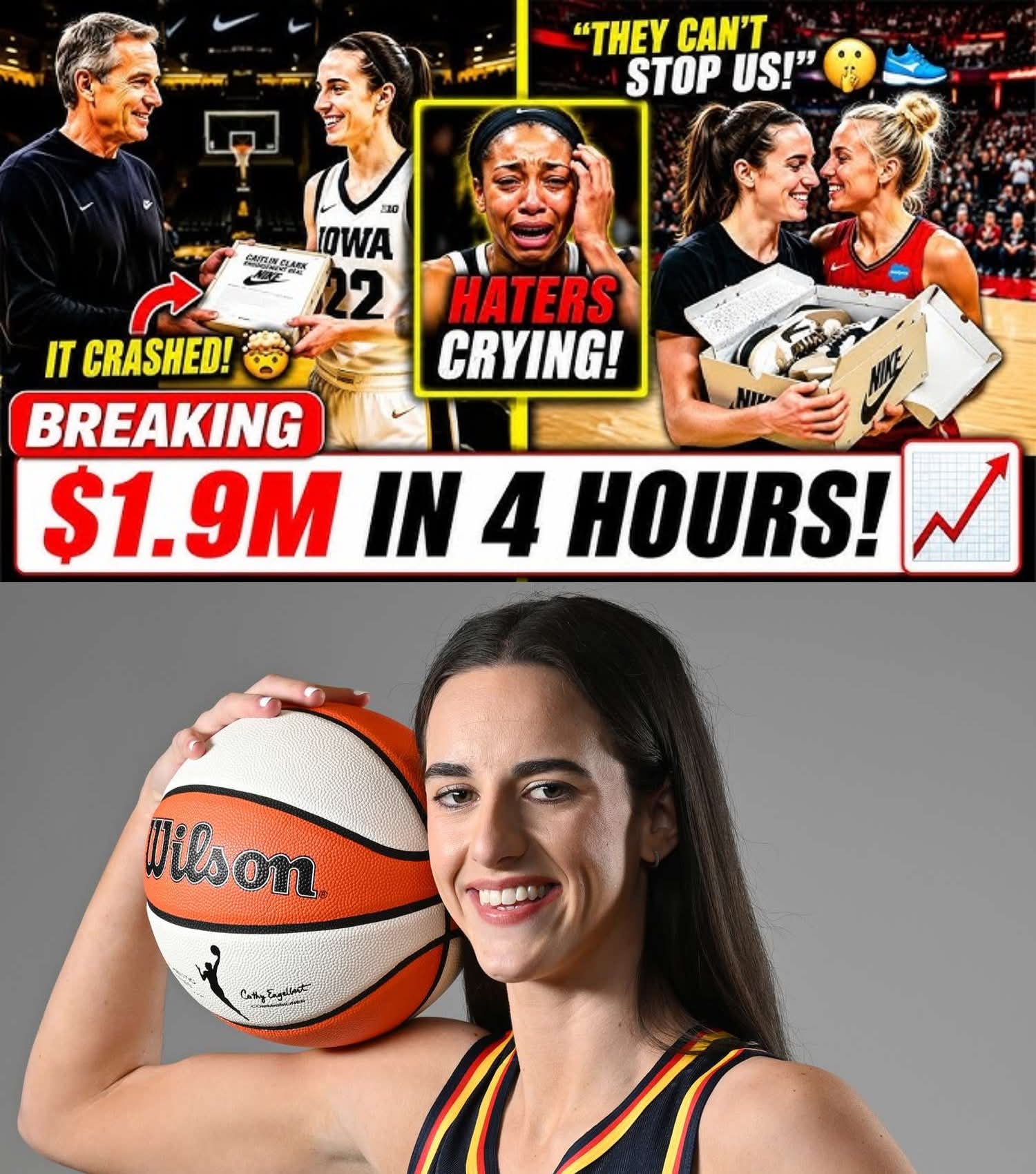
The spotlight surrounding Caitlin Clark has extended far beyond her performances on the basketball court, with her high-profile partnership with Nike now fueling a wider debate about sports marketing, athlete branding, and the narratives that shape women’s basketball. While many fans have celebrated Clark’s rapid rise as a transformational figure for the WNBA, a growing number of critics argue that the conversation has become more about corporate storytelling than the realities of professional sports.
According to the opinion piece, Clark’s entrance into the WNBA and her blockbuster Nike partnership have been portrayed as a groundbreaking moment that reshaped the league. The article suggests that the marketing campaign surrounding the rookie has elevated her into the role of a “corporate savior,” creating a narrative that emphasizes individual heroism while overlooking the broader contributions of veteran stars who helped build the league over many years.
One of the biggest talking points centers on claims that Clark influenced Nike to prominently feature Indiana Fever teammate Sophie Cunningham during the rollout of her signature shoe campaign. Viral posts and online discussions suggested the move generated enormous commercial success, with reports claiming millions of dollars in sales within hours. The article, however, questions those claims, arguing that major global companies like Nike plan signature launches years in advance through carefully coordinated marketing strategies rather than making last-minute decisions based on a rookie player’s requests.
The commentary argues that modern sports marketing is driven by long-term business planning rather than emotional storytelling. From product design and inventory management to advertising campaigns and athlete placement, every major decision is typically evaluated months or even years before a sneaker reaches consumers.
Another major criticism focuses on the narrative surrounding Clark and Cunningham. The article claims the “protector” storyline has become a powerful marketing tool that encourages fans to view Clark as an athlete constantly needing defense from critics or opponents, while positioning Cunningham as her loyal teammate standing beside her. According to the writer, this dynamic strengthens fan engagement, increases social media interaction, and ultimately benefits commercial sales.
The article also argues that the public conversation often shifts depending on which storyline best supports marketing goals. At one point, Clark is portrayed as an individual superstar overcoming resistance. At another, the focus moves toward teamwork and sisterhood when corporate partnerships can benefit from promoting those themes.
Beyond Clark herself, the article raises broader questions about how companies allocate marketing resources across women’s basketball. It contrasts Clark’s rapid rise as Nike’s newest signature athlete with established stars such as A’ja Wilson and Sabrina Ionescu, suggesting that corporate investment frequently follows media attention and public excitement rather than purely on-court accomplishments.
Using Wilson as an example, the commentary notes that the two-time WNBA champion and multiple-time MVP has already built one of the league’s most decorated careers. Yet the article argues that players with sustained excellence do not always receive the same immediate commercial push as athletes whose popularity generates larger headlines and greater consumer buzz.
The opinion piece ultimately claims that this reflects a larger reality within professional sports: marketing decisions are influenced not only by championships and awards but also by storytelling, audience engagement, and a player’s ability to capture widespread public attention.
The discussion also extends to consumer behavior. Rather than focusing solely on shoe technology or athletic performance, the article argues that many modern marketing campaigns rely heavily on emotional narratives that encourage fans to associate purchasing products with supporting a particular athlete or movement. According to the writer, this strategy creates powerful brand loyalty while keeping consumers invested in ongoing storylines surrounding players and teams.
Although the commentary presents a critical perspective on Nike’s campaign and the media coverage surrounding Clark, it reflects one side of an ongoing debate that continues to divide basketball fans. Supporters of Clark argue that her unprecedented popularity has brought record television ratings, increased attendance, stronger merchandise sales, and greater visibility for the WNBA as a whole. Critics, meanwhile, continue questioning whether corporate storytelling sometimes overshadows the league’s long-established stars and the collective efforts that helped women’s basketball reach its current level of success.
As Clark’s rookie era continues to generate headlines, discussions surrounding athlete branding, corporate influence, and media narratives appear unlikely to disappear anytime soon. Whether fans view her rise as a genuine revolution for women’s basketball or simply the latest example of sophisticated sports marketing, one thing remains undeniable: Caitlin Clark remains one of the most influential figures shaping conversations across the WNBA today.
