

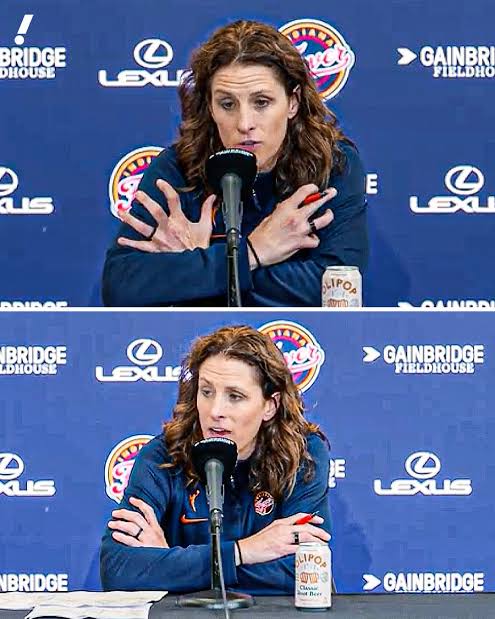
The Indiana Fever may have escaped Phoenix with a dramatic victory, but head coach Stephanie White left Wednesday night’s showdown furious over one moment she believes crossed a dangerous line.
During the Fever’s thrilling 111-109 win over the Phoenix Mercury, a controversial sequence involving rookie superstar Caitlin Clark ignited fresh debate across the WNBA. White didn’t hold back after the game, openly criticizing officials for failing to whistle what she described as a dangerous act against her franchise star.
And her message was unmistakable.
“They were so egregious. I mean, a fist in the throat is crazy. It’s crazy. It’s dangerous,” White said following the game.
The comments came after a heated incident involving Mercury veteran Alyssa Thomas and Clark during an intense fourth-quarter battle. Video of the play quickly spread across social media, with many fans and analysts questioning how the officials allowed play to continue without an immediate foul call.
The controversy unfolded in a game that already had playoff-level intensity from the opening tip. Indiana and Phoenix traded blows throughout the night, producing one of the most entertaining contests of the WNBA season.
When the final buzzer sounded, the Fever emerged with a narrow 111-109 victory, but much of the postgame conversation centered on Clark and the physical treatment she received.
White’s frustration was evident as she addressed reporters.
According to the Fever coach, the league must do more to protect players from potentially dangerous contact, particularly plays involving the head and neck area.
“A fist in the throat is crazy,” White repeated. “It’s dangerous.”
The incident occurred as Clark was battling for position during a crucial possession. Replays showed contact being made in the upper-body area, causing Clark to fall to the floor. Despite the apparent severity of the collision, officials did not issue a foul during live action.
That decision immediately sparked outrage on social media, where fans flooded timelines with slow-motion clips and demands for league review.
The debate intensified because Clark has repeatedly found herself at the center of highly physical encounters throughout her WNBA career.
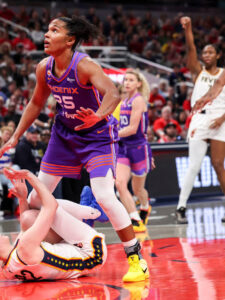
As one of the league’s biggest stars and most heavily defended players, Clark routinely faces aggressive defensive schemes designed to limit her scoring and playmaking ability. However, many observers believe Wednesday’s incident went beyond normal basketball physicality.
White clearly belongs to that group.
The Fever coach, who has consistently advocated for player safety, emphasized that dangerous contact should never be ignored regardless of the player involved.
Her comments also reignited ongoing discussions surrounding officiating standards across the WNBA.
Throughout the season, coaches, players, and fans have expressed concerns about inconsistency in foul calls, particularly regarding flagrant fouls and unnecessary contact. Wednesday’s no-call is likely to add even more scrutiny to league officiating.
Despite the controversy, Clark once again delivered in a high-pressure environment.
The Fever guard continued to orchestrate Indiana’s offense while helping her team secure a crucial road win against a talented Mercury squad. The victory represented another important step for an Indiana team looking to establish itself as a legitimate championship contender.
Still, the celebration was somewhat overshadowed by the postgame fallout.
White’s pointed remarks ensured that the conversation extended far beyond the final score.
For Phoenix, the loss was especially painful considering how competitive the contest remained from start to finish. The Mercury pushed Indiana to the brink, forcing the Fever to execute in clutch moments to secure the two-point victory.
Yet the game’s defining image may ultimately be Clark lying on the court after absorbing contact to the throat area.
The incident has already become one of the most discussed moments of the WNBA week, with analysts dissecting whether league discipline could follow.
In situations involving potential dangerous contact, the WNBA office routinely reviews game footage after contests conclude. If league officials determine that the play warranted additional punishment, supplemental discipline remains possible.
That possibility now hangs over the aftermath of Wednesday night’s thriller.
Regardless of whether further action is taken, White made one thing abundantly clear: she believes the no-call represented a serious officiating mistake.
And she isn’t staying silent.
As the Fever continue their push up the standings, protecting Clark and the rest of Indiana’s roster will remain a major priority for White and her coaching staff.
Wednesday’s controversy served as another reminder that the balance between physical competition and player safety remains one of the WNBA’s most closely watched issues.
For now, Indiana leaves Phoenix with a hard-earned 111-109 victory.
But judging by White’s passionate response, the debate surrounding that missed whistle is far from over.
