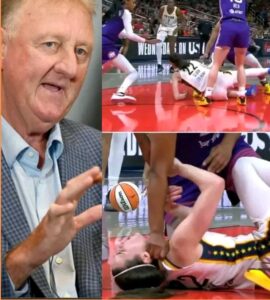
One hard foul. One suspension. And now, a league-wide debate that refuses to die.
What began as a heated moment during the Indiana Fever’s dramatic 111-109 loss to the Phoenix Mercury has evolved into one of the most polarizing conversations in women’s basketball this season. The WNBA’s decision to suspend Phoenix Mercury forward Alyssa Thomas for one game after upgrading her foul on Caitlin Clark to a Flagrant 2 has sparked fierce discussion across the sport, with fans, analysts, and former players questioning whether the punishment truly addresses a much bigger issue.
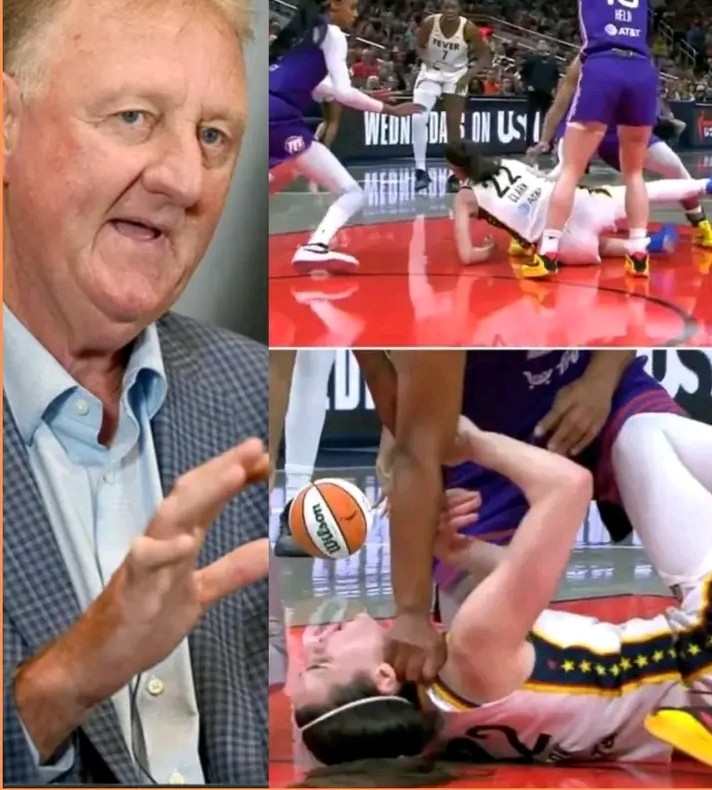
The incident occurred during Wednesday night’s highly charged matchup between the Fever and Mercury. In the second quarter, Thomas made forceful contact with Clark during a physical sequence that immediately drew attention from players, coaches, and viewers watching nationwide. Following a league review, WNBA officials ruled that Thomas had committed “reckless” contact and classified the play as a “non-basketball act,” leading to a one-game suspension.
Yet instead of ending the controversy, the league’s ruling appears to have intensified it.
For many observers, the suspension has reopened an ongoing discussion surrounding the physical treatment Clark has received throughout her young professional career. Since entering the WNBA as the No. 1 overall pick and one of the most recognizable stars in basketball, Clark has frequently found herself at the center of hard fouls, heated exchanges, and highly physical defensive schemes.
Supporters of the Indiana Fever star argue that the latest incident is not an isolated case but part of a larger pattern. They point to several previous games in which Clark absorbed heavy contact while carrying enormous expectations as the face of a rapidly growing league.
The latest debate has spread far beyond social media timelines.
Perhaps most notably, basketball legend Larry Bird’s name has repeatedly surfaced in fan discussions. Bird himself has not publicly commented on the Thomas-Clark incident, but countless supporters have invoked the Hall of Famer while discussing how previous generations protected transcendent stars.
Many fans have drawn comparisons between the treatment received by iconic players in different eras, questioning whether today’s WNBA is doing enough to safeguard one of its most valuable attractions.
Clark’s impact on the league has been undeniable.
The former Iowa superstar arrived in the WNBA carrying unprecedented attention after becoming the NCAA’s all-time leading scorer and leading Iowa to consecutive national championship appearances. Since joining Indiana, she has consistently driven television ratings, increased arena attendance, boosted merchandise sales, and introduced millions of new viewers to the league.
That immense popularity is precisely why some observers believe the league must strike a delicate balance.
Basketball has always been a physical sport. Elite players from Michael Jordan to Larry Bird, from Diana Taurasi to Breanna Stewart have routinely faced aggressive defensive tactics. Many former players insist physicality is simply part of competing at the highest level and caution against creating special rules for any individual player.
Others, however, argue that there is a significant difference between tough defense and unnecessary contact.
The WNBA clearly believed the line had been crossed in this case.
By upgrading the play to a Flagrant 2 after further review, league officials effectively determined that Thomas’ actions warranted stronger disciplinary measures than what was initially assessed during the game. The one-game suspension sends a message that reckless, non-basketball plays will not be tolerated.
Still, critics say the punishment may not be enough.
Some fans believe harsher penalties should accompany repeat incidents involving excessive contact. Others have called for greater consistency in officiating, arguing that frustrations often build when players believe similar actions are judged differently from game to game.
Meanwhile, supporters of Thomas have defended the Phoenix veteran, insisting that intense physical battles are part of professional basketball and warning against overreacting simply because the player involved is Caitlin Clark.
Thomas, widely respected around the league for her toughness and competitive spirit, now finds herself unexpectedly at the center of one of the season’s biggest storylines.
Regardless of where fans stand, one reality is impossible to ignore: every incident involving Clark now carries enormous scrutiny.
Few athletes in recent memory have generated this level of attention so early in their professional careers. Every foul, every confrontation, and every officiating decision involving Clark is dissected instantly by millions of viewers across television, social media, and sports talk platforms.
That spotlight isn’t likely to fade anytime soon.
As the Fever continue their push through the season, the broader conversation surrounding player safety, competitive physicality, and star protection is expected to remain front and center.
The WNBA may have closed its disciplinary review by suspending Alyssa Thomas for one game. But for many around basketball, the bigger question remains unresolved:
How should the league protect its brightest stars while preserving the physical edge that defines elite competition?
For now, that debate is only getting louder.