

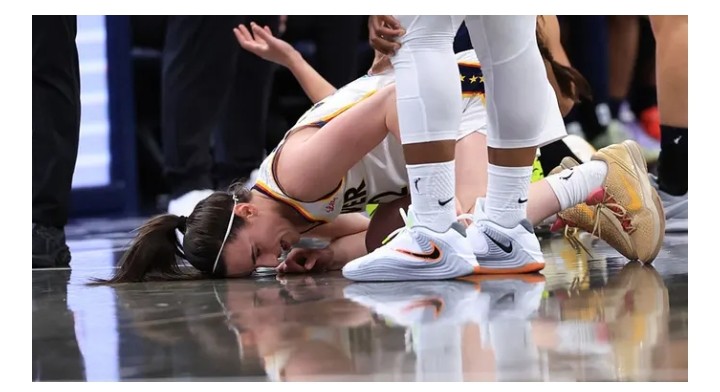
The conversation surrounding Caitlin Clark has taken another dramatic turn and this time, it’s no longer confined to basketball. A group of House Republicans has formally challenged the WNBA over what they describe as repeated physical treatment of the Indiana Fever superstar, pushing the debate beyond the court and into the halls of Congress.
The letter, sent by members of the House Republican Study Committee to WNBA Commissioner Cathy Engelbert on July 7, argues that the league has a responsibility to ensure every player competes in a safe environment. The lawmakers urged the commissioner to address what they believe are repeated incidents involving Clark, warning that the league could face increased scrutiny if player safety concerns are not taken seriously.
“As Commissioner you have an obligation to ensure that every player competes in a safe environment both on and off the court, free from violence, discrimination, or retaliation,” the lawmakers wrote in the letter.
Rep. Diana Harshbarger also publicly defended Clark in a message posted on X, saying the league has failed to adequately protect one of its biggest stars.
“Women athletes deserve fair and safe competition,” Harshbarger wrote. “Instead of protecting its biggest star, the WNBA has let repeated physical attacks against Caitlin Clark go unanswered. Commissioner Engelbert has an obligation to get serious about accountability, and it’s time she finally does.”
The congressional intervention immediately intensified one of the WNBA’s most polarizing storylines.
Clark has consistently found herself at the center of debates over the league’s physical style of play since entering the WNBA. While several hard fouls involving the former Iowa superstar have generated headlines throughout her career, Clark herself has generally avoided escalating those incidents publicly, often emphasizing basketball over controversy.
Still, her supporters argue the level of physicality directed toward the Fever guard has crossed the line.
Some observers have even suggested the WNBA should adopt stricter rules specifically designed to discourage targeting individual players. One reporter floated the idea of introducing what was jokingly referred to as “The Caitlin Law,” a proposal that quickly gained attention across social media.
Adding even more fuel to the discussion was legendary basketball broadcaster Dick Vitale.
Vitale strongly defended Clark on social media, expressing frustration over what he believes has been unfair treatment from opponents.
“Absolutely makes ‘No Sense’ that Caitlin Clark is targeted in such a negative manner by many of her peers,” Vitale posted. “She should be treated like ROYALTY for what she has done for the WNBA.”
His comments quickly sparked debate.
While many fans applauded Vitale’s support, others questioned his description of Clark as “basketball royalty” after only three WNBA seasons. Critics argued that distinction belongs to longtime league legends who helped build the WNBA over its three-decade history.
The political response, however, generated even stronger reactions.
Social activist and justice journalist Chuck Modi sharply criticized Republican lawmakers, accusing them of using Clark’s situation for political gain rather than showing genuine concern for player safety across the league.
“You don’t care about Black women being fouled. Or any WNBA women not named Caitlin,” Modi wrote on X. “You care about pandering to white fear for votes. That’s it.”
Those remarks highlighted how the conversation has expanded far beyond basketball, with race, politics and media narratives becoming intertwined with discussions about Clark’s treatment on the court.
Former WNBA MVP Candace Parker also entered the conversation, although her criticism focused on a different issue.
Speaking on her Post Moves podcast alongside Indiana Fever center Aliyah Boston, Parker blasted fellow WNBA players after Clark finished just 11th among players in All-Star voting despite ranking No. 2 in the fan vote.
“You’ve got some insecurities if you’re sitting down and putting Caitlin Clark as the 11th-best guard,” Parker said. “Y’all need to go to a therapist.”
Meanwhile, the Indiana Fever sought to distance themselves from the political controversy.
The organization released a statement clarifying that it was not involved in Congress’ decision to send the letter to Commissioner Engelbert, making it clear the franchise had no role in the lawmakers’ actions.
Even with that clarification, the debate shows no signs of slowing down.
Supporters continue to argue Clark deserves greater protection as one of the league’s biggest attractions, pointing to her impact on television ratings, attendance and overall visibility for women’s basketball. Others maintain that physical play has always been part of the WNBA and warn against creating different standards for one player, regardless of her popularity.
The result is a conversation that has become increasingly divided.
Instead of focusing solely on Clark’s performance on the court, discussions now regularly include politics, race, media narratives and the league’s approach to officiating. Whether Congress’ involvement leads to any meaningful changes remains uncertain, but it has undoubtedly amplified one of the most talked-about issues of the 2026 WNBA season.
As the Fever continue their campaign, Clark remains the focal point of nearly every major league discussion. What began as debates over hard fouls has evolved into a national conversation involving lawmakers, Hall of Fame broadcasters, former WNBA stars and fans across the political spectrum ensuring that the spotlight on Clark, and the league itself, isn’t fading anytime soon.
