

The news no team wants to hear has arrived and it’s already raising concern about what comes next.
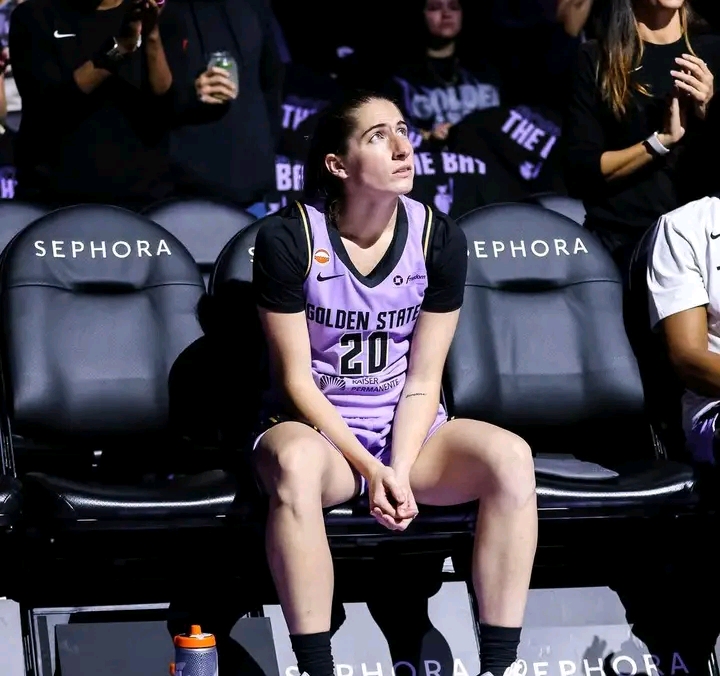
The Golden State Valkyries have officially announced that guard Kate Martin has been diagnosed with a grade two strain in her right quadriceps, an injury that could temporarily sideline one of the team’s most reliable contributors. While it’s not a worst-case scenario, it’s serious enough to disrupt momentum at a critical point.
According to the team, Martin will be reevaluated in one week, a timeline that offers some clarity but also leaves plenty of unanswered questions. That short window isn’t about a return; it’s about determining how her body responds to initial treatment and whether recovery is trending in the right direction.
A grade two quad strain typically indicates a partial tear of the muscle, placing it firmly between a mild tweak and a severe rupture. For athletes, especially guards who rely heavily on explosiveness, lateral movement, and quick acceleration, this kind of injury can be particularly limiting. Even routine movements cutting, sprinting, or elevating for a shot can become difficult.
That’s where the concern starts to build.
Martin’s role isn’t defined by flashy stat lines alone it’s about consistency, effort, and the ability to impact multiple areas of the game. Whether it’s defending the perimeter, moving without the ball, or making the extra pass, her presence has been a steady factor in the Valkyries’ rotation. Losing that, even temporarily, forces adjustments.
And those adjustments aren’t always seamless.
Injuries like this don’t just affect the player they ripple through the entire lineup. Rotations tighten. Minutes shift. Players who were previously in supporting roles are suddenly asked to step into bigger responsibilities. It’s a test of depth, chemistry, and coaching adaptability all at once.
The timing also matters more than it might seem at first glance.
Early or mid-season injuries can derail rhythm, especially for a team still building cohesion. The Valkyries, like many teams navigating roster changes and evolving identities, rely heavily on continuity. When a key piece is removed even briefly it can slow down progress.
Still, there’s a measured sense of optimism built into the diagnosis.
Unlike a grade three tear, which often requires extended recovery or even surgery, a grade two strain is typically managed through rest, rehabilitation, and gradual reconditioning. The one-week reevaluation window suggests the medical staff is cautiously optimistic, keeping a close watch on inflammation, mobility, and strength recovery.
But make no mistake this isn’t a “day-to-day” situation.
In most cases, players dealing with this level of muscle strain can be sidelined anywhere from two to six weeks, depending on how well they respond to treatment. That timeline isn’t fixed, and teams rarely rush players back from soft-tissue injuries, especially when long-term health is at stake.

For Martin, patience will be key.
Rushing back too soon could risk aggravating the injury, potentially turning a manageable situation into something far more serious. That’s why the reevaluation is so important it provides a checkpoint, not a finish line.
There’s also the mental side of recovery, something that often goes overlooked.
Athletes dealing with injuries like this have to balance frustration with discipline. Sitting out games, watching from the sidelines, and going through rehab instead of practice isn’t easy especially for players used to contributing every night. But it’s part of the process, and how they handle it can shape their return.
For the Valkyries, the focus now shifts to adaptation.
Coaches will need to adjust rotations, possibly experimenting with different backcourt combinations to fill the gap. Teammates will be asked to step up not just statistically, but in terms of energy, communication, and leadership on the floor.
And while no single player can fully replace Martin’s role, collective effort can help bridge the gap.
The coming week will be telling.
Once Martin is reevaluated, the team will have a clearer picture of her recovery trajectory. Will she be ahead of schedule? Right on track? Or facing a longer road back? Those answers will shape the next phase not just for her, but for the team as a whole.
Until then, it’s a waiting game.
And in sports, waiting can be the hardest part.
What’s certain, however, is that this moment will test both player and team. Injuries have a way of revealing depth, resilience, and character. For Martin, it’s about recovery. For the Valkyries, it’s about response.
One diagnosis, one week, and a lot still to unfold.
