

A violent kind of reputation is forming inside spring practice at Iowa Hawkeyes football, and it’s not coming from hype videos or social media edits it’s coming straight from coaches and teammates who are watching it unfold in real time.
The name at the center of it all is L.J. Phillips, a transfer portal addition from FCS South Dakota who arrived in Iowa City already carrying production, but is now building something even more dangerous: fear. After rushing for 1,920 yards and 19 touchdowns last season, Phillips has quickly become one of the most talked-about players in the Hawkeyes’ 2026 offseason.
What makes the situation even more striking is how fast the internal feedback loop has formed. Coaches are praising him, teammates are echoing it, and the language being used to describe him is turning heads far beyond the locker room. At Iowa, physical football is nothing new but Phillips is pushing that identity to another level.
And the quote that has now gone viral inside program circles says everything.
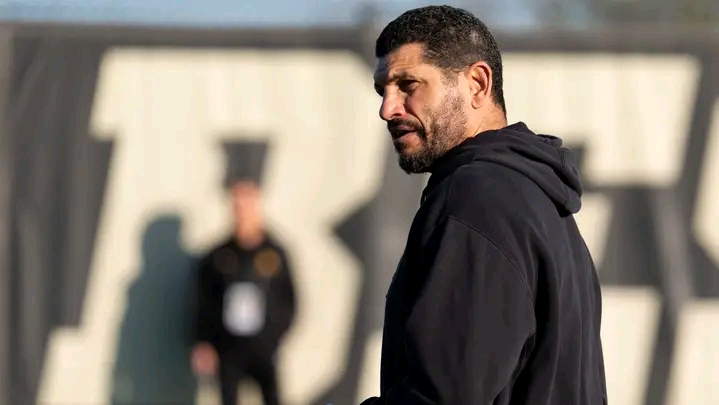
New running backs coach Jay Norvell didn’t try to soften expectations or wrap his assessment in cautious language. Instead, he delivered one of the most vivid descriptions of spring practice, summing up Phillips’ style in a way that immediately stuck.
“He’s like a bowling ball covered in butcher knives. Nobody wants to tackle him,” Norvell said.
It wasn’t just about size or strength. It was about impact. The way Phillips finishes runs, absorbs contact, and keeps moving has already separated him from other backs in the room, even in early spring evaluation periods. Norvell’s quote has since become a shorthand inside conversations about Iowa’s run game less analysis, more warning.
That tone fits perfectly with how the Iowa Hawkeyes football program has traditionally been built. But even within that culture, Phillips is making an immediate impression that feels different.
The numbers behind the hype are not minor footnotes. Phillips arrives in Iowa City after a dominant season at South Dakota, where he piled up 1,920 rushing yards and 19 touchdowns, earning FCS All-American recognition along the way.
That production gave Iowa a proven runner through the transfer portal, but what has stood out in spring practices isn’t just what he did at the FCS level it’s how quickly that physical style is translating to Big Ten-level expectations.
Teammates have noticed it too. One of the players directly competing in the same backfield, sophomore running back Nathan McNeil, didn’t hesitate when describing what Phillips brings into the room. His comments reflected both respect and urgency, the kind that comes when competition suddenly gets real.
“He’s a great running back. We call him pit bull in the room, because he doesn’t go down. Even if he gets hit hard, he’s still up and moving,” McNeil said.
That description matters in a running back room where every rep is being watched closely. At Iowa, carries are earned, not given, and the tone in spring suggests nothing is being handed out easily.
The most important development might not be Phillips alone but the environment he’s walking into. The Hawkeyes are entering 2026 with one of their deepest running back rotations in recent memory, and that depth is already reshaping practice intensity.
Alongside Phillips, the room features McNeil, Kamari Moulton, and Xavier Williams, all competing for roles in what is expected to be a heavily run-focused offensive identity under coordinator Tim Lester.

That system has been built around physical consistency. It’s not about flashy highlight plays it’s about wearing defenses down, controlling tempo, and winning late in games when other teams start to fade. Phillips fits that identity almost too perfectly on paper, but now the question is how that translates under Big Ten pressure.
Inside practice sessions, the competition has reportedly raised the standard across the board. Every carry matters. Every missed tackle creates consequences in evaluation. And in that environment, a player like Phillips doesn’t just blend in he forces adjustments.
What stands out most about this early phase of Phillips’ Iowa career is how quickly the narrative shifted from “transfer addition” to “tone-setter.” That transition usually takes months, sometimes even a full season. In this case, it’s happening in weeks.
That urgency is important for a program like Iowa Hawkeyes football, which has long relied on a strong identity in the trenches and a run game that dictates matchups. Players like Phillips don’t just add depth they change how defenses prepare.
And while spring football doesn’t always guarantee regular-season dominance, it does reveal habits. So far, the habits forming around Phillips are simple: finish runs, absorb contact, and keep moving forward.
Those habits are exactly what Iowa has built its reputation on.
There’s also a psychological layer to what’s happening. When a running back earns descriptions like “bowling ball covered in butcher knives” or “pit bull in the room,” it’s not just about performance metrics it’s about how defenders begin to approach him.
Arm tackles stop being an option. Angles change. Hesitation creeps in. Even in practice, that kind of reputation builds pressure before the ball is snapped.
For Phillips, that means every rep becomes a test of consistency. For Iowa’s defense, it means preparing for a back who doesn’t just run through contact but invites it.
The broader context makes this even more significant. The Hawkeyes’ offensive identity under Tim Lester has leaned heavily on establishing a dominant run game over the past two seasons. That foundation doesn’t work without depth, physicality, and reliability at running back.
Phillips adds another layer to that blueprint. Not a replacement. Not a project. A piece that already looks ready to contribute.
And if spring practice is any indication, he’s not waiting for permission to make his presence felt.
As the 2026 season approaches, questions will naturally shift from spring praise to real-game production. Can Phillips carry that same physical style into Big Ten defenses? Can he maintain efficiency when space tightens and competition increases?
Those answers will come later. But for now, inside the walls of Iowa Hawkeyes football, the early verdict is already forming and it’s built around one clear idea: this isn’t just another transfer addition.
It’s a runner who is changing the tone of the room.
And at Iowa, that’s usually where something serious begins.
