

Iowa Officiating Controversy Ignites After Michigan’s 71–68 Win as Ben McCollum Sends Firm Message to Big Ten
College basketball games often leave behind dramatic moments, but few postgame reactions carry the weight of a head coach publicly challenging the standards of officiating. That’s exactly what happened following Michigan’s narrow victory over Iowa a game that quickly turned into a broader conversation about physical play, discipline, and the role of referees in high-stakes matchups.
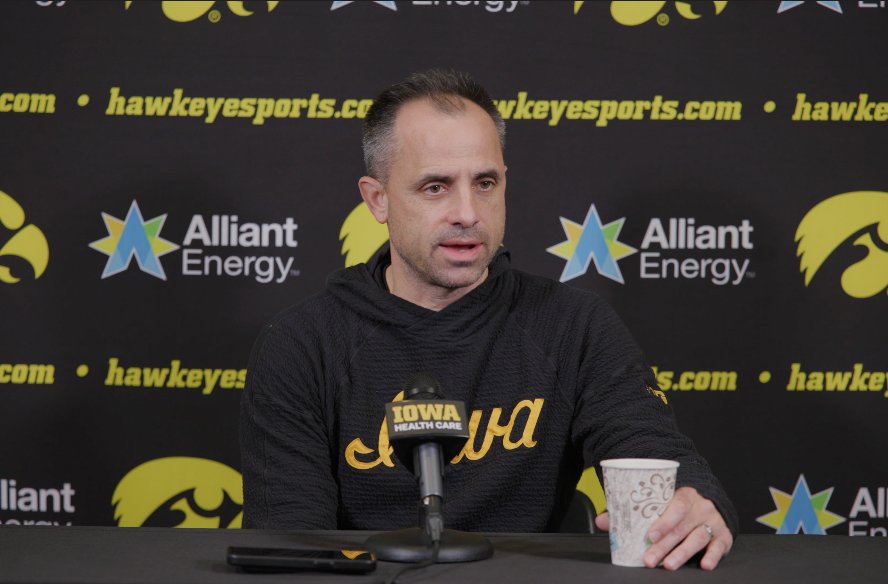
The Iowa officiating controversy erupted after Iowa head coach Ben McCollum delivered a pointed postgame statement following his team’s 71–68 loss to the Michigan Wolverines men’s basketball at Crisler Center.
Rather than focusing solely on the final score, McCollum used the moment to address what he believes was a troubling shift in how the game was officiated particularly during the tense closing minutes.
The remarks quickly spread across social media and college basketball circles, igniting debate about whether the game crossed the line from hard-nosed competition into something more chaotic.
A Big Ten Battle That Turned Physical
From the opening tip, the matchup between the Iowa Hawkeyes men’s basketball and Michigan carried the intensity typical of late-season conference clashes.
Both teams understood the stakes. Every possession mattered.
The game unfolded with playoff-like urgency, featuring physical defense, aggressive drives to the basket, and a crowd that fed off the tension inside the arena.
Michigan ultimately emerged with a 71–68 victory after executing several crucial plays down the stretch. The Wolverines capitalized on late opportunities while Iowa struggled to convert in the final moments.
For McCollum, however, the result wasn’t the only storyline.
Speaking with reporters shortly after the final buzzer, the Iowa coach delivered a statement that framed the night as part of a larger issue within conference basketball.
Ben McCollum’s Message: Physical Basketball Has Limits
McCollum began his remarks by making one thing crystal clear he is not opposed to physical basketball.
In fact, he embraces it.
“I’ve dedicated my life to this game,” McCollum said. “I believe in physical basketball. I coach it. I demand it.”
But the Iowa coach insisted that what unfolded in Ann Arbor crossed an important boundary.
“There is a firm line between disciplined toughness and disorder presented as competitive fire,” he continued. “What unfolded tonight stepped over that line. It wasn’t simply physical. It lacked control.”
McCollum’s comments weren’t aimed at individual players. Instead, he directed them toward the broader structure that governs college basketball games particularly officiating.
According to him, the issue wasn’t isolated contact. It was the cumulative effect of escalating intensity without consistent enforcement.
Iowa Officiating Controversy Sparks Debate Across Big Ten
The Iowa officiating controversy quickly became a talking point across the Big Ten Conference.
Within hours, analysts, fans, and commentators began dissecting McCollum’s remarks.
Some supported the coach, arguing that late-game officiating inconsistencies have become an ongoing challenge in college basketball.
Others pushed back, suggesting that physical play is simply part of high-stakes conference competition especially in tightly contested games where emotions run high.
Still, McCollum’s criticism wasn’t centered on one controversial call.
Instead, he emphasized the importance of consistency throughout the entire game.
“If it’s a foul early, it must remain a foul late,” he said.
For McCollum, the danger comes when standards shift based on the moment.
“When consistency disappears, players adapt,” he explained. “And that’s when the game slips out of structure.”
The Final Minutes That Shifted the Game’s Tone
Late-game scenarios often test the boundaries of officiating.
As the clock ticked down in Ann Arbor, the physicality intensified something common in close contests.
But McCollum believes the game’s rhythm changed in those final moments.
According to him, the focus drifted away from execution and toward reaction.
“Basketball depends on structure,” he said, pointing to spacing, timing, and legal contact as the pillars of the sport.
“When competition is intentional, the game maintains rhythm and clarity.”
However, when that structure breaks down, the result can be a chaotic finish.
“When emotion overrides discipline when there’s excessive contact, late hits, and exchanges after the whistle the rhythm disappears,” McCollum said.
He believes that’s exactly what happened.
Iowa Accepts Responsibility for the Loss
Despite his criticism of officiating, McCollum made it clear that Iowa must also take responsibility for the outcome.
Michigan made the plays that mattered most.
“They made key plays to pull away,” McCollum acknowledged. “We handled their initial run with composure.”
But execution down the stretch ultimately determined the result.
“We didn’t execute when it mattered most,” he said.
That admission underscored an important balance in McCollum’s message.
Accountability, he emphasized, applies to everyone involved players, coaches, and officials alike.
A Broader Conversation About College Basketball Standards
The Iowa officiating controversy has quickly grown into something larger than one game.
At its core, the debate centers on a fundamental question: how should physical basketball be managed in elite conferences?
The Big Ten has long been known for its bruising, defense-first style of play. Games are often physical, and referees frequently allow a higher level of contact compared to other conferences.
That identity is part of what makes Big Ten basketball compelling.
But it also creates challenges.
Too much leniency can blur the line between aggressive defense and illegal contact.
Too much enforcement can disrupt the natural flow of the game.
McCollum’s argument is that the answer lies in consistency.
Reaction Across the College Basketball World
Across social media and sports talk shows, reactions to McCollum’s statement have been mixed.
Some analysts praised the coach for addressing what they view as a long-standing issue in conference officiating.
Others argued that coaches often raise officiating concerns after narrow losses.
Yet even critics acknowledged that McCollum’s comments were measured rather than emotional.
He didn’t accuse specific officials of bias.
He didn’t question Michigan’s victory.
Instead, his focus remained on maintaining the integrity of the sport.
What Happens Next for Iowa and the Big Ten
For Iowa, the immediate focus shifts forward.
The Hawkeyes still have critical games remaining as the conference season continues.
McCollum emphasized that the team will return to preparation and improvement.
“We will address what we need to fix,” he said. “That is our standard.”
At the same time, his message to conference leadership remains unmistakable.
Consistency in officiating, he argued, is essential for preserving the integrity of competition.
Whether or not the Big Ten Conference reviews the game publicly, the discussion sparked by McCollum’s remarks is unlikely to fade quickly.
His closing words captured the essence of the controversy.
“The players deserve protection,” he said.
“The fans deserve a contest decided by performance.”
And perhaps most importantly, he added, conferences must decide what kind of basketball they want to promote.
Will it be guided by discipline and consistent standards?
Or by emotion in the heat of the moment?
That question now sits at the center of one of the most talked-about postgame reactions in recent Big Ten memory.
