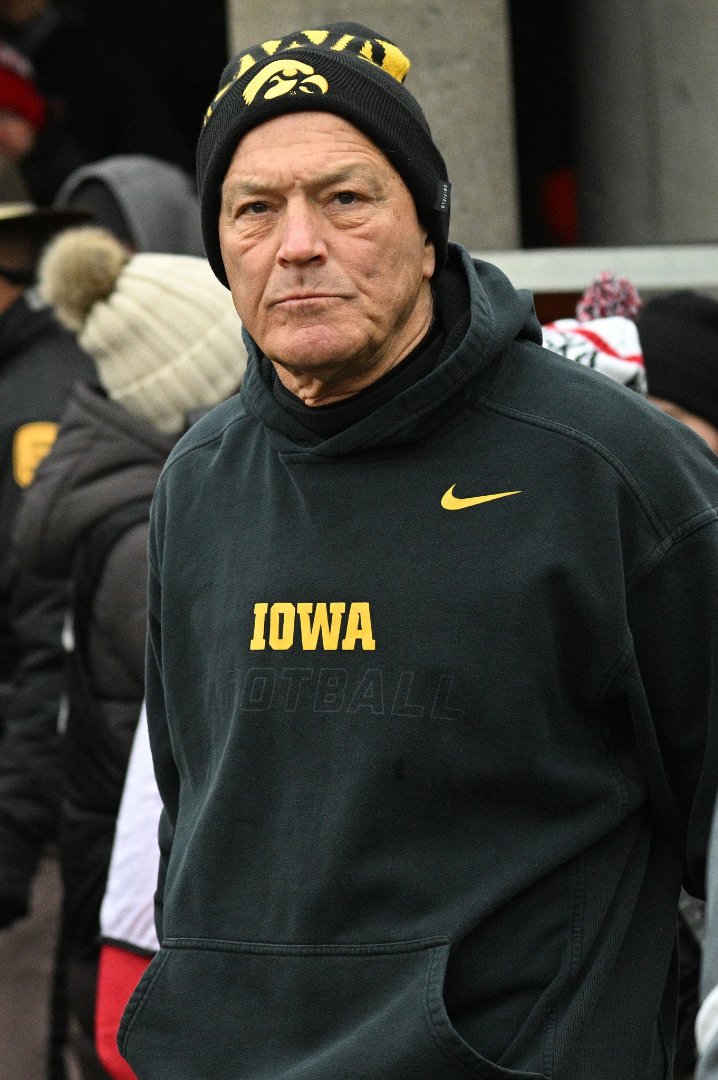
Kirk Ferentz Retirement Watch: Is the Iowa Legend Finally Near the End?
The Kirk Ferentz retirement watch is heating up again and this time, it feels more real than ever. As the 2026 college football season approaches, the long-standing face of the Iowa Hawkeyes finds himself under renewed scrutiny, not for performance, but for longevity. At 70 years old, Ferentz remains one of the most respected and enduring figures in the sport.
A Legacy Built on Consistency and Tough Football
The Kirk Ferentz retirement watch isn’t new. It’s been a recurring storyline for years, yet Ferentz continues to defy expectations. Entering his 28th season in Iowa City, the veteran head coach has turned consistency into an art form.
Since taking over the program in 1999, Kirk Ferentz has compiled a remarkable 213–128 record. That number alone tells part of the story. The deeper truth lies in how Iowa wins disciplined defense, efficient offense, and a refusal to beat itself.
In 2025, Ferentz guided the Hawkeyes to a 9–4 record. What stands out even more is how narrow those losses were. All four defeats came by five points or fewer, including a tight contest against eventual national champion Indiana. That kind of competitiveness underscores why Iowa remains relevant year after year.
Why ESPN Put Ferentz Back on the Radar
Each offseason, ESPN releases its list of coaches to watch in terms of potential retirement. And once again, Ferentz’s name is front and center.
The reasoning is straightforward. Age, evolving game dynamics, and career longevity all factor into the discussion. Ferentz turned 70 on August 1, shortly before cementing his place in history as the all-time wins leader in the Big Ten Conference.
But this isn’t a farewell tour at least not yet.
According to ESPN’s Adam Rittenberg, Ferentz remains “healthy, energetic, and still enjoys coaching,” even as the sport undergoes massive changes. NIL deals, the transfer portal, and shifting recruiting landscapes have forced many veteran coaches to step aside. Ferentz, however, has adapted.
Reinventing Himself in a Changing Game
College football today looks nothing like it did when Ferentz first arrived in Iowa City. Back then, player movement was limited, and recruiting cycles were predictable. Now, the transfer portal can reshape a roster overnight.
Yet Ferentz hasn’t resisted change he’s adjusted to it.
Iowa continues to develop players rather than rely heavily on transfers. That philosophy, once seen as old-fashioned, has become a competitive advantage. While other programs scramble to rebuild annually, Iowa maintains stability.
There’s also been evolution in coaching style. Ferentz has shown a willingness to tweak offensive schemes, embrace analytics, and modernize aspects of player development. He hasn’t abandoned his identity but he’s refined it.
The Numbers That Define Greatness
Let’s put Ferentz’s career into perspective:
213 career wins at Iowa
Big Ten all-time wins leader
13 consecutive bowl appearances
Eight or more wins every season since 2016 (excluding the COVID-shortened 2020 season, where Iowa still went 6–2)
Those aren’t just good numbers they’re elite.
And perhaps most impressively, Iowa has achieved this without consistently landing top-tier recruiting classes. Ferentz has built a system where development matters more than star rankings.
That’s why his teams are rarely flashy but almost always effective.
What’s Left to Accomplish?
This is where the Kirk Ferentz retirement watch becomes truly compelling.
What does a coach with this résumé still chase?
One glaring achievement remains: a College Football Playoff appearance. Iowa has been close but hasn’t broken through into the CFP era’s elite tier. For a program built on consistency, that final leap would be the perfect capstone.
Imagine Ferentz leading Iowa to its first CFP berth. It wouldn’t just validate his career it would redefine it.
And that possibility might be enough to keep him on the sidelines a little longer.
The Culture Inside Kinnick Stadium
To understand why Ferentz hasn’t stepped away, you have to look beyond wins and losses.
Inside Kinnick Stadium, Iowa football isn’t just a program it’s a culture. Players buy into a system that emphasizes accountability, toughness, and team-first mentality.
Ferentz has created an environment where development isn’t optional it’s expected.

NFL scouts have taken notice. Year after year, Iowa sends players to the league, many of whom outplay their draft positions. That pipeline reinforces the program’s reputation and keeps recruits interested, even without the flash of bigger schools.
Longevity Like No Other
In an era where coaching tenures often last just a few years, Ferentz’s 28-season run is extraordinary. He is currently the longest-tenured head coach in FBS a distinction that speaks volumes about both his success and stability.
Programs across the country cycle through coaches, chasing quick fixes. Iowa has done the opposite, and the results speak for themselves.
Ferentz isn’t just a coach he’s an institution.
So, When Will He Retire?
That’s the question everyone keeps asking and the one no one can answer.
The truth is, Ferentz will leave on his own terms. There’s no indication of burnout, no visible decline in performance, and no pressure from the university.
If anything, the opposite is true.
Iowa continues to compete at a high level. The team is coming off another strong season, and expectations remain steady heading into 2026. There’s no urgency to make a change.
And as long as Ferentz enjoys coaching, there’s little reason to believe he’ll walk away.
Why This Season Feels Different
Still, the Kirk Ferentz retirement watch carries a different tone this year.
It’s not just about age it’s about legacy.
Every season now feels like it could be the last chapter of one of college football’s most respected careers. Every win adds to his record. Every game at Kinnick becomes a moment fans might one day look back on as part of the farewell.
That doesn’t mean retirement is imminent but it does mean the conversation is unavoidable.
A Legend Still Writing His Story
What makes Ferentz unique is that he hasn’t faded into irrelevance late in his career. Many coaches linger too long, their programs declining as the game evolves around them.
That hasn’t happened at Iowa.
Instead, Ferentz continues to win, adapt, and compete. His teams remain disciplined, physical, and difficult to beat. Opponents know that facing Iowa means preparing for a four-quarter battle.
That sustained excellence is rare and it’s why his eventual retirement will mark the end of an era.
Final Thoughts
The Kirk Ferentz retirement watch will continue to dominate headlines as long as he remains on the sidelines. But for now, there’s no farewell tour, no countdown clock just another season ahead.
Ferentz has already secured his place as one of the greatest coaches in college football history. Yet he’s still chasing more more wins, more milestones, and perhaps that elusive College Football Playoff appearance.
Until he decides otherwise, the legend of Iowa football isn’t winding down.
It’s still being written.