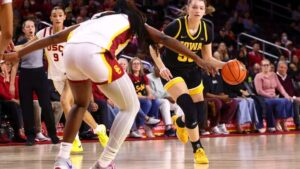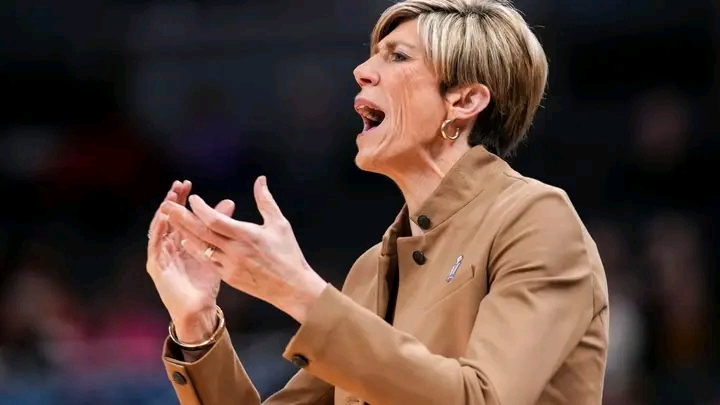
The offseason has barely begun, yet the are already facing a dramatic roster reset that could reshape the program’s short-term future and long-term trajectory.
In a whirlwind Monday that sent ripples through the fanbase, sophomore guard and sophomore forward both announced their intentions to enter the . Their departures weren’t isolated decisions they were the latest moves in what has quickly become a significant exodus.
With Mallegni and Rodriguez now on their way out, Iowa’s total number of outgoing players has climbed to five. They join freshman guard , sophomore guard , and junior guard , all of whom have also entered the portal.
That’s five scholarship players gone in a matter of weeks.
And when you look at how the roster now shapes up numerically, the impact becomes even more striking.
A Roster Suddenly Wide Open
Scholarship distribution offers one of the clearest windows into a program’s health, depth, and flexibility. For Iowa, the numbers tell a story of both concern and opportunity.
For the 2026–27 season, the Hawkeyes currently have just 6 of 15 scholarships filled.
That’s not a typo.
Six.
In an era where depth, experience, and rotation stability often separate contenders from pretenders, Iowa finds itself with nine open scholarship spots an unusually large number for a high-level program.
Here’s how those six scholarships are currently allocated:
2026–27 Scholarship Breakdown
Point Guard (1)
- Junior:
Shooting Guard (1)
- Junior:
Small Forward / Wing (1)
- Sophomore:
Power Forward (1)
- Freshman:
Center (2)
- Junior:
- Sophomore:
Total: 6/15 scholarships used
Breaking Down the Numbers
At first glance, the roster appears dangerously thin. Only one player is listed at each guard position, and the frontcourt, while slightly more stable, still lacks depth behind its projected starters.
But numbers alone don’t tell the full story.
This kind of scholarship flexibility while often the result of unexpected departures can also become a powerful tool. With nine open spots, Iowa now has the ability to aggressively attack both the transfer portal and the high school recruiting pipeline.
The question is whether they can capitalize on it.
Looking Ahead: 2027–28 Stability (or Illusion?)
While the 2026–27 outlook raises immediate concerns, the 2027–28 scholarship picture offers a bit more structure at least on paper.
Iowa currently has 7 of 15 scholarships allocated for that season.
Here’s how the roster is projected to look:
2027–28 Scholarship Breakdown
Point Guard (1)
- Senior:
Shooting Guard (2)
- Senior:
- Freshman:
Small Forward / Wing (1)
- Junior:
Power Forward (1)
- Sophomore:
Center (2)
- Senior:
- Junior:
Total: 7/15 scholarships used
Key Names Still Anchoring the Program
Despite the departures, Iowa isn’t starting from scratch. Several key players remain in the fold, and their development will be critical.
projects as the primary floor general moving forward. As a junior in 2026–27 and a senior the following season, she’ll be expected to take on a leadership role both in orchestrating the offense and stabilizing a potentially young roster.
On the wing, and provide continuity. Stremlow’s experience and scoring ability, combined with Houston’s versatility, give Iowa a foundation to build around.
In the frontcourt, and form a promising interior duo. Both players are expected to log heavy minutes, especially given the lack of depth behind them.
And then there’s .
The Woliczko Factor
Woliczko isn’t just another freshman she’s one of the most intriguing additions to Iowa’s future roster.
Fresh off her appearance in the , Woliczko arrives with both pedigree and expectation. Her performance on that stage, along with her decision to join Iowa despite reportedly “leaving money on the table,” speaks volumes about her belief in the program.
At 6-foot-2 with the ability to stretch the floor and attack off the dribble, Woliczko brings a modern skill set that fits seamlessly into Iowa’s offensive philosophy.
She won’t just be filling a roster spot she’ll be expected to contribute immediately.
What Went Wrong—and What Comes Next
Five players entering the transfer portal isn’t just a roster update it’s a signal.
In today’s college basketball landscape, movement is constant. Players transfer for more playing time, better fits, or new opportunities. But when departures stack up this quickly, it inevitably raises questions.
Was it about minutes? System fit? Development concerns?
Or simply the reality of modern college athletics, where roster turnover has become the norm?
Whatever the reasons, Iowa now faces a pivotal stretch.
The Portal Becomes the Priority
With nine open scholarships for 2026–27 and eight for 2027–28, Iowa’s strategy moving forward is clear: the transfer portal will be essential.
Programs across the country have shown that quick turnarounds are possible with the right additions. Veteran transfers can bring immediate scoring, leadership, and defensive stability qualities Iowa will need in abundance.
Expect the Hawkeyes to target:
- Experienced guards to bolster backcourt depth
- Versatile wings who can defend multiple positions
- Frontcourt depth to support Heiden and Hays
The margin for error is slim, but the opportunity is massive.
A Defining Offseason for Iowa
There’s no sugarcoating it this is one of the most important offseasons in recent memory for Iowa women’s basketball.
The combination of unexpected departures and significant scholarship flexibility creates a unique situation. It’s part challenge, part opportunity.
If Iowa capitalizes landing impact transfers and developing its returning core the narrative could quickly shift from concern to resurgence.
But if those roster spots remain unfilled or underutilized, the consequences could linger for multiple seasons.
The Bottom Line
Right now, the numbers are impossible to ignore.
- Five players gone
- Six scholarships filled for 2026–27
- Seven for 2027–28
That’s not just turnover it’s transformation.
The coming months will determine whether this moment becomes a setback or a turning point.
One thing is certain: the won’t look the same when they take the court next season.
And in today’s college basketball world, that might not be a bad thing at all.