Hawkeye Wave Leaves Kinnick Stadium in Silence as Iowa Fans Turn Toward Children’s Hospital
On a crisp afternoon in Iowa City, something remarkable unfolded inside Kinnick Stadium. Instead of the thunderous cheers that usually greet kickoff, a quiet, almost sacred stillness settled over the crowd.
It was the Hawkeye Wave a tradition that has become one of the most moving moments in American sports.
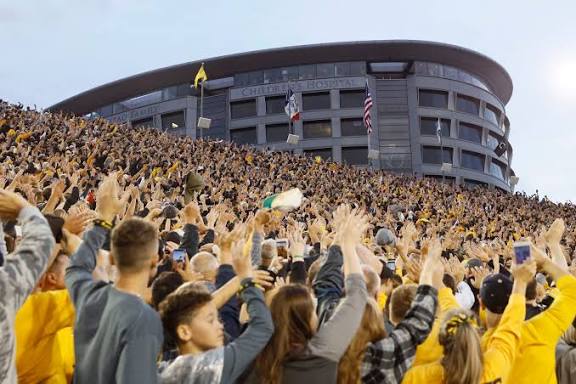
As the Iowa Hawkeyes football players stepped onto the field, tens of thousands of fans rose from their seats. But they weren’t preparing to roar. Instead, they turned away from the field and faced the towering windows of Stead Family Children’s Hospital.
In that instant, competition faded into the background. What unfolded next reminded everyone in attendance that sometimes the most powerful moments in sports have nothing to do with the scoreboard.
A Sudden Silence Inside Kinnick Stadium
Moments before kickoff, the scene inside Kinnick Stadium looked familiar: black-and-gold jerseys scattered across the stands, flags waving in the breeze, and the hum of anticipation rippling through the crowd.
But when the Hawkeyes gathered along the sideline, something unusual happened.
The roaring noise that normally echoes across the stadium vanished.
Players stood shoulder to shoulder, helmets tucked under their arms. Coaches and staff members lined the sideline quietly. One by one, fans throughout the stadium slowly rose to their feet.
Within seconds, more than 70,000 people were standing.
And yet, the stadium was almost completely silent.
Only the soft rustle of black-and-gold flags and the gentle sweep of the afternoon wind could be heard drifting through the stands.
It felt less like a sporting event and more like a shared moment of reflection.
Hawkeye Wave Tradition Unites an Entire Stadium
The silence wasn’t accidental. Everyone in the stadium knew what was about to happen.
Then, almost as if guided by an invisible signal, thousands of arms lifted into the air.
Fans, players, and coaches turned away from the field and waved toward the upper floors of Stead Family Children’s Hospital, the towering building that overlooks Kinnick Stadium.
Behind those windows, young patients many fighting serious illnesses watched the game from their hospital rooms.
Some waved back.
Others held signs or flashed small lights toward the stadium below.
Families gathered beside them, smiling through emotional moments that transcended the game itself.
For the children inside the hospital, that wave represents far more than a simple gesture.
It’s a message: You’re not alone.
How the Hawkeye Wave Began
The Hawkeye Wave tradition began in 2017, sparked by a simple but powerful idea.
When the University of Iowa completed the construction of Stead Family Children’s Hospital adjacent to Kinnick Stadium, fans immediately noticed the hospital’s upper floors had a direct view of the football field.
Instead of ignoring the building, the Iowa community decided to embrace it.
During the first home game that season, fans turned toward the hospital and waved to the children watching from their rooms.
The moment caught national attention almost instantly.
Television broadcasts paused.
Commentators struggled to hide their emotions.
And what started as a spontaneous gesture quickly became a permanent part of Hawkeye football culture.
Today, the Hawkeye Wave takes place at the end of the first quarter during every home game.
A Moment Bigger Than Football
For a program known for tough defense and Big Ten battles, the Hawkeye Wave represents something deeper.
Inside Kinnick Stadium, rivalries fade for a moment. Scoreboards don’t matter. Rankings disappear.

Instead, tens of thousands of people pause to recognize the courage of children fighting battles far more difficult than anything happening on the field.
Some of those kids spend weeks or even months inside the hospital.
For them, watching a college football game can be a welcome distraction from treatments, surgeries, and long recoveries.
The wave brings joy, encouragement, and a reminder that an entire community is cheering for them.
Parents often say the tradition gives their children something to look forward to during difficult days.
Players Feel the Impact Too
The Hawkeye Wave isn’t just emotional for fans. It deeply affects the players as well.
Standing on the field and looking up at the hospital windows offers a powerful perspective.
For a moment, the intensity of competition disappears.
Athletes who spend their lives chasing wins and championships are reminded that football is only part of life.
Many Iowa players have visited the hospital during the season, meeting young patients and their families.
Those visits often leave lasting impressions.
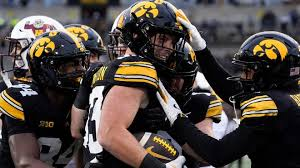
Several former Hawkeyes have said the wave remains one of the most meaningful moments they experienced during their college careers.
Even seasoned veterans admit it’s impossible not to feel something when thousands of fans fall silent and raise their hands toward the hospital.
A Tradition Recognized Across the Sports World
Since its creation, the Hawkeye Wave has become one of the most widely admired traditions in college athletics.
Major networks have highlighted the moment during national broadcasts. Sports analysts regularly point to it as one of the most touching scenes in American sports.
In fact, the University of Iowa community received the prestigious ESPY Award for Best Moment for the tradition in 2018.
The recognition wasn’t just about football.
It celebrated compassion, empathy, and the way sports can bring people together.
Today, fans from visiting teams often join in the wave when they travel to Iowa City.
Even rival supporters, dressed in opposing colors, put competition aside for those brief seconds.
Because in that moment, everyone is simply part of one community.
The Children Who Inspire the Wave
For the young patients watching from the hospital rooms, the experience can be unforgettable.
Some children press their hands against the glass windows while waving back toward the stadium.
Others hold homemade signs or flashlights to signal their presence to the crowd below.
Parents often capture the moment on their phones, knowing it will become a memory their children carry for years.
Doctors and nurses inside the hospital frequently pause their work to watch the wave as well.
For staff members who witness the toughest days in pediatric care, the tradition serves as a reminder that compassion exists beyond hospital walls.
When the Wave Ends, the Roar Returns
Eventually, the wave comes to an end.
Fans lower their arms.
Players return their focus to the field.
And suddenly, the quiet stadium bursts back to life.
The roar of Hawkeye fans returns as the game resumes. Helmets clash. Coaches shout instructions. The competition resumes with full intensity.
But something has changed.
The brief pause the shared silence, the collective wave lingers in the hearts of everyone who witnessed it.
Because for those few seconds, more than 70,000 people were united by something far more important than football.
A Symbol of Hawkeye Nation
The Hawkeye Wave has grown into a defining symbol of the Iowa football program.
It reflects the spirit of Hawkeye Nation: community, compassion, and unity.
In a world where sports often revolve around rivalries, rankings, and championships, this tradition offers a powerful reminder of what truly matters.
Sometimes the most unforgettable moments in sports don’t happen during the game.
They happen before the ball is even snapped.
And inside Kinnick Stadium, when thousands of fans lift their arms toward the hospital windows, the message is clear.
Hope travels farther than any touchdown pass.