2027 Florida DL Josh Johnson during recruiting process with Iowa Hawkeyes
Court-Intrusion Chaos: Iowa Athletics Apologizes After Fan Confronts Fred Hoiberg
On a night that should’ve been remembered strictly for Big Ten hardwood drama, the phrase Court Intrusion Incident quickly overshadowed the final buzzer. In the immediate aftermath of Iowa’s rivalry clash with Nebraska, tensions spilled beyond the scoreboard when a fan breached security and directly confronted Nebraska head coach Fred Hoiberg prompting a swift response and an official statement from the University of Iowa Athletics Department.
What unfolded inside Carver-Hawkeye Arena wasn’t just a breach of etiquette it triggered conference-wide concern about postgame security, player safety, and court-storming culture across college basketball.
Official Statement From Iowa Athletics
In the hours following the game, University of Iowa Athletics released a public statement acknowledging the incident and outlining immediate institutional concern.
“The University of Iowa Athletics Department implemented its court-intrusion guidelines following last evening’s Iowa vs. Nebraska men’s basketball game. Unfortunately, an individual gained access to the court through a restricted area, directly confronting Coach Hoiberg and putting Nebraska players, coaches, and staff in a reactive situation. We apologize for this incident and will conduct a review of our procedures and security measures to determine what adjustments may be needed to further strengthen our protocols and help prevent similar incidents in the future.”
The wording was deliberate apologetic, but also procedural. Iowa confirmed that guidelines were in place, yet acknowledged a breakdown that allowed the confrontation to occur.
Court Intrusion Incident Sparks Immediate Big Ten Concern
The Court Intrusion Incident unfolded seconds after the final horn, when fans began moving toward the hardwood a common sight in emotionally charged rivalry games.
But this situation escalated differently.
According to arena personnel and eyewitness accounts, one individual bypassed standard security flow and entered through a restricted access point an area designated strictly for team staff, media, and credentialed personnel.
That breach created a direct path to the visiting bench.
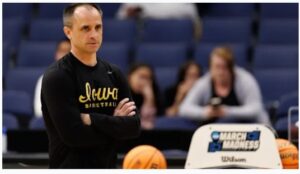
Standing near his players, Nebraska head coach Fred Hoiberg suddenly found himself face-to-face with the intruder.
Nebraska athletes and staff immediately reacted forming a protective buffer while arena security rushed in to remove the fan from the floor.
No physical altercation was reported, but the proximity and unpredictability of the confrontation created a tense, volatile moment.
Rivalry Heat Meets Postgame Vulnerability
Matchups between Iowa Hawkeyes men’s basketball and Nebraska Cornhuskers men’s basketball rarely lack intensity.
Border-state pride, recruiting overlap, and conference standings often add emotional fuel. But when the buzzer sounds, security protocols are designed to separate competitive fire from postgame order.
That separation briefly collapsed.
Players from both teams were still on the court some exchanging handshakes, others heading toward the tunnel when the breach occurred.
Moments like that are considered “high-risk windows” in arena operations:
Emotions are elevated
Crowd movement increases
Security sightlines narrow
Visiting teams are most exposed
This incident hit all four factors simultaneously.
Carver-Hawkeye Arena Security Under Review
The game took place inside Carver‑Hawkeye Arena, one of the Big Ten’s most recognizable basketball environments.
While the venue has hosted decades of high-profile games without major security failures, Iowa officials confirmed a full procedural review is now underway.
Areas of focus include:
Restricted-access tunnel points
Credential verification checkpoints
Postgame fan flow routing
On-court security staffing levels
Response time coordination
The goal isn’t just accountability — it’s prevention.
Athletic departments across the country increasingly share security data after incidents, meaning Iowa’s findings could influence arena protocols far beyond Iowa City.
Nebraska Sideline Reaction
Though Nebraska has not released a lengthy independent statement, team sources indicated appreciation for Iowa’s immediate apology and cooperation.
For Coach Hoiberg, the moment carried layered significance.
Before leading Nebraska, he built deep ties within the state of Iowa starring collegiately and later coaching within the region. That familiarity made the confrontation more surreal than hostile, according to those present.
Still, visiting coaches remain among the most vulnerable figures during court storms positioned closest to fans with minimal physical barriers once security lines break.
Nebraska players reportedly stayed near Hoiberg until the situation was fully under control, reinforcing the seriousness of the breach despite its brief duration.
Court-Storming Culture Under the Microscope
The Court Intrusion Incident arrives amid a national debate: Where’s the line between celebration and safety?
Court-storming has long been a staple of college basketball’s identity particularly after upsets or rivalry wins. But recent seasons have produced multiple flashpoints:
Player collisions with fans
Verbal confrontations
Security overwhelm
Visiting team endangerment
The NCAA has issued guidance, but enforcement remains school-driven — meaning protocols vary widely by venue.
Some programs now delay court access by:
Holding students behind barriers
Extending security lines
Escorting visiting teams off first
Iowa’s review may explore similar measures.
Big Ten’s Likely Response
While the conference office has yet to announce disciplinary action or fines, the Big Ten Conference traditionally evaluates incidents involving bench safety and restricted-area breaches.
Possible outcomes — if deemed necessary — could include:
Institutional fines
Security compliance mandates
Game-operations reviews
Future hosting requirements
However, because no injuries or physical contact were confirmed, punitive measures if any would likely focus on procedural correction rather than punishment.
The Human Element Behind the Headline
Lost beneath policy language is the emotional reality of the moment.
For players, postgame minutes are sacred:
Seniors soak in final home atmospheres
Rivals exchange respect
Coaches regroup emotionally
Introducing confrontation — even verbal — fractures that space.
Security experts often stress that athletes exiting competition operate in an adrenaline-heavy mental state. Unexpected fan proximity can trigger instinctive defensive reactions, escalating situations unintentionally.
That’s why buffer zones exist.
And why breaches matter — even when brief.
Social Media Amplification
Within minutes, clips and eyewitness accounts circulated online, magnifying scrutiny.
Short videos showed security escorting the individual away, while Nebraska staff guided players toward the tunnel.
Though the footage revealed no physical escalation, perception alone fueled debate:
Was security too slow?
Should court storms be banned?
Are visiting teams adequately protected?
Iowa’s rapid statement helped control narrative momentum signaling institutional accountability before speculation could spiral.
Institutional Accountability in Action
What stood out most in Iowa’s response was tone.
The department didn’t deflect blame toward fans, rivalry emotion, or game intensity.
Instead, it acknowledged three key points:
1. Guidelines existed
2. A breach occurred
3. Reviews will follow
That transparency aligns with modern crisis-response standards in collegiate athletics where optics matter nearly as much as action.
What Happens Next?
Expect several developments in the coming days:
Internal security audits
Staff debriefings
Surveillance review
Coordination with Nebraska officials
Conference communication
If procedural gaps are identified, updates could be implemented before Iowa’s next home game.
In today’s college sports climate, even isolated incidents often accelerate nationwide policy evolution.
Final Word
The Court Intrusion Incident may not have resulted in injury, but its implications stretch beyond one postgame confrontation.
It spotlighted the fragile line between fan passion and participant safety — a line universities must constantly reinforce as college basketball atmospheres grow louder, tighter, and more emotionally charged.
For Iowa, the apology was step one.
The real test lies in what changes before the next buzzer sounds in Iowa City.