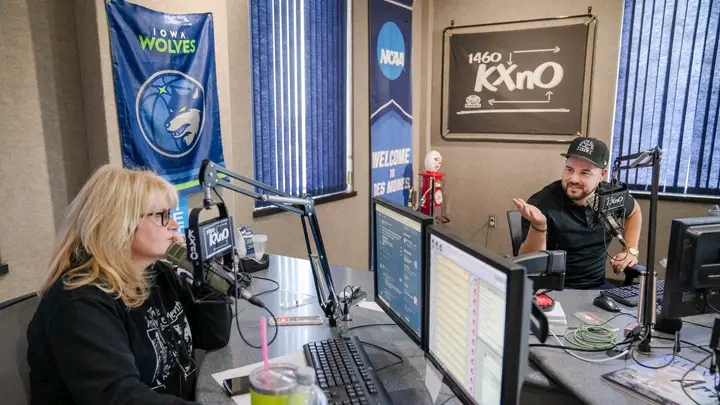
What was supposed to be a celebration of three decades of local sports radio instead turned into one of the saddest weeks in Iowa broadcasting history. For longtime KXNO personality Ken Miller, June 24 was meant to be a farewell filled with gratitude, memories and appreciation from listeners who had spent decades tuning in. Instead, sweeping layoffs at the Des Moines sports station transformed his retirement into a painful reminder of how quickly an industry can change.
Miller had announced his retirement a full year in advance, carefully choosing a date that carried special meaning. On June 24, 1996, he helped launch “Marty and Miller,” the very first sports talk radio show dedicated to central Iowa. Thirty years later, that anniversary was supposed to mark the conclusion of one of the state’s most influential broadcasting careers. Instead, Miller never appeared on what should have been his final show after deciding not to cross the picket line created by the layoffs of many of his colleagues.
The devastating cuts were part of a nationwide restructuring by iHeartMedia, KXNO’s parent company. While layoffs affected stations across the United States, the impact in Des Moines was especially severe. Several of the station’s most recognizable local personalities including Heather Burnside, Alec Busse, Tyler Allen, Sean Roberts, Lucas Strain and Connor Ferguson were let go, leaving the station’s local programming almost entirely dismantled.
For many Iowa sports fans, the news wasn’t simply about employees losing their jobs. It represented the disappearance of a trusted local voice that had connected listeners with the Iowa Hawkeyes, Iowa State Cyclones, Drake Bulldogs and countless high school athletes through decades of changing sports landscapes. Local sports talk had become a daily tradition, and suddenly that tradition appeared to be ending.
Miller’s decision not to participate in his scheduled farewell immediately became one of the defining moments of the controversy. According to his longtime co-host Trent Condon, numerous people encouraged Miller to appear for one final broadcast celebrating the station’s history. Miller respectfully declined, choosing solidarity with coworkers who had just lost their jobs over receiving a personal sendoff.
That decision resonated throughout Iowa’s sports community.
For listeners who had followed Miller since the mid-1990s, the absence felt symbolic. Instead of signing off with memories from three decades behind the microphone, one of Iowa’s broadcasting pioneers quietly walked away without the goodbye many believed he had earned.
The layoffs themselves came as little warning.
According to reports, iHeartMedia launched a broad company-wide workforce reduction affecting stations in multiple markets, including St. Louis, Pittsburgh and Indianapolis. While exact nationwide numbers were not publicly disclosed, industry observers reported that more than 100 on-air and programming positions disappeared during the restructuring.
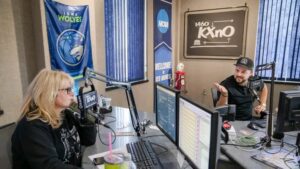
Des Moines was among the hardest-hit markets.
Popular local programs disappeared almost overnight, including “The 1st Quarter,” while afternoon drive programming also underwent massive changes. The station’s once locally focused lineup suddenly shifted toward nationally syndicated programming, marking a dramatic change for listeners accustomed to hearing discussions centered on Iowa sports every day.
Condon remained on the air immediately following the layoffs and used his show to address the situation directly.
Rather than pretending nothing had happened, he openly spoke about the emotional toll of watching longtime coworkers lose their positions.
“My heart aches for the people, my friends, and for my colleagues,” Condon said during the broadcast, praising those who had worked tirelessly to serve Iowa sports fans over the years. He also explained why Miller had chosen not to appear for his farewell program, emphasizing that the veteran broadcaster wanted to stand alongside his colleagues rather than celebrate individually.
Those remarks would soon have consequences of their own.
Just days later, Condon announced that his own time at KXNO had ended.
In a social media statement, he revealed that corporate executives considered his comments regarding the layoffs “controversial.” Despite losing his platform, Condon made it clear he stood behind everything he had said and remained disappointed that Miller never received the farewell broadcast he deserved.
His departure effectively removed the last remaining local daytime voice from KXNO.
For listeners, that development represented something much larger than a staffing change.
For three decades, local sports radio had offered something national broadcasts simply couldn’t replicate. Whether discussing recruiting battles between Iowa and Iowa State, previewing Friday night high school football games or analyzing Drake basketball, local hosts understood the community because they lived in it.
National programming may cover professional leagues extensively, but it rarely dedicates meaningful airtime to regional stories that matter most to local fans.
That reality quickly became a central topic among listeners online.
Across social media and community discussion forums, many fans expressed disappointment over losing programming dedicated specifically to Iowa athletics. Several longtime listeners said local personalities gave the station its identity, while syndicated national shows could be heard virtually anywhere in the country.
Others pointed toward independent Iowa-based sports media platforms as possible alternatives.
Podcast networks and digital sports outlets have steadily expanded in recent years, creating new spaces for regional sports coverage outside traditional radio. As terrestrial radio continues evolving, those digital platforms may become increasingly important for fans seeking in-depth conversations about Iowa teams and athletes.
Still, many acknowledged that replacing the daily habit of turning on local sports radio during morning or afternoon commutes won’t be easy.
Industry analysts believe the events at KXNO also reflect broader changes occurring throughout broadcasting.
Traditional radio companies continue adapting to shifting advertising models, increasing competition from podcasts, streaming services and digital content creators. Cost-cutting measures have become increasingly common, particularly in smaller markets where maintaining large local staffs has become more difficult.
Yet financial realities do little to soften the emotional impact felt by longtime listeners.
Ken Miller’s career embodied the growth of Iowa sports media itself.
When “Marty and Miller” debuted in 1996, many questioned whether central Iowa could sustain a dedicated sports talk format. Over the next three decades, however, local sports coverage flourished, fueled by passionate fan bases supporting the Hawkeyes, Cyclones, Panthers and Bulldogs.
Miller became one of the most recognizable voices in that movement.
His thoughtful interviews, balanced opinions and deep knowledge of Iowa athletics earned respect from coaches, athletes and fans alike. While broadcasting styles evolved over time, Miller remained a consistent presence through coaching changes, conference realignments, championship seasons and heartbreaking defeats.
Ironically, his carefully planned farewell became remembered not for celebration but for sacrifice.
Instead of delivering one last sign-off before loyal listeners, he chose principle over ceremony.
That decision may ultimately define the closing chapter of his broadcasting legacy just as much as the thousands of shows he hosted over the previous 30 years.
As KXNO moves forward with a lineup increasingly built around syndicated national programming, questions remain about the future of local sports radio in Iowa.
Will another station step into the void?
Can independent digital creators fully replace the community connection built through traditional radio?
Or does the end of Miller’s remarkable career signal the closing of one chapter and the uncertain beginning of another?
Those answers will emerge over time.
What already seems certain is that June 2026 will be remembered as a turning point in Iowa sports media history a week when one of the state’s most influential voices quietly exited the airwaves, dozens of broadcasting careers changed overnight, and an era that began with a groundbreaking radio show in 1996 came to an unexpected and emotional conclusion.