Something unusual happened inside the Iowa Hawkeyes football program this week, and it’s quickly become one of the most talked-about storylines surrounding the team heading into the new season.
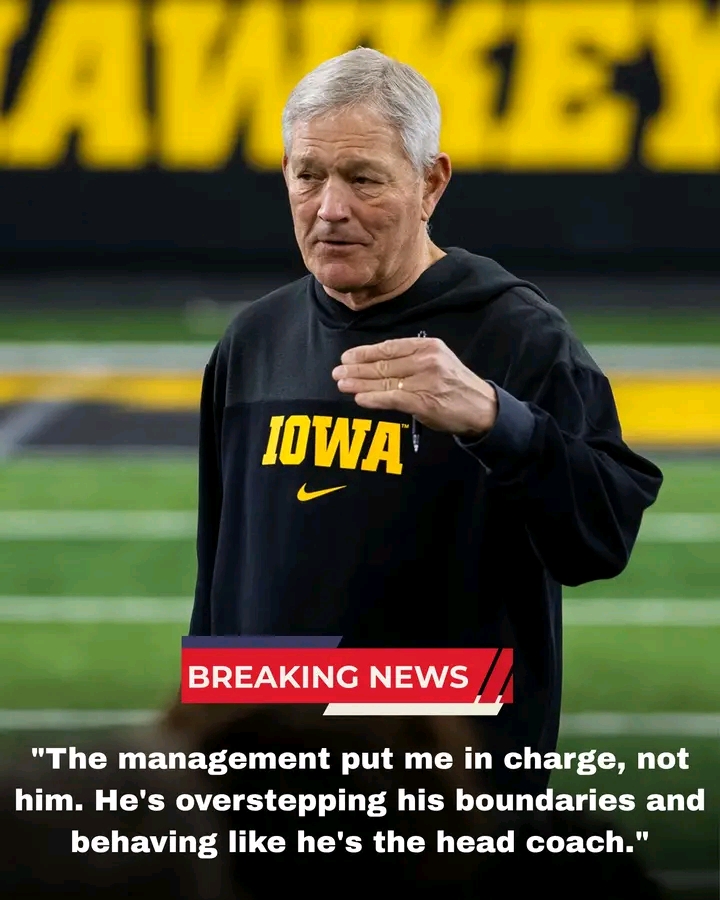
During a media availability, longtime Iowa head coach Kirk Ferentz addressed reports of tension within the locker room and delivered a message that many interpreted as a direct warning to a player believed to hold significant influence inside the program. While Ferentz stopped short of naming anyone publicly, his comments left little doubt about where he stands when it comes to accountability and team culture.
The veteran coach, who has built Iowa football on discipline, consistency, and accountability throughout his tenure, made it clear that no player regardless of talent, status, or leadership role is bigger than the program. His remarks immediately sparked discussion across the college football world, with fans and analysts debating what may have prompted such a public statement.
According to Ferentz, standards inside the Hawkeyes program are expected to apply equally to everyone. The coach emphasized that personal privilege and individual behavior cannot be allowed to undermine the culture that Iowa has spent years establishing.
The comments arrived at a critical point in the offseason as the Hawkeyes continue preparing for the upcoming campaign. With expectations building and roster competition intensifying, any sign of internal conflict naturally attracts attention especially when it comes from one of college football’s most respected head coaches.
Ferentz’s reputation has long been built on maintaining stability and enforcing accountability within the program. That reputation is precisely why his latest remarks have generated so much interest.
When questioned about reported issues within the squad, Ferentz didn’t dodge the topic. Instead, he addressed it directly and delivered a message that resonated throughout the college football community.
“There are standards in this program that apply to everyone,” Ferentz stated.
He continued by stressing that whenever those standards are challenged by personal behavior or perceived privilege, the coaching staff has a responsibility to respond.
“We will respond the right way together,” Ferentz added.
Those words quickly became the focal point of discussions among Hawkeyes supporters. Many viewed the statement as one of the strongest public messages Ferentz has delivered regarding internal team discipline in recent years.
What makes the situation even more intriguing is that the identity of the player at the center of the reported controversy has not been confirmed.
Despite widespread speculation, no individual has been publicly identified by the coaching staff, the university, or Iowa Athletics. Nevertheless, theories have already begun circulating across social media platforms and fan communities, with supporters attempting to determine who may have prompted the coach’s remarks.

University officials, however, have urged restraint as the situation continues to develop. Rather than fueling speculation, Iowa representatives have emphasized the importance of respecting privacy while internal matters are addressed.
Later in the day, Iowa Athletics released an official statement reaffirming that any internal issues are being handled within the program. The department did not provide additional details regarding the circumstances that led to Ferentz’s comments.
That lack of specific information has only increased curiosity surrounding the situation.
For a program that traditionally keeps internal matters behind closed doors, Ferentz’s willingness to publicly address concerns even without naming a player represents a notable departure from the norm. It also highlights how seriously the coaching staff appears to be taking the matter.
The timing is significant.
The Hawkeyes are deep into preparations for the upcoming season, and maintaining locker-room unity will be essential if the team hopes to meet expectations. Successful college football programs often rely as much on culture and leadership as they do on talent, and Ferentz’s comments suggest those values remain non-negotiable in Iowa City.
The coming weeks will likely reveal whether this episode becomes a defining moment that strengthens the team or a distraction that lingers into the season.
Much will depend on how leaders inside the locker room respond. Veteran players, team captains, and members of the coaching staff will all play important roles in ensuring that the focus remains on football rather than off-field controversy.
For now, though, Ferentz’s position appears unmistakable.
The message delivered by Iowa’s head coach was simple, direct, and impossible to ignore: discipline comes first, accountability applies to everyone, and no amount of talent or influence can supersede the standards that define Iowa football.
As speculation continues and questions remain unanswered, one thing is certain the spotlight is now firmly on the Hawkeyes’ locker room.
Whether the reported tension fades quietly or develops into a larger storyline remains to be seen. But Ferentz has already made his expectations clear.
Under his leadership, standards are not optional. They are the foundation of the program, and anyone who challenges them will be expected to answer for it.
That declaration has sent shockwaves throughout the college football landscape and ensured that all eyes will remain on Iowa as the Hawkeyes continue their preparations for what promises to be a fascinating season ahead.