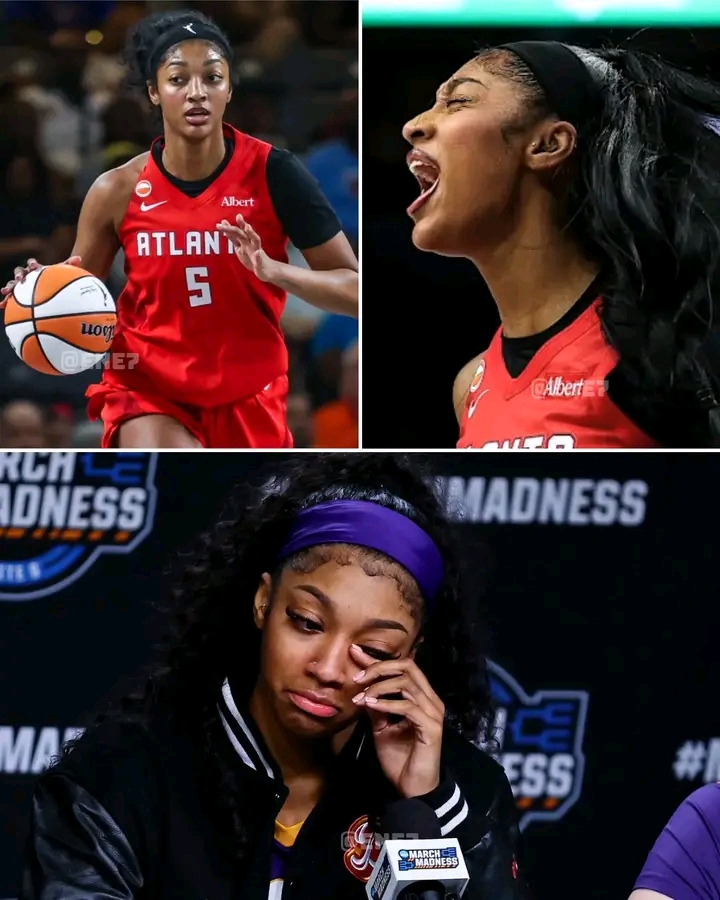
“YO, SHE’S THE ONLY STARTER WHO CAN’T HIT A SHOT PAST 5 FEET?!” Angel Reese’s Offensive Struggles Are Suddenly Becoming Impossible To Ignore
For all the wins piling up around her, one uncomfortable conversation continues to follow everywhere she goes.
And now, the numbers are making that conversation even louder.
The former college superstar and one of the biggest personalities in women’s basketball is once again putting up double-doubles in the WNBA. On paper, that sounds impressive. Through five games of the 2026 season, Reese has continued doing what she’s always done best rebound relentlessly, play with emotion, and bring energy every single night.
But beneath the rebounds and highlight celebrations sits a statistic that’s causing serious debate across social media, sports talk shows, and WNBA circles.
Angel Reese is currently the only starting player in the entire WNBA who has not made a single shot from beyond five feet.
Not one.
And once that stat started spreading online, basketball fans wasted no time reacting.
“YO, SHE’S THE ONLY STARTER IN THE LEAGUE WHO CAN’T MAKE A SHOT PAST 5 FEET?!” one viral post read, summing up the growing criticism surrounding Reese’s offensive game.
The backlash isn’t coming out of nowhere either. The numbers behind it are difficult to defend.
According to early-season shooting splits, Reese is currently 0-for-7 on all shot attempts outside five feet. That means every made basket she has recorded this season has come directly around the rim. No mid-range jumpers. No floaters. No face-up shots. Nothing outside close-range finishes.
For a player constantly discussed as one of the future faces of the league, critics believe that’s a major issue.
And unfortunately for Reese, this isn’t a brand-new concern.
Her rookie season in the WNBA was heavily criticized because of her efficiency around the basket. Back then, Reese shot just 39.1 percent from the field, a number that quickly became a talking point online. Opposing fans questioned her touch, analysts questioned her offensive versatility, and every missed layup seemed to explode across social media within seconds.
To her credit, Reese responded in Year 2.
She improved her field-goal percentage to 45.8 percent and looked more comfortable offensively. That improvement quieted many critics and gave supporters hope that her offensive development was trending upward.
But now, five games into the 2026 season, those same concerns are beginning to resurface again.
Reese’s shooting percentage has dipped back down to 40.7 percent, and the lack of perimeter scoring is once again dominating headlines.
What makes the criticism even more intense is the context surrounding her new team.
After the blockbuster offseason trade that sent Reese from the to the , expectations skyrocketed almost immediately. Atlanta made the move believing Reese could help elevate the franchise into championship contention.
So far, from a team perspective, things are going extremely well.
The Dream sit at 4-1 and already look like one of the most dangerous teams in the league. Their latest statement victory came after erasing a massive 15-point deficit against the , showing the kind of resilience championship-caliber teams usually possess.
Atlanta’s roster is loaded with talent, experience, and athleticism. That depth has helped cover some of Reese’s offensive limitations early in the season.
But that hasn’t stopped the spotlight from landing directly on her shooting struggles.
The reality is simple: teams are beginning to notice they don’t have to respect her away from the basket.
Defenders are sagging off. Paints are becoming crowded. Offensive spacing tightens when opponents know a player has zero interest or confidence in taking jump shots. In today’s modern WNBA, where floor spacing and versatility are becoming increasingly important, that kind of limitation can quickly become a problem.

Especially for a star player.
And yet, there’s another side to this conversation that many fans believe deserves more attention.
Even while struggling offensively, Reese still impacts winning.
That’s what makes this debate so fascinating.
She rebounds at an elite level. She creates second-chance opportunities. She brings toughness and emotion every night. Her motor never stops. Coaches love players who crash the boards the way Reese does because effort and physicality can completely shift momentum during games.
There’s also the undeniable reality that Reese remains one of the league’s biggest attractions. Whether people support her or criticize her, they’re watching. Every game sparks debate. Every stat goes viral. Few players in women’s basketball generate the kind of attention Reese creates on a nightly basis.
That visibility comes with pressure.
When you’re one of the faces of the sport, weaknesses get magnified. Every missed shot becomes a trending topic. Every rough performance becomes national discussion material.
And right now, Reese is dealing with exactly that.
Still, it’s important to remember something many critics are overlooking: it’s only been five games.
Five games is a tiny sample size in a long WNBA season. Shooters go through slumps. Players adjust to new systems. Chemistry takes time to develop, especially after major offseason moves. Reese is also playing alongside more offensive talent than she had during her time in Chicago, which naturally changes shot opportunities and offensive responsibilities.
In Atlanta, she doesn’t have to force offense every possession.
That may partially explain the lower scoring aggression.
But regardless of context, the pressure surrounding her jumper is real and growing by the day.
The internet has already turned the stat into meme material. Clips of missed layups and awkward finishes continue circulating online, while opposing fans repeatedly question whether Reese can truly become an elite offensive player without developing a reliable mid-range game.
Some analysts believe the solution is obvious: more offseason skill work, more confidence in face-up situations, and more willingness to take uncomfortable shots during games.
Because eventually, defenses will continue daring her to shoot until she proves she can make them pay.
The scary part for the rest of the league?
Atlanta is still winning anyway.
That’s what should concern opponents most.
Even with Reese struggling offensively, the Dream already look like legitimate title contenders. Their depth, defense, and ability to rally from huge deficits make them one of the toughest teams in the WNBA right now.
If Reese eventually develops even a consistent 10-to-15-foot jumper, Atlanta’s ceiling could become terrifying.
And that’s why this story isn’t just about criticism.
It’s about potential.
At 24 years old, Reese still has time to evolve offensively. Plenty of WNBA forwards entered the league with limited jump shots before eventually expanding their games. Development doesn’t happen overnight, especially under constant public scrutiny.
But until those improvements arrive, the conversation isn’t going anywhere.
The stats are public.
The clips are viral.
And the pressure surrounding Angel Reese’s offensive game is suddenly bigger than ever.
Now the basketball world waits to see how she responds.