

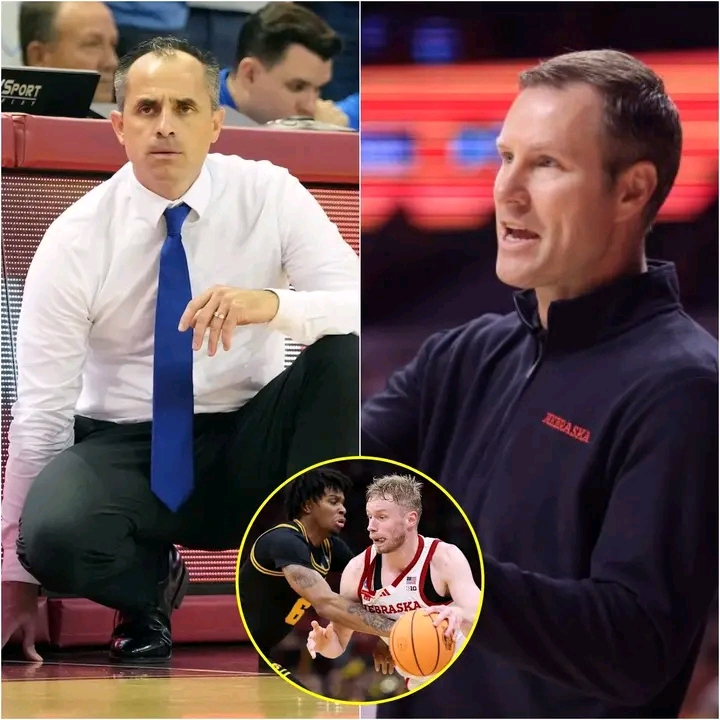
HOIBERG SOUNDS THE ALARM: What Nebraska’s Coach Saw in Iowa’s Grit Will Stick Long After the 77–71 Final
Published: March 27, 2026
The scoreboard inside the arena read 77–71 in favor of the Iowa Hawkeyes. It was a Sweet 16 battle that delivered everything March Madness promises intensity, momentum swings, and pressure-packed possessions. But when the final buzzer sounded, the conversation didn’t settle on the numbers.
Instead, it shifted to something deeper.
And no one captured that better than Fred Hoiberg.
The Nebraska Cornhuskers head coach didn’t hide behind clichés. He didn’t talk about missed shots or officiating. He didn’t even dwell on the narrow six-point margin. What he delivered instead was a candid, almost reflective breakdown of what truly separated both teams and why Iowa walked away with the win.
A Game That Refused to Be Simple
From the opening tip, this wasn’t going to be a routine postseason game. Nebraska came in with a 28–6 record and the confidence of a team that had handled Big Ten competition all season. Iowa, seeded lower, played like a group with something to prove.
The first half set the tone: physical defense, contested shots, and very little room to breathe. Iowa leaned on disciplined ball movement, while Nebraska tried to impose its structure and tempo. Neither side gave an inch.
By halftime, the margin was razor-thin.
But it was in the second half that the game revealed its true character.
Iowa began to dictate pace not by speeding things up, but by controlling moments. They made smarter decisions in transition, attacked mismatches, and, crucially, capitalized on Nebraska’s brief lapses.
That’s where Hoiberg saw the difference.
Hoiberg’s Honest Breakdown
After the game, Hoiberg didn’t sugarcoat anything.
He pointed directly at execution under pressure.
According to him, Iowa didn’t just play harder they played sharper when it mattered most. In a game decided by six points, that distinction becomes everything.
Nebraska had opportunities. Multiple possessions late in the game could have shifted momentum. But missed defensive rotations and a couple of empty offensive trips created just enough separation for Iowa to stay in control.
Hoiberg acknowledged that.
And then he went further.
He emphasized that Iowa’s composure stood out more than any single stat. When Nebraska pushed, Iowa responded. When the crowd grew louder, Iowa stayed organized. When the margin tightened, Iowa didn’t panic.
That’s not something you measure on a box score but it wins games in March.
The Turning Point Nobody Will Forget

Midway through the second half, with Nebraska closing the gap, the game reached a critical stretch.
Iowa strung together a sequence that defined the night:
A defensive stop that forced a rushed Nebraska shot
A controlled transition possession ending in a high-percentage finish
A clutch three-pointer that extended the lead
In less than two minutes, the energy shifted.
Nebraska never fully recovered.
Hoiberg later pointed to that exact stretch not as a collapse from his team, but as a moment where Iowa executed at a level Nebraska couldn’t match.
That distinction matters.
Because it wasn’t about failure it was about being outplayed in key moments.
Numbers That Tell the Real Story
While the final score reads 77–71, the deeper stats paint a clearer picture of how Iowa secured the win:
Field Goal Efficiency: Iowa shot a higher percentage in the second half, especially inside the arc
Turnovers: Nebraska committed costly turnovers during late-game possessions
Rebounding: Iowa edged Nebraska in second-chance opportunities
Clutch Scoring: Iowa converted critical baskets in the final five minutes
These aren’t overwhelming differences but in tournament basketball, they don’t need to be.
Margins are thin. Execution is everything.
Iowa’s Identity on Full Display
For Iowa, this wasn’t just a win it was a statement.
They didn’t rely on a single star performance. Instead, they showcased a collective approach:
Smart ball movement
Defensive discipline
Timely scoring
It’s the kind of performance that doesn’t always dominate headlines but consistently wins games.
And it’s exactly what Hoiberg respected.
He didn’t frame Iowa as lucky or opportunistic. He described them as deliberate fully aware of who they are and how they want to play.
That level of identity becomes dangerous in March.
Nebraska’s Missed Opportunities
For Nebraska, the loss will sting not because they were outclassed, but because they were close.
Very close.
They had stretches where they controlled tempo. They forced Iowa into tough looks. They created scoring chances.
But they couldn’t sustain it.
Hoiberg pointed to decision-making in high-pressure moments as the difference. A rushed shot here. A missed assignment there. Small details that add up quickly against a disciplined opponent.
And that’s what makes this loss difficult.
It wasn’t a blowout.
It was a game Nebraska could have won.
More Than a Scoreline
What made Hoiberg’s postgame remarks stand out was how far he moved beyond the typical analysis.
He spoke about mindset.
About composure.
About understanding the moment.
He essentially highlighted a truth every March Madness veteran knows: talent gets you here, but poise keeps you alive.
Iowa showed that poise.
Nebraska, at times, didn’t.
And in a six-point game, that’s enough to decide everything.
What This Means Moving Forward
For Iowa, this victory does more than send them to the next round it builds belief.
They’ve now proven they can:
Win tight games
Execute under pressure
Outlast a high-quality opponent
That combination makes them a serious threat moving forward.
For Nebraska, the focus shifts to reflection.
This isn’t a team that needs rebuilding it’s a team that needs refinement. The foundation is strong. The structure works. But the details those small, high-pressure decisions need sharpening.
And Hoiberg knows it.
The Final Word
As the arena emptied and the noise faded, one thing remained clear:
This game wasn’t just about 77–71.
It was about control, composure, and execution when it mattered most.
The Iowa Hawkeyes didn’t just winthey demonstrated exactly how tournament basketball is supposed to be played.
And Fred Hoiberg made sure everyone understood why.
Because sometimes, the most important story isn’t what the scoreboard says.
It’s what the game reveals.
