

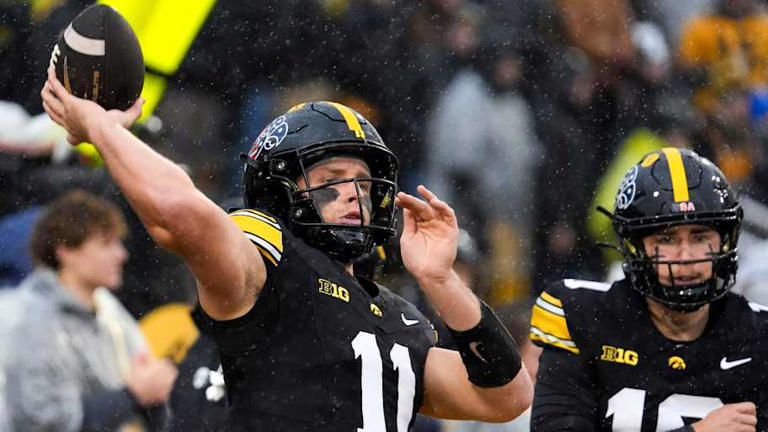
Comments from Iowa and Oregon officials After the Hawkeyes’ 84-66 victory, spark debate The final score was Iowa 84, Oregon 66, but that doesn’t explain why people are still talking about this game.
Minutes later, Iowa head coach Ben McCollum made comments that transformed a standard postgame press conference into a larger conversation about standards in collegiate basketball. This was the real headline. A dominant Hawkeye performance on the floor was soon overshadowed by the Iowa Oregon officiating remarks.
Iowa Oregon officiating comments shift focus beyond the score
Inside Carver-Hawkeye Arena, Iowa dominated the entire game. The Hawkeyes produced high-percentage looks, moved the ball quickly, and prevented Oregon from developing a steady offensive rhythm. The Ducks were unable to focus on a single threat because several players scored in double figures.
Defensively, Iowa dictated tempo. By the middle of the second half, the result was clear because Oregon was unable to produce sustained runs or string together stops. Iowa’s ability to respond immediately whenever Oregon threatened ensured the Ducks were never seriously positioned to flip the game.
Yet McCollum barely referenced the stat sheet.
“Don’t just look at the score,” McCollum told reporters. “We played well tonight, but there are still things that need to be addressed.”
The room grew noticeably quieter.
McCollum cited instances of excessive physicality and uneven enforcement that, in his opinion, put players at needless risk without naming officials. “Guys were essentially told to ‘play through it’ in certain situations,” he said. “Regardless of the outcome or situation, player safety and fairness must be important.”
Why McCollum’s timing mattered
The controversy in the college basketball community was sparked by the timing of the Iowa Oregon officiating remarks. Iowa had just won by a commanding 18 points. There was no controversial call that altered the outcome. No drama at the end of the game. No reason, on the surface, to complain.
After a decisive victory, some analysts questioned whether it was necessary to voice concerns about the officiating. From that angle, the most important lesson should have been Iowa’s execution. Others thought McCollum made a thoughtful and sincere choice.
Others saw McCollum’s decision as calculated and sincere.
McCollum avoided coming across as defensive or self-serving by speaking following a victory rather than a defeat. His message was not one of justifications. It had to do with consistency. According to McCollum, “the players bear the consequences when standards change depending on game flow.” On the internet, former coaches and athletes expressed a similar opinion, pointing out that discussions about officiating frequently take place in private but seldom appear in public forums following easy wins.
Iowa’s performance backed up the message
What strengthened McCollum’s stance was Iowa’s play. Whistles and momentum swings were not used by the Hawkeyes. They earned clean looks through ball movement, spacing, and disciplined execution. Oregon, on the other hand, put up a strong fight but was unable to match Iowa’s poise.
During crucial moments, especially after halftime, Iowa tightened their defense and controlled possessions, holding the Ducks in check. The victory also demonstrated noticeable advancements made under McCollum’s direction. When Oregon tried to accelerate the game, Iowa responded coolly, communicated defensively, and appeared connected on both ends of the court.
The context was important. McCollum wasn’t deflecting from a sloppy performance. Despite one of Iowa’s best efforts of the season, he was exaggerating a worry.
A postgame moment that lingered
By the end of the evening, the scoreboard had disappeared into the distance. A scoring run or a highlight dunk did not leave a lasting impression. It was a coach’s choice to address what he believed to be a critical issue affecting the sport. In college basketball, postgame press conferences after wins are usually predictable praise the effort, credit the opponent, move on.
McCollum chose a different course of action. Iowa prevailed handily. However, the remarks made by the Iowa Oregon officials made sure that the discussion continued after the final buzzer.
