It didn’t take long for Iowa football to make its debut on the 2026 transfer portal, and the Hawkeyes did it in a very consistent manner. Iowa secured a commitment that immediately bolsters a position group that had begun to appear thin just days after the portal’s official opening on Friday. Anthony Hawkins, a former Villanova safety who was among the FCS’s most productive young defenders last season, declared on Sunday that he is moving to Iowa City.
The timing was crucial. The portal takes away as fast as it gives, and Iowa had already witnessed a number of significant contributors add their names to the database. That is the unsettling truth of contemporary college football. However, the atmosphere quickly changes when a staff like Kirk Ferentz turns things around and acquires a player who obviously fits the program’s identity. Hawkins’ dedication accomplished just that.
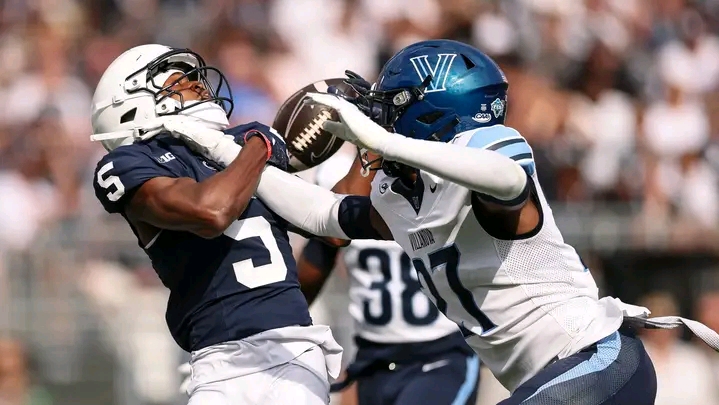
Hawkins has three more years of eligibility when he arrives at Iowa, which is a huge advantage in the current roster-building environment. He has the length and physicality that Iowa looks for in its defensive backs, standing six feet three inches tall and weighing 195 pounds. He contributes production, which is more significant. Hawkins recorded 59 total tackles, added four tackles for loss, intercepted two passes, and forced a fumble during a stellar freshman campaign at Villanova in 2025. He was named an FCS freshman All-American as a result of those numbers, and FBS programs seeking quick assistance soon became aware of him.
It wasn’t just Iowa that received attention. Before deciding on the Hawkeyes, Hawkins considered offers from a number of schools, including Kentucky and Wisconsin. That choice says a lot, especially since Kentucky has been active on the portal and Wisconsin is a well-known Big Ten rival. Hawkins believed that Iowa offered the best blend of opportunity, development, and defensive heritage. Phil Parker is the first in that lineage.
Iowa’s defensive coordinator consistently produces disciplined, effective defenders from overlooked recruits and underappreciated transfers. Under Parker’s direction, safeties in particular have flourished, and Hawkins appears to be the next player who might profit from that system. He fits Iowa’s requirements for the back end of its defense perfectly because of his size, instincts, and willingness to tackle.
The need is also genuine. Xavier Nwankpa, a three-year starter for Iowa, is graduating, creating a big gap at safety. Although it will be difficult to replace Nwankpa’s leadership and experience, Hawkins offers the staff a realistic opportunity to take over that position sooner rather than later. There will be more room for flexibility in the secondary if Hawkins can manage those duties. Zach Lutmer may be among the most significant repercussions.
In 2025, Lutmer flourished in Iowa’s financial situation by offering a hybrid presence that enabled the defense to be aggressive and inventive. It would be ideal to keep Lutmer in that position, and Hawkins’ arrival makes that more likely. Iowa can now make decisions based on strengths rather than shuffling pieces out of necessity.
This commitment seems like a traditional Iowa portal victory when viewed in a larger context. Hawkins is not an ostentatious name from a blue-blood program. He is a driven, accomplished athlete who excelled at his level and now aspires to compete in the Big Ten. That strategy has worked well for Iowa in the past and fits with the program’s preferred roster construction method.
Additionally, it conveys the idea that Iowa can participate in the portal once the appropriate fit is found. Landing Hawkins early helps stabilize the group and provides the coaching staff with clarity as the offseason progresses, as the secondary is undergoing change due to graduations and transfers. Although there is still much work to be done, this is a good beginning.
Hawkins sees the relocation as both a challenge and an opportunity. It’s difficult to move from FCS to the Big Ten, particularly for a role that requires discipline and communication. However, Iowa’s system has a history of facilitating that shift by positioning players for success. Hawkins could quickly establish himself as a reliable member of the defense if he keeps up the pace he demonstrated as a freshman.

In the end, Iowa football improved as soon as Hawkins committed. He meets a need, works well with the plan, and has potential that goes beyond a single season. This served as a reminder of how successful the process can be when everything goes according to plan in a time when transfer portals frequently feel chaotic and unpredictable. Anthony Hawkins appears to be a reinforcement that the Hawkeyes should be thrilled about going into 2026.
Acquiring a player like Hawkins also provides an emotional boost. Iowa football fans are aware of how important the defense has been to the team, particularly during seasons when the offense has had to work hard to score points. This identity is strengthened by the addition of a proven playmaker in the secondary, which also provides assurance that the bar isn’t falling.
This identity is strengthened by the addition of a proven playmaker in the secondary, which also provides assurance that the bar isn’t falling. It’s simple to picture Hawkins emerging from the tunnel at Kinnick Stadium, embracing the Hawkeyes’ renowned physical style and feeding off the crowd. Even in a time of frequent roster changes, moments like these, when a new player commits and optimism subtly grows, are part of what keeps college football interesting. Hawkins’ story could serve as another illustration of how Iowa can turn opportunity into sustained defensive excellence in future seasons if development follows production.