After finishing the 2025 season on a high note, the Iowa football program is dealing with yet another wave of staff turnover. The Hawkeyes finished the season with an impressive victory over No. 14 Vanderbilt in the ReliaQuest Bowl and a 9-4 overall record, which included a 6-3 record in Big Ten play. That victory signaled a potential turning point for Iowa in big games and ended a frustrating 0-13 streak against ranked teams that had persisted since 2021. It was more than just a bowl victory.
The team was celebrating on the field, but what was happening on the sidelines was quite different. Fans of the Iowa program are feeling the effects of the staff room’s decline. The first setback was the announcement that longtime Hawkeyes coach LeVar Woods, who had grown to be a pillar of the team, was leaving to work for Pat Fitzgerald at Michigan State. Although Woods’ departure was difficult, Iowa’s offseason difficulties persisted.
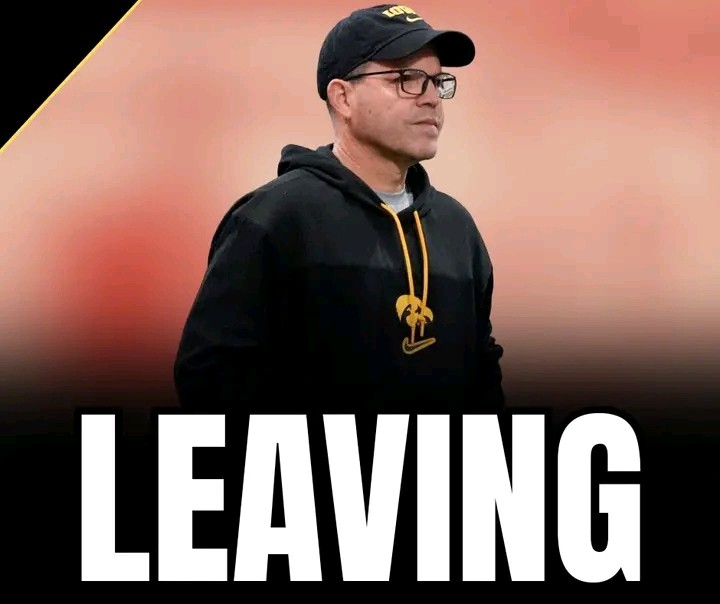
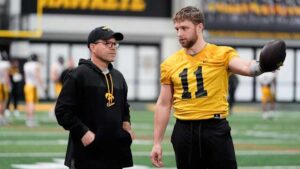
Senior analyst Warren Ruggiero has confirmed that he is leaving Iowa football to work for James Franklin at Virginia Tech, so the program is now dealing with yet another setback. Tyler Tachman of the Des Moines Register reports that Ruggiero will work at Blacksburg as a senior offensive analyst. Despite only spending one season at Iowa, he had a significant impact on the offense.
Ruggiero is regarded as an offensive innovator in the coaching community and is credited with creating the “slow mesh” scheme, which the Hawkeyes used in their offense this past season. Iowa finished the season ranked No. 54 nationally in scoring offense, averaging 29.3 points per game, and scored 34 points against Vanderbilt in the bowl game thanks in large part to the slow mesh. Compared to 2024, when Iowa averaged 27.7 points per game and was ranked No. 72 overall, that represents a significant improvement. Ruggiero’s strategy undoubtedly contributed to the offense’s advancement, and his departure creates a big void in the Hawkeyes’ strategic toolbox.
Ruggiero’s reasons for moving have not been made public. The title shift from “senior analyst” at Iowa to “senior offensive analyst” at Virginia Tech may appear insignificant on the surface, but in coaching hierarchies, minute variations in role and responsibility can have significant implications. This could be a chance for Ruggiero to increase his influence because analysts frequently have varying degrees of influence over quarterback development, play design, and game planning.
Because the offense appeared to be gaining momentum, Iowa supporters are hurt by the defeat. The bowl performance demonstrated what the team could accomplish with the correct direction, and the 29.3 points per game were an improvement. The offense had a distinct advantage because of the slow mesh in particular, which slowed down defensive reads and created opportunities for both the passing and running games. It is unclear how Iowa will sustain that momentum in 2026 after losing the system’s creator.
This series of departures highlights the difficulty of staff retention in college football off the field. Upward mobility, or the opportunity to join a new program under a well-known coach like James Franklin, can be alluring because coaching staffs are by their very nature dynamic. Successful programs frequently act as launching pads for coaching careers, as demonstrated by LeVar Woods’ transfer to Michigan State and Ruggiero’s transfer to Virginia Tech. Although these actions make sense, they force schools like Iowa to rebuild and make adjustments, sometimes in the middle of recruiting cycles or early season preparation.
In 2026, the Hawkeyes’ capacity to handle these adjustments will be put to the test. One of the main concerns will be offensive continuity. New coaching philosophies may present a learning curve for players who flourished under Ruggiero’s tutelage, especially quarterbacks and skill position players. After what seemed to be a season of progress, Iowa will need to maintain the offense’s progress while incorporating new ideas from whoever takes Ruggiero’s place.
Additionally, fans will be observing how head coach Kirk Ferentz and his team handle these departures. Ferentz has a track record of consistent leadership and flexibility, but even for an established program, the sudden departure of two important employees poses a challenge. Having experienced minds in the building is crucial for recruiting, development, and in-season adjustments. To maintain momentum, Woods and Ruggiero’s void must be filled as soon as possible.
The emotional aspect of this is also worth mentioning. It can be upsetting for players, particularly those who supported the slow mesh system, to see a coach who contributed to their success depart the program. Peak performance depends on team chemistry and coaching staff trust, and it might take some time to get used to a new offensive analyst. However, this also offers a chance to present fresh concepts and viewpoints, which could change Iowa’s offense in ways that supporters haven’t yet anticipated.
There is cause for optimism in spite of these departures. Iowa can compete at a high level even against ranked opponents, as demonstrated by their victory over Vanderbilt. Positive momentum heading into 2026, the successful integration of an innovative offensive scheme, and the improvement in scoring offense are all positive indicators. The program will probably adjust once more after enduring staff turnover in the past.
Ultimately, LeVar Woods’ departure and Warren Ruggiero’s subsequent transfer to Virginia Tech serve as a reminder of the dynamic nature of college football coaching. Although Iowa’s loss of such a brilliant offensive mind after a season of quantifiable progress is disappointing, the program has shown resiliency in the past. One of the stories to keep an eye on as the Hawkeyes get ready for the 2026 campaign will be how they react, both in terms of staff replacements and offensive continuity. For the time being, supporters can consider the accomplishments of 2025 while anticipating the upcoming changes, understanding that nothing stays the same in college football for very long.