

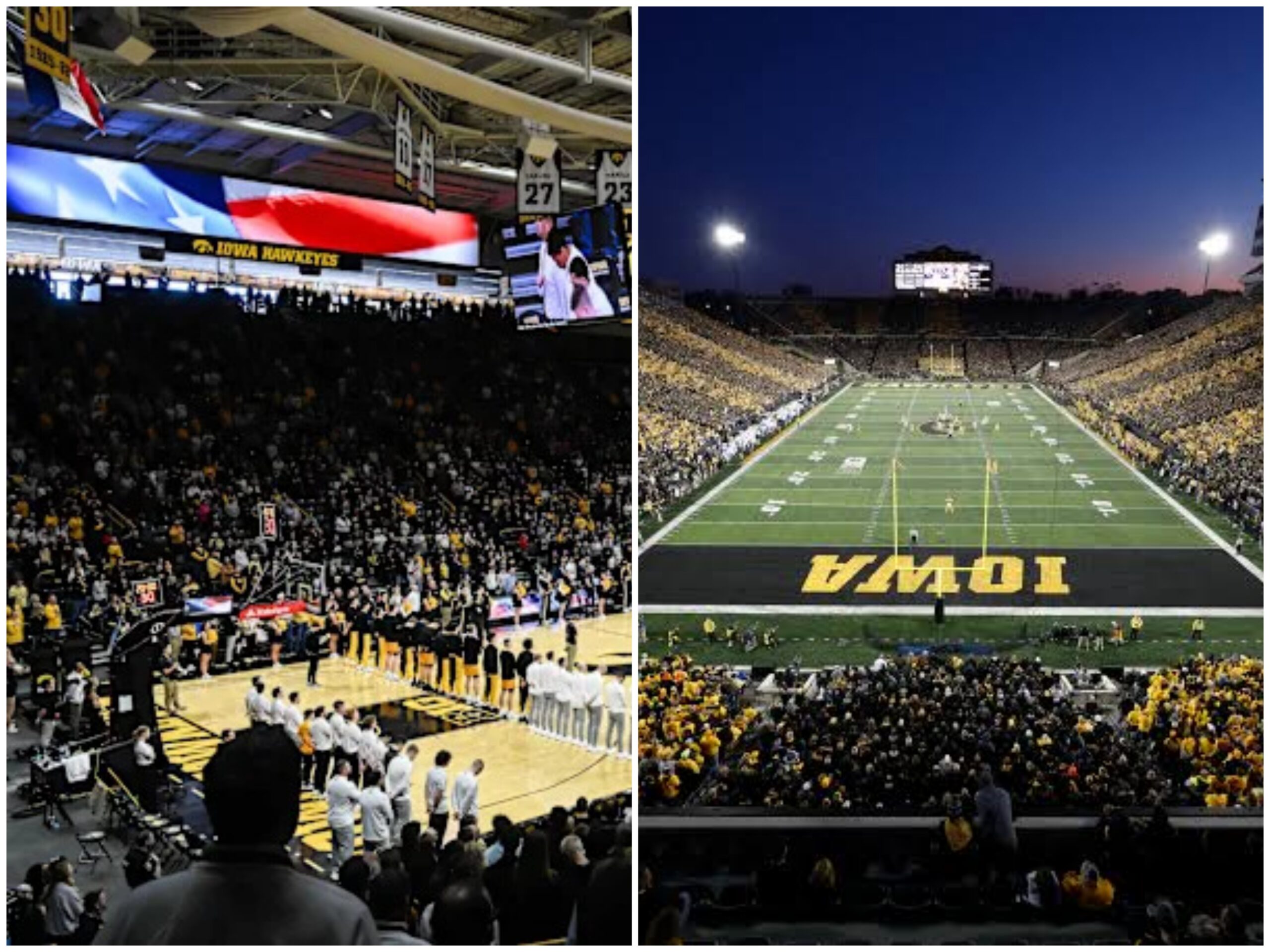
A significant change could be on the way for Iowa fans attending games in Iowa City, and it’s already generating discussion across the Hawkeye community.
For decades, game days at Kinnick Stadium and Carver-Hawkeye Arena have been defined by tradition, pageantry, and one of the most passionate fan bases in college athletics. Now, a reviewed plan that would allow alcohol sales during football and basketball games is putting a new spotlight on the game-day experience.
The proposal would impact two of the most recognizable venues in college sports. Kinnick Stadium, home of Iowa football, regularly draws crowds exceeding 65,000 fans on Saturdays during the fall. Carver-Hawkeye Arena serves as the home of Iowa men’s and women’s basketball and has hosted countless memorable moments over the years.
If implemented as expected, the move would bring Iowa in line with a growing number of major athletic programs that have expanded alcohol availability inside their stadiums and arenas. Across college athletics, schools have increasingly embraced alcohol sales as a way to enhance fan experience while creating additional revenue opportunities.
For many Hawkeye supporters, the development represents one of the biggest off-field changes in recent years.
The discussion isn’t happening in a vacuum. Throughout college sports, universities have faced increasing financial pressures as conferences expand, media rights evolve, and athlete compensation continues to reshape the landscape. Athletic departments are constantly searching for new revenue streams that can help support facilities, scholarships, staffing, and competitive success.
Alcohol sales have emerged as one of those opportunities.
Supporters of the move argue that many fans already consume alcohol before entering stadiums. They believe regulated in-venue sales can provide a safer and more controlled environment while also reducing the rush of consumption that sometimes occurs before kickoff or tipoff.
Others view the change as part of the natural evolution of the modern sports experience.
Professional sports venues have long offered alcohol sales, and many college programs have gradually followed suit. As fan expectations continue to change, athletic departments have been challenged to find ways to improve the overall experience without compromising the traditions that make college sports unique.
At Iowa, tradition remains a powerful part of the Hawkeye identity.
Few moments in sports are as iconic as the famous Hawkeye Wave at Kinnick Stadium, where fans, players, and coaches turn toward the nearby children’s hospital at the end of the first quarter. The gesture has become one of the most celebrated traditions in American sports and serves as a reminder that Iowa athletics are built on more than wins and losses.
Because of that history, any major game-day change naturally attracts attention.
Many fans are curious about how alcohol sales would be managed inside the venues. Questions have centered on concession locations, purchasing limits, identification requirements, and operational procedures designed to maintain a family-friendly atmosphere.
Those details often play a critical role whenever universities introduce new policies.
Athletic administrators at schools that have already adopted similar programs have generally emphasized responsible consumption, staff training, and security measures. Their goal has been to balance fan convenience with safety and crowd management.
For Hawkeye football fans, the impact could be most noticeable on Saturdays at Kinnick Stadium.
The venue is widely regarded as one of the toughest environments in college football. Visiting teams frequently speak about the intensity of the crowd, especially during night games when the stadium atmosphere reaches another level.
Adding alcohol sales would represent a notable shift in how fans experience those events.
Basketball supporters could also see changes inside Carver-Hawkeye Arena. The venue has experienced some of the most electric moments in program history, including NCAA Tournament runs, conference title races, and record-breaking performances from some of the biggest names to wear the black and gold.
As attendance remains an important focus for athletic programs nationwide, many schools are exploring ways to create a more attractive in-arena experience.
The financial aspect of the discussion cannot be ignored.
Across the country, universities that have introduced alcohol sales have reported meaningful increases in concession revenue. While financial outcomes vary by institution, administrators often point to the additional revenue as a valuable resource that can be reinvested into athletic programs and fan amenities.
That possibility is one reason the topic continues to attract attention.
For some Hawkeye supporters, the change represents modernization. For others, it raises questions about preserving the traditions and atmosphere that have made Iowa athletics special for generations.
Regardless of where fans stand, one thing is clear: the conversation has become one of the most closely watched developments surrounding Iowa athletics.
As details continue to emerge, supporters will be watching closely to see how the policy is implemented, what safeguards are put in place, and how the new experience ultimately affects game days in Iowa City.
Whether you’re a lifelong season-ticket holder, a student preparing for another football Saturday, or a basketball fan eager for the next big game at Carver-Hawkeye Arena, the potential change signals a new chapter in the Hawkeye game-day experience.
And if the plan moves forward as expected, the next time fans walk through the gates at Kinnick Stadium or take their seats inside Carver-Hawkeye Arena, they may notice that one of the most talked-about changes in recent Iowa athletics history has officially arrived.
