

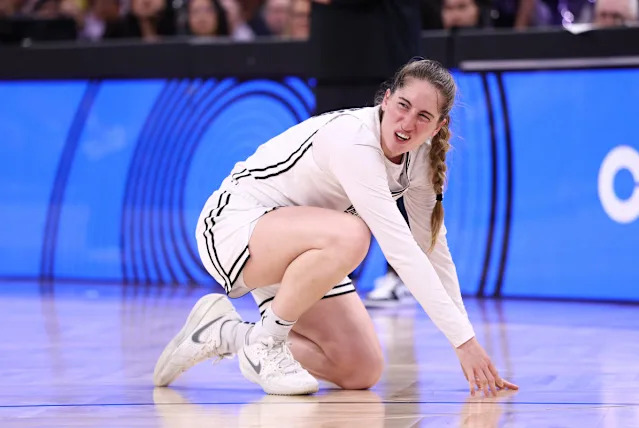
A hypothetical accident report involving Kate Martin would naturally draw attention from basketball fans, particularly those who followed her career with the Iowa Hawkeyes. But an important distinction must come first: there is no verified information in this scenario establishing that an accident has happened. The headline describes a hypothetical situation, not a confirmed event, and it should not be shared as breaking news.
Martin became familiar to many supporters through her time in Iowa City, where she developed into a respected member of the Hawkeyes women’s basketball program. Her performances, leadership and competitive approach helped make her a recognisable figure among college basketball followers. For fans who watched the team closely, news involving her name would be enough to prompt concern. That reaction, however, should never be mistaken for evidence that something has taken place.
In a situation like this, the first responsibility of anyone discussing an alarming report is to establish what is actually known. A headline can travel quickly across social media, group chats and sports pages, often reaching people before its context has been checked. When the subject is a real person, that speed can cause unnecessary worry and may spread a damaging false impression. A dramatic phrase is not confirmation, and repetition does not turn an unverified claim into fact.
If a genuine emergency involving a public figure were ever reported, reliable updates would be expected from appropriate representatives, official organisations or credible news outlets. Until such information exists, readers should avoid guessing about injuries, causes, locations or personal circumstances. Those details can be deeply private, and inventing them would add speculation rather than understanding. Respectful reporting means being clear about uncertainty instead of filling gaps with assumptions.
For Iowa basketball supporters, Martin’s connection to the program is part of why her name carries meaning. Fans remember the effort required to compete at a high level, the pressure of important games and the relationships built between players, coaches and supporters. That history can create a strong sense of connection, even after a player’s college career has moved into a new chapter. Concern for an athlete’s wellbeing is understandable, but it should be expressed without turning a hypothetical headline into a claim about her life.
The wider lesson reaches beyond one player or one basketball community. Sports news now moves through a crowded online environment where attention-grabbing posts can be published and reposted in seconds. Some are accurate; others are incomplete, misleading or entirely invented. Readers can help limit the harm by checking the date, looking for an identifiable original source and comparing the claim with established reporting. If a post offers no evidence, it is better to pause than to pass it on.
Editors and publishers also have a responsibility to choose language carefully. Words such as “report,” “breaking” and “awaits answers” can suggest that an event has occurred, even when the underlying material is only a hypothetical prompt or an unconfirmed rumour. A responsible headline should state the uncertainty plainly. If the story is fictional or hypothetical, that fact belongs near the beginning, not in a small disclaimer after several paragraphs that may already have misled readers.
At present, this scenario provides no confirmed details about an accident involving Kate Martin. There is therefore no verified development for fans to interpret and no basis for claims about her condition. The most accurate response is to treat the subject as hypothetical and wait for trustworthy information before drawing conclusions. That approach may feel less dramatic than circulating a sensational post, but accuracy matters more than urgency.
Basketball communities are built on passion, loyalty and concern for the people who make the game memorable. Those qualities are strongest when they are matched with patience and care. Supporters can continue to appreciate Martin’s contributions to Iowa basketball without spreading an unsupported story about her safety. Should credible information ever become available, it can be considered on its merits. Until then, the headline should remain what it says it is: a hypothetical scenario, not news of an actual accident.
For now, the sensible course is simple: check before sharing, avoid speculation and allow verified sources to speak. A person’s wellbeing deserves care, not rumours dressed up as headlines.
