

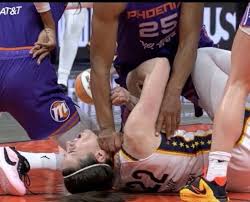
Caitlin Clark has once again found herself at the center of one of the biggest conversations in sports, and this time the debate stretches far beyond points, assists, or highlight-reel shots. As the Indiana Fever guard continues to command national attention, fresh discussions about how she’s treated by opponents, the media, and the basketball community have reignited, leaving fans asking the same question: Why does Clark continue to generate so much controversy?
The latest debate intensified after television commentators and sports analysts revisited the physical defense Clark has faced throughout her professional career. Supporters argue that the Fever star has been subjected to unusually aggressive play, while critics insist the attention comes naturally with being the league’s biggest attraction. The differing opinions have fueled another wave of passionate reactions across social media and sports television.
Clark entered the WNBA carrying unprecedented expectations after a record-breaking college career at Iowa, where she became the NCAA Division I all-time leading scorer. Since arriving in the league, she has helped attract larger television audiences, increase attendance across multiple arenas, and bring millions of new viewers to women’s basketball. Those achievements have also made her one of the most closely watched athletes in American sports.
Despite her popularity, Clark’s rise has not been free of criticism. Every hard foul, heated exchange, and controversial officiating decision involving the Fever guard quickly becomes a national talking point. Some analysts believe that’s simply the reality for any superstar, while others argue the intensity of the scrutiny surrounding Clark is unlike anything the WNBA has experienced before.
One of the biggest disagreements centers on what drives the criticism directed toward Clark. Some commentators believe basketball competitiveness alone explains the physical style opponents use against her. Others argue that factors such as race, media attention, marketing opportunities, and the rapid growth of the league have all contributed to the conversation surrounding the Indiana guard.
The debate has also highlighted how different players have approached discussions about diversity and representation within the WNBA. Several prominent stars have publicly spoken about the league’s history and the contributions of Black athletes, emphasizing the importance of recognizing those who helped build women’s professional basketball long before its recent surge in popularity.
Clark, meanwhile, has largely avoided becoming deeply involved in political or cultural debates. Throughout her college and professional career, she has consistently redirected attention toward basketball, her teammates, and improving her game. That approach has earned praise from many fans who appreciate her focus on competition, while others believe high-profile athletes have an opportunity to speak more openly on broader social issues.
The media’s coverage of Clark has become another source of disagreement. Television personalities, columnists, and former players frequently offer sharply different interpretations of the same incidents. A routine foul or postgame comment involving Clark can quickly become the subject of national debate, creating headlines that often dominate sports news cycles for days.
Supporters point to the enormous business impact Clark has had since entering the WNBA. Television ratings have climbed, ticket demand has surged in cities where the Fever play, and merchandise sales have remained among the league’s highest. Many believe those numbers demonstrate the transformational effect she has had on women’s basketball, regardless of the ongoing controversies surrounding her.
Critics, however, caution against reducing the league’s success to one player. They argue that numerous established stars have spent years building the WNBA’s foundation and deserve recognition alongside Clark for helping elevate the sport. That perspective continues to shape many conversations about the league’s future and how credit should be distributed among its biggest names.
For Clark herself, little appears to have changed. She continues to attract packed arenas, intense defensive attention, and relentless media coverage nearly every time she steps on the floor. Whether she records a double-double, delivers a game-winning performance, or simply becomes involved in another physical contest, the spotlight rarely moves elsewhere.
As the WNBA season continues, one thing remains clear: Caitlin Clark is no longer just one of the league’s brightest young stars she has become its biggest conversation. Every game seems to spark another national discussion, whether about basketball strategy, officiating, media narratives, or the league’s evolving identity.
The differing opinions surrounding Clark are unlikely to disappear anytime soon. What supporters and critics can agree on, however, is that few athletes have transformed the visibility of women’s basketball as quickly as she has. Whether viewed as the face of the league, its most scrutinized player, or simply an elite competitor focused on winning games, Clark continues to shape the conversation every time she takes the court and the debate surrounding her shows no signs of slowing down.
