

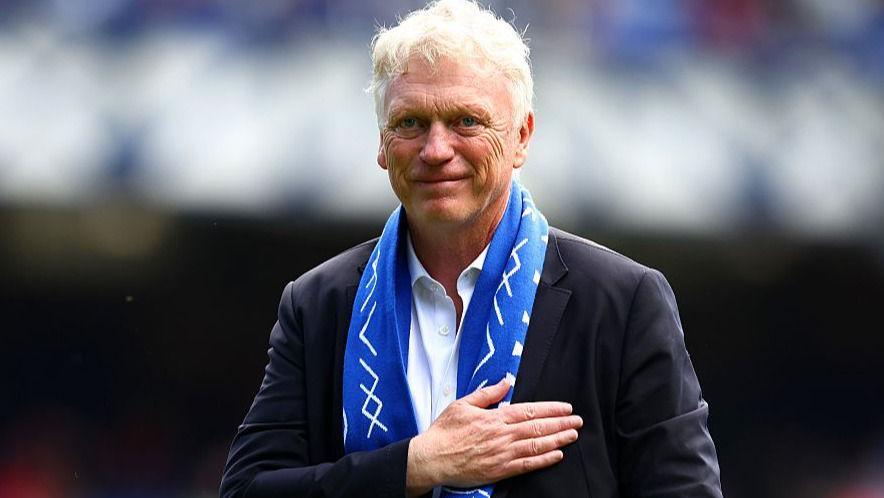
Imagine the final whistle at Hill Dickinson Stadium, the stands beginning to empty and David Moyes walking slowly toward the tunnel for the last time as Everton manager. It’s a scenario that would send shockwaves through Merseyside, because the Scot isn’t just another coach at Goodison Park’s successor stadium—he’s a manager whose name is deeply woven into Everton’s modern history.
To be clear, David Moyes has not stepped down as Everton head coach. He remains in charge heading into the 2026/27 Premier League campaign, after returning to the club in January 2025 for a second spell. But if the day ever comes when Moyes decides his work is finished, Everton would suddenly face one of the biggest managerial transitions in the club’s recent history.
And the timing would make it even more significant. Everton finished 13th last season, despite moving to within three points of the Champions League places on March 21 before failing to win any of their remaining matches. With European football now firmly in the club’s sights, the pressure on Moyes and his squad has changed from simply surviving to proving Everton can finally move forward.
The Moyes Era Has Come Full Circle
Moyes already knows exactly what Everton means.
His first spell began in March 2002, when he inherited a side battling near the relegation zone. He quickly turned the club around, eventually guiding Everton to fourth place in 2004/05—their highest Premier League finish at the time—and Champions League qualification.
More than two decades later, he returned to a very different Everton. The club had endured managerial upheaval, financial uncertainty and years of relegation anxiety. Moyes’ immediate task was to restore stability, and although last season ended with disappointment, Everton showed enough improvement for optimism to remain alive.
The challenge now is whether he can take that next step.
Everton supporters aren’t demanding perfection. They want to see a team that can compete consistently, attack with greater confidence and turn promising spells into points.
A New Everton Is Taking Shape
Moyes won’t have to rebuild from scratch.
Jordan Pickford remains the experienced presence behind the back line, while Jarrad Branthwaite has emerged as one of the most important young defenders in the squad. James Tarkowski provides leadership and physicality, with Vitalii Mykolenko and the rest of the defensive group expected to carry much of the responsibility.
In midfield, Kiernan Dewsbury-Hall is becoming increasingly important to Everton’s plans. The club has also added Christian Nørgaard, giving Moyes another experienced option in the centre of the pitch.
Then there’s Iliman Ndiaye, whose ability to carry the ball and create danger gives Everton an attacking dimension they desperately need.
Up front, Beto remains a major figure after finishing last season as Everton’s leading scorer with 10 goals. Thierno Barry, meanwhile, has shown encouraging signs during pre-season and could provide another option as Moyes looks for greater attacking output.
And Everton have made one particularly eye-catching change this summer.
Brennan Johnson Arrives as Dwight McNeil Leaves
On August 11, Everton and Crystal Palace completed a straight player swap involving Brennan Johnson and Dwight McNeil.
Johnson, 25, signed a four-year contract with Everton after spending the previous part of the year at Palace. McNeil, meanwhile, ended his Everton spell after making 128 appearances, scoring 15 goals and registering 19 assists.
For Moyes, Johnson could be a crucial piece.
Everton’s attack lacked consistency last season, and Johnson brings Premier League experience, pace and the ability to operate from wide areas. If he can rediscover the form he showed earlier in his career, his arrival could give Everton another weapon in transition.
But What Happens If Moyes Eventually Walks Away?
That’s where the real uncertainty begins.
Replacing Moyes would mean more than hiring another tactician. Everton would need someone capable of handling the expectations surrounding a historic club, managing a squad containing experienced leaders such as Pickford and Tarkowski while developing younger players like Branthwaite and integrating new arrivals.
The next manager would also inherit the expectations attached to Hill Dickinson Stadium.
Everton’s new home represents a fresh chapter, but supporters want the football to match the ambition of the surroundings. The club has already shown flashes of progress under Moyes; the next step is turning those flashes into a sustained challenge for the top half—and potentially Europe.
For now, there is no farewell.
Moyes is still on the touchline. Everton are still preparing for the new Premier League season, and Brennan Johnson has just joined the squad.
But football changes quickly.
And if the day eventually comes when Moyes removes his coat, takes one final look around Hill Dickinson Stadium and heads down the tunnel, Everton won’t simply be saying goodbye to a manager.
They’ll be closing another major chapter—and asking whether the man who follows him can finally turn “Nil Satis Nisi Optimum” from a motto into a new era of success.
