

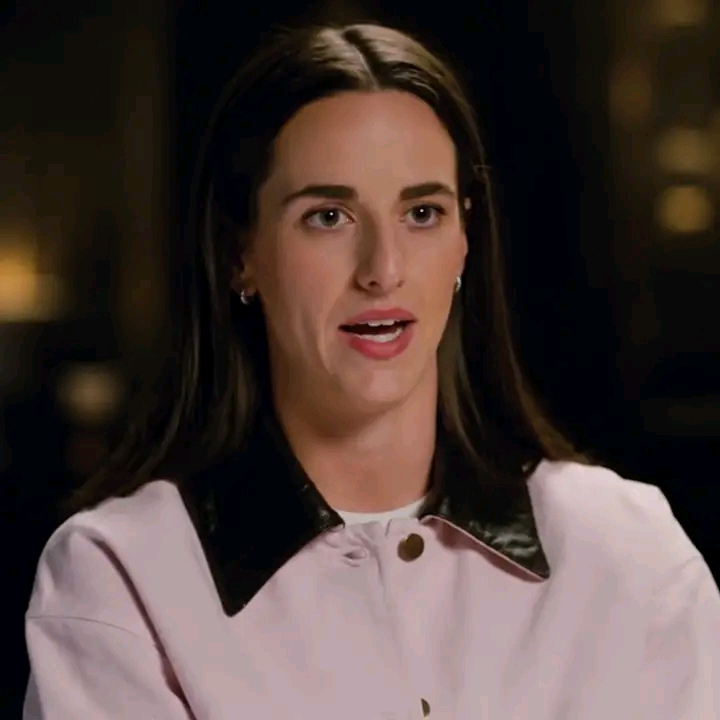
Caitlin Clark has made it clear that she knows people want to hear her opinion on almost everything. But when the conversation turns toward politically sensitive issues, the Indiana Fever superstar says she’d rather let the people running the sport handle those debates while she concentrates on basketball.
Clark was asked about transgender inclusion in women’s sports after Fever teammate Sophie Cunningham publicly shared her own position during an interview with ESPN. Cunningham said she had received criticism after discussing the issue, insisting that her comments were about showing love while also being honest about her desire to protect young girls competing in sports.
The subject eventually reached Clark following Indiana’s loss to the Minnesota Lynx last Sunday. Rather than taking a public position, Clark pointed toward the WNBA and its governing bodies, saying the issue should be addressed through discussions between leagues, officials and athletes.
“It’s not really a discussion we have in our locker room,” Clark said. “It’s for leagues and governing bodies to work with their athletes to find solutions, but my focus is on basketball.”
That answer didn’t stop the conversation. If anything, it intensified the spotlight surrounding one of the most recognizable athletes in American sports.
Clark was asked again Thursday night about political issues and whether there’s a point when she believes she should publicly speak about them. Her response was notably personal rather than political.
“I think first and foremost, like you know, you speak when you feel like you want to speak,” Clark told reporters. “I try to just show up and be myself every single day.”
For Clark, that appears to be the dividing line. She isn’t saying she has nothing to think about outside basketball; she’s saying she doesn’t believe being one of the WNBA’s biggest stars automatically means she has to become a spokesperson for every controversial issue.
That distinction has become increasingly important because Clark’s popularity means virtually every public comment she makes can become a national conversation within minutes.
Her recent comments also came against the backdrop of a heated debate surrounding Cunningham. The Fever guard had explained to ESPN that she believed love and honesty could coexist, while arguing that young girls shouldn’t have to compete against biological men in women’s sports.
Clark chose not to endorse or reject Cunningham’s position publicly. Instead, she placed responsibility on the organizations that create and enforce the rules.
That decision drew criticism from former Fox News personality Megyn Kelly, who described Clark as a “coward” for declining to offer a stronger position.
But Barstool Sports founder Dave Portnoy pushed back forcefully.
“Absolute moron/idiot to call Caitlin a coward for this answer,” Portnoy wrote, arguing that Clark doesn’t owe anyone a political position simply because she’s famous. He added that she shouldn’t be turned into somebody else’s “political talking point” when her stated priority is playing basketball.
The disagreement highlights an unusual reality surrounding Clark. Her fame has grown so rapidly that even choosing not to comment has become news.
On the court, however, Clark’s attention remains firmly centered on the Fever. She continues to carry enormous expectations whenever she steps onto the floor, and every game brings another reminder of how closely the public follows her career.
That was evident again on Aug. 6, when Clark faced the Las Vegas Aces at Gainbridge Fieldhouse in Indianapolis. Whether she scores, passes, speaks publicly or stays quiet, the attention surrounding her rarely disappears.
There’s also a larger question underneath all of this: Does being the WNBA’s most popular player create an obligation to speak on every major social issue?
Clark’s recent answers suggest she doesn’t see it that way.
She appears comfortable allowing leagues and governing bodies to address questions involving policy while she decides for herself when, where and whether she wants to discuss politics.
For now, her message is remarkably simple: she’ll speak when she feels it’s right, remain herself, and keep her primary focus on basketball.
And given the enormous attention surrounding Caitlin Clark, even saying less can sometimes become the biggest story of all.
