

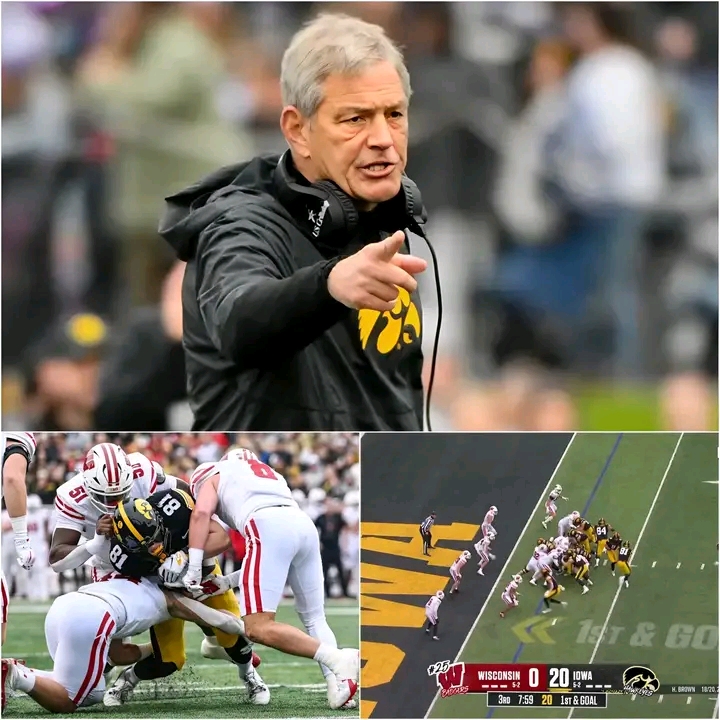
Iowa’s Dominant 30–0 Victory Over Wisconsin Overshadowed by Controversial Moments and Questions About Sportsmanship
Iowa’s 30–0 victory over Wisconsin should have been remembered as a commanding performance. The Hawkeyes controlled the scoreboard, kept their opponent out of the end zone and delivered the kind of result every team hopes to produce. Yet the final score was not the only thing that stood out. The game also left questions about sportsmanship, player safety and how officials respond when emotions spill over.
The concern was not simply that football is a physical sport. Hard tackles, fierce blocking and intense competition are part of the game. Players understand that contact comes with the job, and nobody expects a contest between two Big Ten programs to be gentle. There is, however, a difference between playing aggressively within the rules and making contact that appears to have little to do with stopping the play.
That distinction matters. When a defender pursues the ball carrier or fights through a block, the purpose is clear: make a football play. When attention seems to shift from the play itself to an opponent, questions naturally follow. Was the contact necessary? Was it avoidable? Did it cross the line into unsportsmanlike conduct? Those are issues officials are expected to assess in real time, and they deserve careful attention after the final whistle as well.
The moments that followed can shape how an incident is remembered. Taunting, gestures and visible exchanges between players may seem minor beside the physical collision, but they can intensify an already heated situation. They also send a message about what competitors believe they can get away with. Passion is valuable in college football. Disrespect should not be mistaken for passion, and intimidation should never become part of the standard.
That is why the officials’ role is so important. Their responsibility is not limited to keeping the clock moving or determining whether a pass was complete. They must enforce the rules consistently, protect players where the rules allow, and make clear that unnecessary conduct has consequences. No officiating crew can catch every detail at full speed. Still, when a moment raises legitimate concerns, the league should be willing to review it and explain the standard being applied.
Player safety cannot be treated as a slogan that appears in preseason statements and disappears when a game becomes emotional. College athletes put their health, time and future opportunities on the line every time they step onto the field. Coaches, officials and administrators all have a part in ensuring that the competitive environment remains demanding without becoming reckless. That responsibility applies regardless of the score, the team involved or the importance of the game.
For Iowa, the 30–0 result remains a significant achievement. The Hawkeyes did what they needed to do on the field, and their performance deserves recognition. A shutout requires discipline across all three phases, sustained effort and attention to detail. The players who stayed focused, executed their assignments and avoided being drawn into distractions helped their team finish the night with a decisive win.
But celebrating that result does not mean ignoring concerns about how the game unfolded. A team can be proud of its performance while still believing that certain moments deserve scrutiny. In fact, holding the sport to a higher standard is part of respecting it. The goal should not be to turn every hard collision into a controversy. It should be to distinguish legitimate football contact from conduct that places another player at unnecessary risk.
The same standard must apply to everyone. Officials should not be judged by which team benefits from a call, and players should not receive different treatment because of their reputation or the situation on the scoreboard. Consistency builds trust. When questionable actions are overlooked, frustration grows among players, coaches and supporters who expect the rules to mean the same thing from one Saturday to the next.
In the end, Iowa’s victory over Wisconsin will be recorded as a 30–0 win. The score tells one part of the story, but it does not answer every question raised during the contest. If the sport wants players and fans to believe that safety and sportsmanship matter, it must respond when conduct appears to fall short. Winning matters. So does the way the game is played together.
