

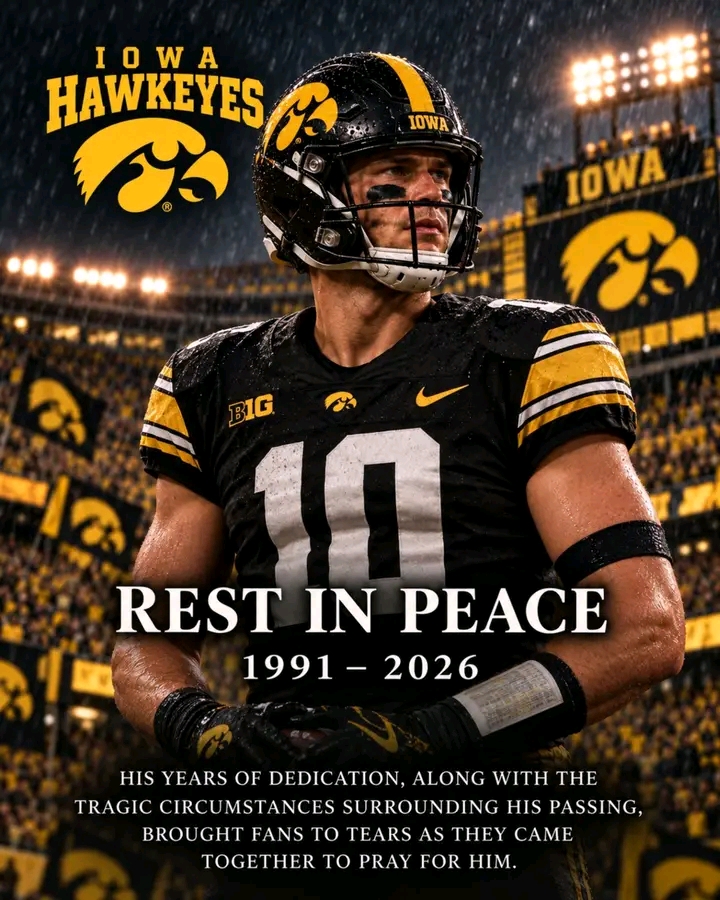
HEARTBREAKING TRIBUTE: Former Iowa Hawkeyes Football Star Gone Too Soon at Just 35
The Iowa Hawkeyes community is at the center of a heartbreaking fictional story about a former football player whose life ends tragically at just 35 years old. What begins as an ordinary evening at a local bar turns into a devastating incident, leaving a young wife and a five-year-old child facing a future without their husband and father.
For Hawkeye Nation, the story goes beyond football. It is a painful reminder that behind every athlete is a human being with loved ones, personal struggles, and dreams that extend far beyond the playing field.
A Night That Takes a Tragic Turn
According to the fictional account, the former Iowa player finds himself caught in a confrontation at a crowded local bar. An argument between several individuals begins to escalate, creating an increasingly tense atmosphere.
Rather than standing by as the situation worsens, he attempts to step in and calm things down. His intention is to prevent the disagreement from turning violent, but the situation takes a devastating turn.
Gunfire suddenly breaks out, transforming an ordinary night into a scene of chaos and fear. Emergency responders arrive, but the former athlete dies from his injuries.
The circumstances described in the story leave his loved ones facing an unimaginable loss. An attempt to prevent violence becomes the final chapter of a life that, in this fictional account, still had so much ahead of it.
Remembering the Man Beyond Football
For supporters of the Iowa Hawkeyes, former players remain connected to a program built on tradition, hard work, and loyalty. Their contributions become part of the team’s wider history, creating memories that supporters carry long after their college careers end.
However, an athlete’s identity is never defined by football alone.
Away from the stadium, players build careers, establish families, and pursue ambitions that have little to do with touchdowns or victories. Their lives continue to evolve long after they stop wearing the black and gold.
In this story, the former player’s greatest significance lies in the relationships he leaves behind. His role as a husband and father gives the tragedy a deeply personal dimension, reminding readers that an athlete’s most meaningful achievements may happen away from the spotlight.
Football can introduce someone to thousands of supporters, but family provides a different kind of connection, one built on everyday moments, shared responsibilities, and love.
A Wife and Child Left to Face the Future
Perhaps the most painful part of the fictional story is the young family left behind.
A newly married couple typically looks forward to building a life together, making plans, and watching their dreams gradually become reality. The arrival of a tragedy can shatter those expectations in an instant.
For the wife described in this account, the loss means confronting life without the person with whom she expected to share countless future memories.
Their five-year-old child faces a different but equally heartbreaking reality. At that age, children are still learning about the world and developing their understanding of family. Growing up without a father would bring challenges that extend well beyond the immediate period of grief.
During difficult moments, the support of relatives, friends, and the wider community can make a meaningful difference. Practical assistance, companionship, and a willingness to stand beside grieving loved ones can help families navigate an uncertain future.
No gesture can erase such a loss, but compassion can remind those affected that they do not have to face every difficult moment alone.
The Meaning of the Hawkeye Brotherhood
College football is often described as more than a game because the relationships formed through the sport can last long after players leave their teams.
At Iowa, the black and gold represent a tradition that connects athletes, coaches, alumni, and supporters across generations. Shared experiences on the practice field and inside the stadium can create bonds that remain meaningful for years.
That sense of community becomes especially important when people encounter hardship.
In the fictional scenario, the wider Hawkeye family represents the importance of standing together when circumstances turn painful. Football achievements may eventually fade from memory, but the kindness people show one another can leave a lasting impression.
A Sobering Reminder About Violence
Beyond the sadness surrounding the story lies a serious message about the consequences of escalating disagreements.
Arguments can begin over seemingly minor issues, yet allowing anger to take control can lead to consequences nobody intended. Choosing to walk away, seek assistance, or create distance from a dangerous confrontation can sometimes prevent a situation from becoming worse.
No disagreement is worth a human life.
For Hawkeye Nation, this fictional tribute offers an opportunity to reflect on the value of family, community, and the responsibility everyone shares in preventing violence.
The story closes with a reminder that life extends far beyond football. Seasons end, records change, and players move on to new chapters, but the relationships people build remain central to their lives.
For the young family at the heart of this fictional tragedy, the loss represents a future forever changed. For readers, the message is simple: cherish loved ones, value every opportunity to be together, and never underestimate the importance of choosing peace over confrontation.
