

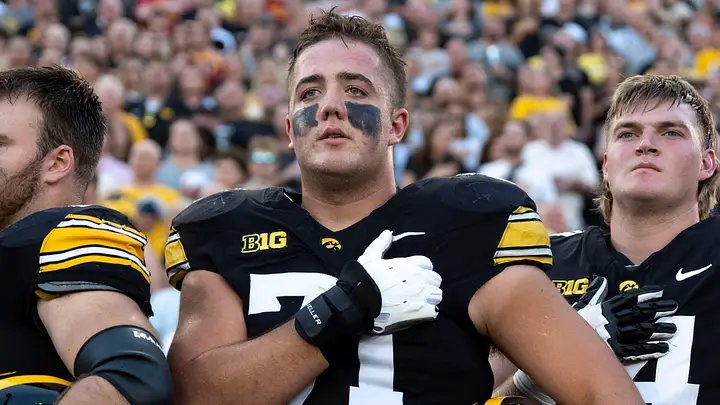
The Iowa football community is facing a heartbreaking loss after an 18-year-old freshman running back died from injuries suffered during a violent confrontation.
According to the account surrounding the incident, the young athlete was involved in an altercation shortly after midnight. During the confrontation, he suffered a serious wound to the chest and was rushed to a nearby hospital by emergency responders. Medical staff attempted to save his life, but his injuries proved fatal.
News of his death quickly moved through the Hawkeyes community, leaving teammates, coaches, classmates and supporters trying to process a loss that came only weeks into what was supposed to be an exciting new chapter.
The freshman had recently begun his college football journey. Like many young players arriving on campus, he had dreams of competing at the highest level of college football, building relationships with teammates and creating memories that would last long after his playing days were over.
Instead, those plans were suddenly taken away.
The same incident reportedly left another young football player injured. He suffered wounds to his head and neck, received medical treatment and was expected to survive. The circumstances surrounding the confrontation remained under investigation as authorities worked to establish exactly what happened and how the situation escalated.
A suspect was reportedly taken into custody while investigators continued gathering information and speaking with witnesses.
For the Iowa football program, however, the investigation was only one part of a much larger tragedy. The immediate focus turned toward the young man’s family and the teammates who had shared practices, meetings and everyday college life with him.
A locker room that had recently been filled with the energy of a new season was suddenly confronted with an empty seat. Equipment that had been used only days earlier became a painful reminder that one of their teammates would not return.

That reality can be especially difficult for players who had only just started building friendships with a freshman who was beginning his first college season.
He was more than a football player.
He was a teammate, a student, a son and a friend. He was also a young person whose life had been filled with possibilities far beyond football.
Messages of sympathy and support began spreading across the football community as people mourned the teenager and offered condolences to his relatives and teammates. For those who knew him personally, the loss was not simply the death of an athlete. It was the loss of someone they had welcomed into their community and expected to see grow over the years.
College football often places young athletes under intense attention. Their performances are measured by statistics, wins, losses, yards and touchdowns. Yet tragedies like this remind everyone that the people wearing those jerseys are young men with families, friendships, hopes and lives outside the stadium.
For the Hawkeyes, the coming days will therefore be about much more than football.
Teammates will have to navigate practices and routines while carrying the weight of grief. Coaches and staff will be called upon to support players as they cope with something far removed from the normal pressures of a football season.
The young running back had only recently begun what should have been a long journey. His college career was supposed to be measured in games played, carries, touchdowns and memories created with teammates.
Instead, his journey ended far too soon.
Now, the Iowa football family is left mourning a teenager who arrived with dreams of playing college football and whose future held possibilities that can no longer be realized.
As authorities continue working to understand the confrontation, those closest to the player are left with the memories he created during his short time with them.
For his teammates, the memories of his personality, determination and presence may become important in the difficult days ahead. Those memories cannot erase the pain, but they can help preserve the person behind the uniform, helmet and dreams.
The football field will eventually return to normal, but an empty place in the locker room will serve as a lasting reminder of the teammate who never got the chance to finish his story.
