

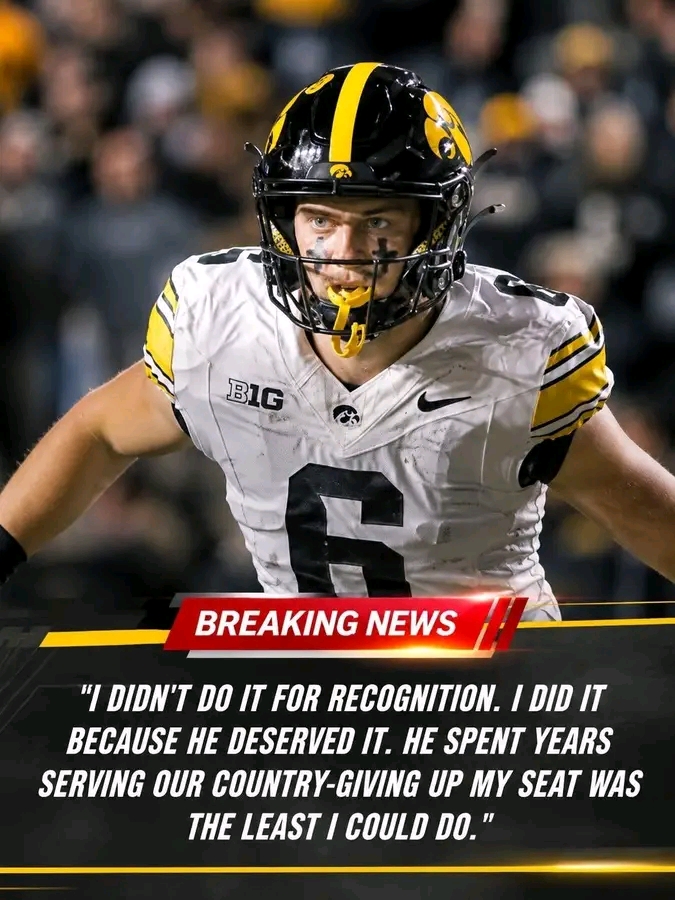
Zach Lutmer’s Reported Act of Kindness Toward an Elderly Veteran Offers a Powerful Reminder About Character
An unverified account involving Iowa Hawkeyes football player Zach Lutmer has drawn attention for a reason that has little to do with touchdowns or statistics. The story describes a simple act aboard a flight: Lutmer allegedly gave up his premium seat so an elderly American veteran could travel more comfortably. The account has not been independently confirmed, so the details should be treated with caution. Still, it has prompted conversation about respect, gratitude and the difference one thoughtful decision can make.
According to the circulating account, the moment happened shortly before the aircraft was due to depart. Lutmer is said to have noticed the veteran and offered to exchange seats, allowing the older passenger to take the more comfortable place. There was reportedly no announcement or attempt to attract attention. If accurate, the exchange was handled quietly as passengers settled in.
That understated quality is central to why the story has resonated. Public figures are often noticed for their performances, while their choices away from competition receive less attention. Giving up a preferred seat may seem modest, but it can matter to the person receiving it. For an older traveller, extra space or comfort can make a journey easier. Just as importantly, consideration can help someone feel seen and respected.
The story also points to the regard many people have for military veterans. Their experiences and sacrifices are not all the same, and no single gesture can represent the full meaning of service. Yet offering courtesy to an older veteran is one small way of acknowledging a life that may include years of duty, challenges and time away from loved ones. Respect does not always require grand ceremonies; sometimes it appears in a practical decision.
The account claims that Lutmer’s kindness did not end with the seat exchange. It says he continued to look out for the veteran during the flight, offering help and making sure the passenger was comfortable. Other passengers and cabin crew were reportedly moved. Those details remain unverified, however, and there is not enough confirmed information to describe precisely what happened. It would be unfair to present every part of the story as established fact.
Even with that qualification, the broader message is worth considering. Travelling can be tiring and stressful. Passengers may be focused on schedules, luggage, connections and comfort. In that environment, noticing another person’s needs takes attention. Acting on that awareness takes generosity. A seat exchange is not a dramatic sacrifice, but it asks someone to put another traveller’s comfort ahead of personal convenience.
For a college athlete, whose days are shaped by training, travel, study and public expectations, choices away from the field can influence how people understand character. Athletic ability is measured in visible results. Character is harder to quantify. It is reflected in how someone treats people who cannot offer an advantage, a favour or a headline in return. That is why stories about everyday kindness often travel beyond their original setting. Such moments can shape a team’s reputation and influence young athletes who are watching how their role models behave closely.
It is important not to confuse a moving story with a verified one. Social media posts can spread quickly, and details sometimes change as a story is retold. Until reliable confirmation is available, Lutmer’s alleged actions should be described as claims rather than fact. That caution does not diminish the principle at the heart of the account; it simply keeps the discussion honest.
If the reported exchange did happen, it was a thoughtful reminder that kindness rarely needs an audience. The veteran may have experienced a more comfortable journey, while fellow passengers may have been reminded to look beyond themselves. If the story encourages even one person to offer help, make room or show patience to someone who needs it, its central message has value.
Football will continue to judge players by preparation, teamwork and performance. But moments outside the stadium can leave their own impression. Whether this account is eventually confirmed or not, the lesson is clear: respect is shown through actions, and sometimes the smallest gesture is the one people remember most.
