

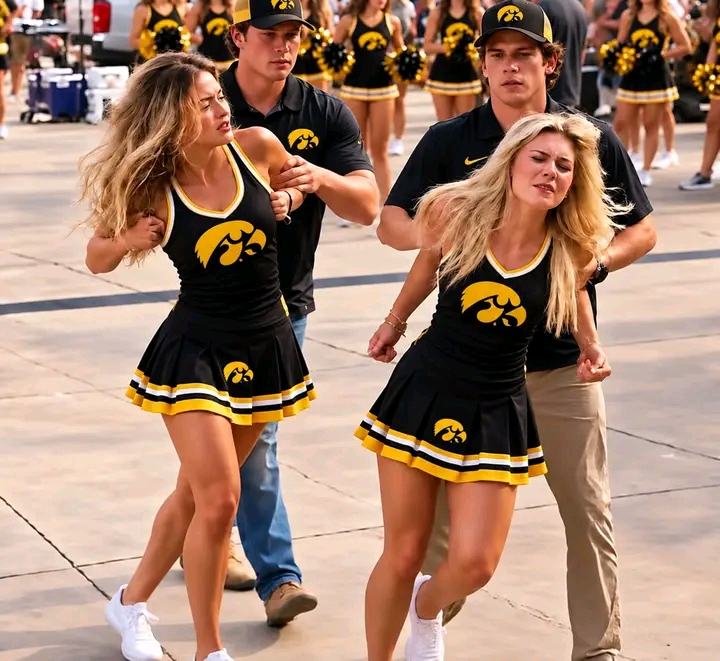
Iowa Hawkeyes Tailgate Brawl Allegedly Involving Female Cheerleaders Sparks Debate
A pregame celebration surrounding the Iowa Hawkeyes has reportedly taken an unexpected turn, with claims of a heated confrontation involving several female cheerleaders drawing attention online.
College football tailgates are usually filled with music, laughter, team colors, and passionate conversations about the game ahead. For Iowa Hawkeyes supporters, these gatherings are an important part of the experience, bringing together students, alumni, families, and lifelong fans before kickoff.
However, reports of an alleged altercation at a crowded tailgate gathering have cast a different light on the celebrations. The claims have prompted questions about what happened, how the disagreement developed, and whether the people involved were members of Iowa’s cheerleading community.
A Pregame Celebration Takes an Unexpected Turn
Game day around Kinnick Stadium is known for its unmistakable black-and-gold atmosphere. Fans arrive early, gather in parking areas, prepare food, and enjoy the excitement that builds before the Hawkeyes take the field.
What should be a relaxed celebration can become tense when disagreements arise in crowded spaces. According to the account circulating online, a dispute reportedly developed among individuals attending a tailgate gathering before escalating into a physical confrontation.
The alleged incident attracted attention from nearby spectators, some of whom were said to have recorded the commotion on their phones.
Details surrounding the disagreement remain unclear, including what initially triggered it and precisely who participated. Without a verified account of the events, it would be premature to draw firm conclusions about the circumstances.
Claims About Female Cheerleaders Draw Attention
The most striking part of the circulating story is the claim that several female Iowa Hawkeyes cheerleaders became involved in the disturbance.
Cheerleaders play a visible role in college athletics, helping create an energetic atmosphere and representing their universities at sporting events. Their involvement in an alleged confrontation would naturally attract attention, particularly among supporters who associate the squad with school spirit and teamwork.
Nevertheless, the identities and affiliations of the individuals reportedly involved have not been independently established in the material provided.
That distinction matters. People appearing in a video at a football tailgate should not automatically be identified as university representatives simply because the gathering is associated with a particular team.
Until reliable confirmation becomes available, the allegations should be treated cautiously rather than accepted as established fact.
Video Claims Fuel Online Discussion
Videos recorded by spectators can spread rapidly, especially when they appear to capture unexpected moments at major sporting events.
A brief recording may show people shouting, a crowd gathering, or individuals attempting to intervene. However, footage that captures only part of an encounter cannot necessarily explain how the situation began or establish the actions of everyone present.
The reported tailgate confrontation has raised familiar questions about the way social media shapes public reactions to incidents involving college sports communities.
Some viewers may quickly assign blame, while others may urge restraint until more information emerges. Both the context of an encounter and the reliability of the available footage are important when assessing what actually happened.
There is also a difference between a video attracting widespread attention and an incident being officially confirmed.
Crowd Safety Remains a Priority
Large football gatherings can bring thousands of people into relatively small areas. When an argument escalates, bystanders can find themselves caught in the middle, even when they have no connection to the disagreement.
Event organizers and security personnel therefore have an important responsibility to respond quickly when disturbances occur.
If the reported confrontation took place as described, separating those involved and preventing further escalation would be essential. Keeping spectators away from an increasingly heated situation can also reduce the risk of additional injuries or disorder.
For fans, the simplest precaution is to avoid joining a confrontation and allow trained personnel to manage the situation.
Iowa Fans Await Clearer Information
For Iowa supporters, the story has introduced an unwelcome distraction from the traditions that make Hawkeyes game days special.
Tailgating is about more than football. It offers friends and families an opportunity to reconnect, gives alumni a reason to return to campus, and allows generations of supporters to share their enthusiasm for the program.
An alleged altercation should not define an entire fan community, particularly when important details remain unverified.
For now, questions surrounding the reported incident remain unanswered. Confirmation of the participants, the circumstances, and any response from university officials would help establish a clearer picture.
Until then, caution is warranted. The Iowa Hawkeyes’ game-day atmosphere is built around community and shared passion, and preserving that spirit means putting safety, respect, and responsible judgment first.
