

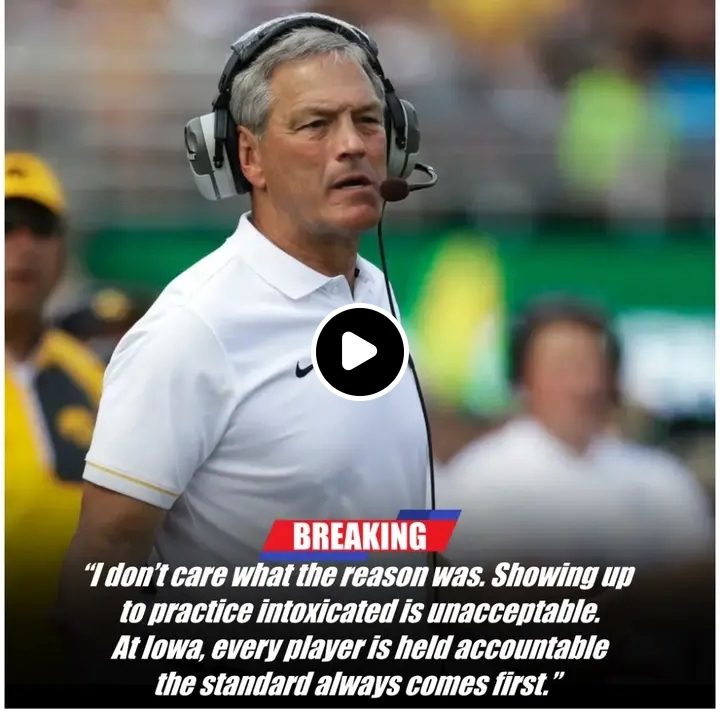
Iowa Hawkeyes Reportedly Dismiss Freshman Following Alleged Week 6 Practice Incident
The Iowa Hawkeyes have reportedly dismissed a freshman football player following allegations that he arrived intoxicated during preparations for their Week 6 matchup, raising fresh questions about discipline and accountability within Kirk Ferentz’s program.
The reported decision has drawn attention because of the timing, with Iowa preparing for another important stretch of its college football campaign. While the player’s identity and the full circumstances surrounding the incident have not been established in the supplied report, the allegation has sparked a wider conversation about the expectations placed on student-athletes.
For a program built around consistency and responsibility, any disciplinary issue involving a player can become a significant distraction.
A Difficult Situation for Iowa
College football demands commitment long before players step onto the field on game day. Preparation involves scheduled practices, film sessions, meetings and the discipline required to follow a demanding routine.
According to the report, Iowa’s decision followed concerns about a freshman’s condition during the team’s preparations. The alleged circumstances were serious enough to result in his reported departure from the program.
However, without further confirmation from the university or coaching staff, important questions remain unanswered. It is unclear whether additional disciplinary measures were considered or whether the player has publicly responded to the allegation.
What is clear is that the report has placed Iowa’s approach to internal discipline under the spotlight.
Why the Timing Matters
The middle of a college football season leaves little room for unnecessary distractions. Coaches are working to correct mistakes, prepare game plans and ensure players understand their individual assignments.
An unexpected roster change can complicate those responsibilities, particularly when it involves a young player who may still be adjusting to the demands of college athletics.
Freshmen often face a difficult transition from high school football to a university programme. They must adapt to tougher competition, greater expectations and increased responsibility away from the field.
That transition does not remove the need to follow team rules. Instead, it makes clear communication and accountability especially important.
For Iowa, maintaining focus will be essential as the team continues its preparations.
Ferentz’s Leadership Under Scrutiny
Head coach Kirk Ferentz has led the Hawkeyes for decades, making consistency and discipline important parts of his programme’s identity.
Players entering Iowa are expected to understand that representing the university involves more than performing on Saturdays. Their conduct during the week also matters, particularly when their actions could affect teammates and the wider organisation.
Nevertheless, the details surrounding this particular allegation remain limited. It would be premature to draw firm conclusions about the player’s circumstances or the precise reasoning behind the reported dismissal without an official explanation.
The situation does, however, highlight a challenge facing every college football coach: balancing the development of young athletes with the responsibility to enforce team standards.
Teammates Must Keep Moving
For the players who remain on the roster, the immediate priority is preparing for the next game.
Practices must continue, assignments must be understood and the coaching staff must ensure that attention remains on the competition ahead.
Senior players could also have an important role in helping younger teammates understand the demands of the programme. Leadership is often most visible when a team faces an unexpected problem rather than when everything is going smoothly.
Still, one reported disciplinary incident does not automatically define an entire locker room. How Iowa responds collectively will depend on the facts, the coaching staff’s decisions and the players’ performances in the weeks ahead.
Fans Want Answers
News involving player discipline naturally invites strong reactions from supporters. Some may view a reported dismissal as evidence that standards are being enforced, while others may want more information before judging the decision.
Both reactions reflect a common concern: fans want to understand what happened and how it could affect their team.
In modern college football, reports can spread rapidly across social media, sometimes before all the relevant details become available. That makes it important to distinguish confirmed information from allegations that still require clarification.
For now, the report has generated discussion, but the player’s identity and the full circumstances have not been established here.
Iowa’s Focus Turns to What Comes Next
Regardless of how the situation develops, Iowa cannot allow uncertainty surrounding one player to consume its entire season.
Ferentz and his staff must continue preparing the team, while the remaining Hawkeyes concentrate on their responsibilities and the challenge ahead.
If the reported dismissal is confirmed, it will represent a significant development for the freshman involved. It could also prompt further questions about how the programme handles disciplinary matters.
Until more details emerge, however, speculation should not replace verified information.
The Hawkeyes’ next steps will matter more than the noise surrounding the report. Their preparation, leadership and response to adversity will determine how effectively they navigate the situation.
For Iowa, the immediate task remains straightforward: maintain focus, uphold expectations and prepare for the next test on the football field.
