

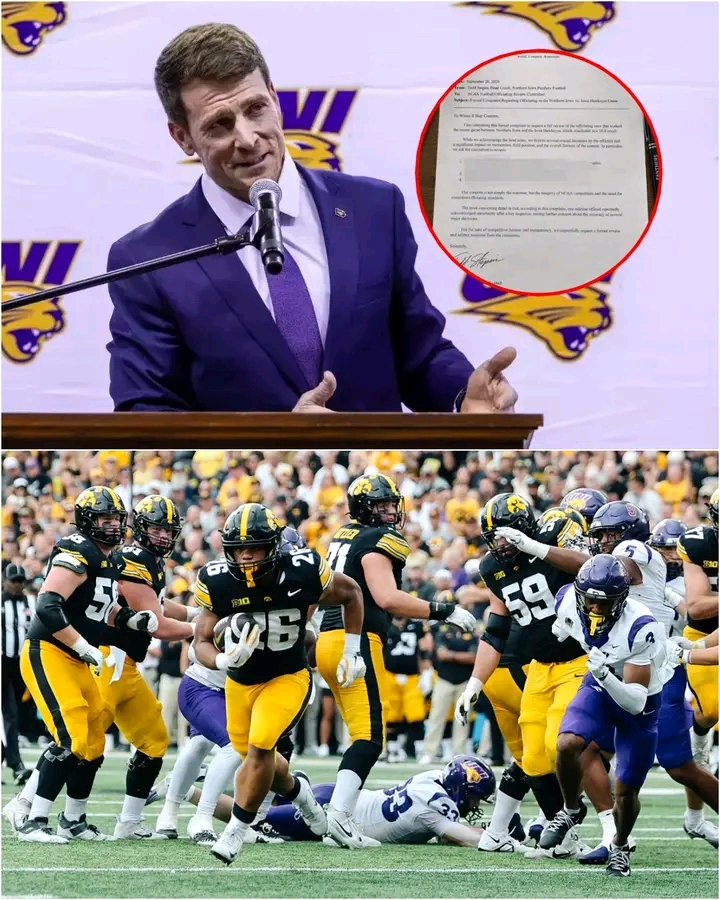
Iowa’s 55–0 victory over Northern Iowa was already destined to dominate the college football conversation. The Hawkeyes controlled the matchup from the opening moments, producing a shutout that left little doubt about which team had the better afternoon.
Yet the discussion surrounding the game did not end when the clock reached zero.
Attention soon shifted toward Northern Iowa head coach Todd Stepsis and a reported complaint concerning several officiating decisions made during the contest. The development added an unexpected layer to a game that had appeared to be completely settled by Iowa’s overwhelming performance.
According to the report, Northern Iowa sought a review of multiple situations that the program believed deserved closer examination. The concerns reportedly involved a holding penalty, a disputed spot, an unsportsmanlike conduct penalty and questions about whether similar situations were handled consistently.
Those issues quickly became a talking point among college football fans.
The reported complaint was not presented simply as an argument over the final score. Instead, the focus was reportedly on how particular decisions were made and whether the officiating crew applied the rules consistently throughout the afternoon.
That distinction matters because officiating remains one of the most closely watched parts of college football. A penalty can erase a major gain, change field position or extend an opponent’s possession. Even when a game is heavily tilted toward one team, disputed calls can become the subject of serious discussion afterward.
Still, the enormous difference on the scoreboard remained impossible to ignore.
Iowa finished the game with a 55–0 victory, keeping Northern Iowa from finding the end zone while controlling the contest on both sides of the football. The Hawkeyes’ defense prevented the Panthers from building sustained momentum, while Iowa’s offense repeatedly created opportunities and turned its advantages into points.
That reality has led to another question among fans: how much could individual officiating decisions actually have changed a game that ended in such a one-sided result?
Some supporters believe officiating concerns deserve attention regardless of the score. From that perspective, consistency matters in every game, whether the final margin is three points or 55.
Others view the controversy differently, arguing that a dominant performance cannot reasonably be explained by a handful of disputed calls. For those fans, Iowa’s overall control of the matchup was the defining story.
Both conversations can exist at the same time.
A request for an officiating review does not erase Iowa’s victory, nor does the final score automatically settle every question about individual decisions. Those are separate issues that can be examined independently.
For Northern Iowa, the reported complaint represents an effort to have disputed moments reviewed through the appropriate channels. Any conclusions about those calls would depend on the details of the review and the information available to the relevant officiating authorities.
For Iowa, meanwhile, the result provides an important boost as the Hawkeyes continue through the season. A shutout victory by such a wide margin can generate confidence across the roster, particularly when the offense and defense are both performing effectively.
But the postgame conversation has now expanded beyond the field.
The situation has once again placed NCAA officiating under the microscope. Fans regularly debate penalties, replay decisions, ball spots and the consistency of calls, especially when emotions are high. Technology has provided more opportunities to review certain plays, but disagreements over judgment calls remain part of the sport.
The reported complaint involving Stepsis therefore gives college football another reason to examine how officiating decisions are reviewed and communicated after controversial games.
For Iowa supporters, the most memorable number from the afternoon remains 55–0. For Northern Iowa, however, the postgame questions may continue beyond the scoreboard.
What began as a decisive Iowa victory has developed into a broader conversation about officiating, consistency and accountability. Whether the reported concerns lead to any further action remains to be seen.
For players and coaches on both sides, the controversy highlights how quickly a result can be overshadowed by events away from the action. Once questions about officiating emerge, every replay, penalty and decision can receive renewed attention from fans long after teams leave the stadium.
One thing is certain: the final whistle ended the game, but it did not end the discussion.
