

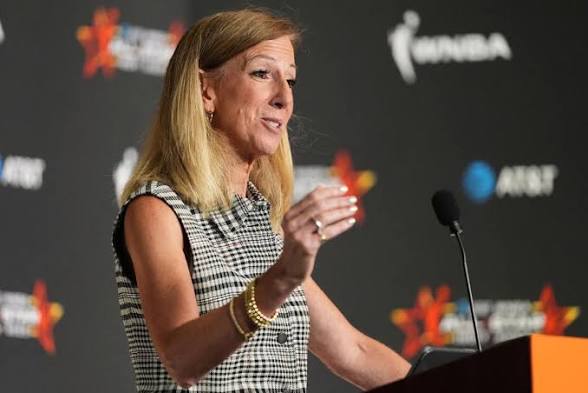
The WNBA is preparing for a major change at the top.
Cathy Engelbert, the league’s first-ever commissioner, will retire at the end of 2026, bringing an extraordinary seven-year chapter to a close. Her departure arrives at a moment when women’s basketball is attracting unprecedented attention, investment and debate.
Engelbert took charge in 2019 when the WNBA was still searching for a larger place in the American sports landscape. Seven years later, the league looks dramatically different. Attendance has surged, television audiences have reached new heights, franchise values have climbed, and expansion plans are set to take the league from 12 teams to 18 by 2030.
That transformation has become a central part of Engelbert’s legacy.
During her tenure, the WNBA navigated the COVID-19 pandemic, including the creation of the 2020 bubble season, while continuing to build its business. The league introduced the Commissioner’s Cup, expanded its regular-season schedule and secured major media and commercial opportunities.
Player compensation has also become a defining part of the story. A new collective bargaining agreement has pushed salaries and benefits to levels the WNBA had never seen before, including the arrival of million-dollar player salaries. Engelbert was also involved in securing charter travel for teams, another major change for players who had spent years dealing with demanding travel conditions.
The league’s growth has not happened quietly, however.
The 2026 season has produced a steady stream of controversy and difficult conversations. Caitlin Clark’s enormous popularity has intensified debates about attention, physical play, officiating and how the league protects its biggest stars. The Sophie Cunningham controversy added another flashpoint, while arguments surrounding transgender eligibility created another politically charged issue for the WNBA.
Those disputes have placed Engelbert under a brighter spotlight than ever before.
Supporters can point to the enormous progress made during her administration. Critics, meanwhile, have questioned the league’s handling of player concerns, safety, officiating and communication. The tension became particularly visible during labor negotiations, as players pushed for better compensation and a greater voice in decisions affecting their careers.
That complicated record means Engelbert’s retirement will be viewed in different ways depending on where a person stands.
For some fans, she will be remembered as the executive who helped turn the WNBA into a much bigger sports property. For others, her departure represents an opportunity for a new leader to address problems that became increasingly difficult to ignore as the league’s profile expanded.

NBA commissioner Adam Silver praised Engelbert’s contribution, describing her tenure as the most significant period of growth in the WNBA’s history. Engelbert, meanwhile, has spoken about the cultural surge surrounding women’s sports and the role WNBA players have played in driving it.
Now the question turns to what comes next.
The commissioner’s position will be one of the most important jobs in women’s sports. Whoever takes over will inherit a league with momentum, larger audiences, rising franchise values and ambitious expansion plans. But that person will also inherit difficult questions about player relationships, league policies, competitive balance, public criticism and how the WNBA handles the intense attention surrounding its stars.
The timing makes the search especially fascinating.
The WNBA is no longer the same league Engelbert entered in 2019. It has become a major part of the broader sports conversation, and its players are increasingly influential beyond the basketball court. That growth creates enormous opportunity, but it also means every decision from the commissioner’s office will receive greater scrutiny.
For fans, that makes the coming leadership search more than a routine executive change. It could shape the direction of the league for years.
Engelbert’s final months will therefore be about more than simply closing a chapter. They will also be about preparing the league for its next phase.
Her decision leaves the WNBA facing a pivotal transition at precisely the moment its future appears bigger than ever.
The next commissioner will not be starting from scratch. Instead, they will inherit the foundation Engelbert helped build, along with the expectations, controversies and pressure that come with it.
The WNBA has spent seven years growing into a new era.
Now, it must decide who is capable of leading it forward.
