

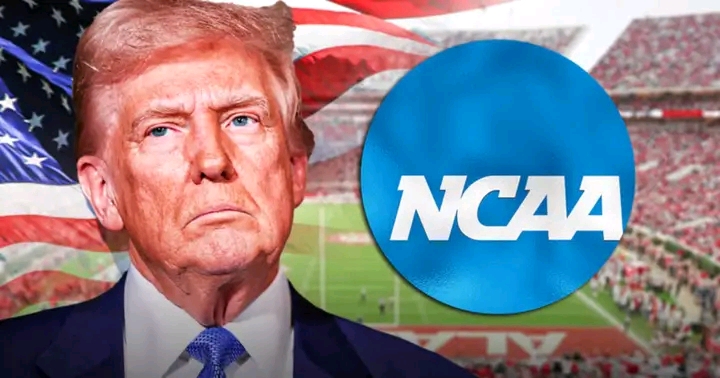
President Donald Trump has made his position unmistakably clear: he wants Congress to finish the job on the Protect College Sports Act. But with lawmakers now leaving Washington without a Senate vote, the question hanging over college athletics is no longer whether the bill has presidential support — it’s whether Congress can overcome its remaining political obstacles.
Trump urged senators to remain in Washington and continue working until the legislation was passed, putting additional pressure on lawmakers as the August recess approached. His intervention added another layer of urgency to a bill that has already gone through months of negotiations involving Republicans, Democrats, college conferences and other major figures in the sports world.
The Protect College Sports Act, sponsored in the Senate by Ted Cruz and Maria Cantwell, is designed to establish national rules for college athletics while addressing some of the uncertainty surrounding transfers, eligibility, recruiting and Name, Image and Likeness compensation. The Senate Commerce Committee previously advanced the measure by a 19-9 vote, giving it a significant bipartisan foundation before its anticipated Senate floor battle.
There was plenty of reason to believe momentum was building. By June, the Senate committee said 24 collegiate athletic conferences and 267 colleges and universities across 49 states and Washington, D.C., had publicly supported the legislation. Major sports organizations, including the NFL, NBA, MLB, NFL Players Association and NBPA, were also listed among its supporters.
Then came the biggest test: getting enough senators to agree on the final package.
The legislation has become one of the most closely watched attempts to bring a national framework to college sports during a period of enormous change. College athletics is already dealing with expanded revenue sharing, rapidly evolving NIL arrangements, transfer movement and questions about how schools can compete financially without creating an even wider gap between the biggest programs and everyone else.
The bill’s supporters argue that a federal framework could provide the consistency college sports desperately needs. Instead of schools, conferences and athletes navigating a patchwork of rules and legal challenges, the legislation would establish nationwide standards covering important areas of the college game.
There has also been significant movement among the major conferences. The Big Ten and SEC, two of the most powerful forces in college athletics, eventually backed the Senate version following negotiations over provisions that had previously created concern. That support removed one major obstacle, but it didn’t eliminate every problem standing between the bill and the president’s desk.
And that’s where the story took another turn.
Despite the pressure from Trump and the push from bill sponsors, senators adjourned for their summer recess without holding the expected vote. Instead, the Protect College Sports Act was placed on the Senate calendar for September, meaning the fight isn’t over it’s simply being pushed into the next phase.
That delay matters because the Senate isn’t the final hurdle. Even if senators approve the legislation when they return, the House of Representatives would still have to consider it. The House has its own complicated political dynamics, making a quick path to Trump’s desk far from guaranteed.
The legislation already has a House counterpart, H.R. 9137, introduced by Rep. Ryan Zinke? No — the official congressional record identifies Rep. Baumgartner as the sponsor, and the bill was referred to multiple House committees for consideration.
For college athletes, coaches and fans, the uncertainty could continue for months.
That’s especially significant as the 2026 football season approaches. Programs are preparing for another season while simultaneously trying to understand how rapidly changing financial and roster rules could affect recruiting, player retention and competitive balance.
Trump’s demand has certainly increased the political pressure, but presidential support alone can’t move legislation through Congress. Senators must agree on the details, the House must ultimately sign off, and both chambers must be willing to keep the process moving.
So, will the Protect College Sports Act become law?
It still could. The bill has bipartisan sponsorship, support from major conferences and backing from prominent sports organizations. But after senators left Washington without passing it, the September return has suddenly become the next major checkpoint.
For now, college sports is left waiting.
And when Congress returns, all eyes will be on whether lawmakers finally turn months of negotiations and Trump’s demand for action into a bill that can actually reach his desk.
