

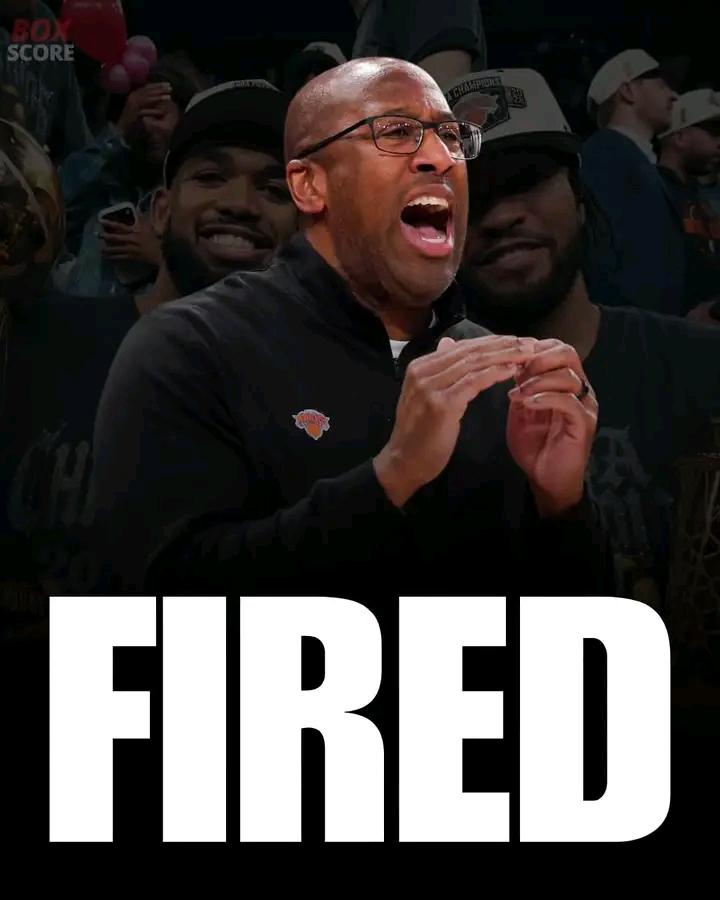
The NBA offseason has barely begun, yet one of the most shocking stories in recent league history is already dominating headlines. According to reports, the New York Knicks have decided to move on from head coach Mike Brown just months after he guided the franchise to its first NBA championship in 53 years. For a team that finally climbed basketball’s highest mountain after decades of disappointment, the decision has left fans, analysts, and former players searching for answers.
Few could have imagined this outcome when the Knicks celebrated their championship victory. Brown was widely praised for transforming New York into one of the NBA’s most disciplined and resilient teams, helping the franchise capture its first title since 1973. His leadership turned a talented roster into a championship-winning unit and delivered one of the most memorable seasons in franchise history.
The timing of the reported decision is what makes it so difficult for many around the league to understand. Championship-winning coaches are typically rewarded with long-term stability and increased influence within an organization. Instead, Brown now finds himself at the center of a stunning separation that has quickly become one of the biggest stories of the summer.
Brown’s arrival in New York came with considerable expectations. The veteran coach had already built a reputation as one of basketball’s most respected defensive minds during previous stops with the Cleveland Cavaliers, Los Angeles Lakers, and Sacramento Kings. He brought years of experience, multiple Coach of the Year honors, and a track record of helping teams maximize their potential.
What happened next exceeded even the boldest projections.
Under Brown’s guidance, the Knicks developed a clear identity built on toughness, defensive intensity, and unselfish basketball. New York consistently ranked among the league’s most competitive teams throughout the season, relying on a combination of veteran leadership and star power to overcome some of the toughest opponents in the Eastern Conference.
The championship run showcased Brown’s strengths as a coach.
Led by All-Star guard Jalen Brunson and star big man Karl-Anthony Towns, the Knicks navigated a challenging postseason filled with pressure-packed moments. Brown’s game plans, defensive adjustments, and ability to keep the locker room focused were frequently highlighted by analysts throughout the playoffs.
Several key victories during the postseason demonstrated why Brown was viewed as the ideal coach for New York. The Knicks repeatedly found ways to win close games, execute under pressure, and maintain composure in hostile road environments. Those qualities often reflect coaching as much as player talent, making the reported decision even more surprising.
For long-suffering Knicks supporters, the championship represented far more than a trophy.
Generations of fans had waited decades to see the franchise return to the top of the NBA. Since the team’s last title in 1973, New York experienced countless coaching changes, roster rebuilds, playoff disappointments, and front-office shakeups. Brown became the coach who finally ended that drought and restored championship basketball to Madison Square Garden.
That achievement alone seemed enough to secure his place within the organization for years.
Instead, reports suggest the franchise is prepared to move forward in a different direction. While no detailed explanation has yet emerged regarding the reasoning behind the decision, league insiders have already begun speculating about possible disagreements over organizational philosophy, roster management, or long-term planning.
Those questions are likely to remain at the center of NBA conversations throughout the offseason.
Around the league, reactions have ranged from surprise to outright disbelief. Former players and basketball commentators have openly questioned why a coach who delivered the ultimate prize would be dismissed so quickly. In a results-driven business where championships define careers, Brown appeared to have achieved everything ownership and fans could have hoped for.
His coaching résumé only strengthens the argument.
Before arriving in New York, Brown accumulated more than two decades of NBA coaching experience. He coached LeBron James during his first stint in Cleveland, worked with championship teams in Golden State, and helped revitalize the Sacramento Kings before taking over the Knicks. Few coaches possess a background as accomplished or respected.
Now, attention shifts toward the future.
The Knicks remain one of the NBA’s most talented rosters and will enter next season with championship expectations. However, replacing a coach who just delivered a title creates significant pressure for whoever takes over. Success will not simply be measured by playoff appearances. Fans will expect another championship run.
The locker room dynamic will also be closely monitored. Championship teams often develop strong bonds between players and coaching staffs during long postseason journeys. Any major leadership change can create uncertainty, particularly when it follows the most successful season in franchise history.
For New York supporters, the news is likely to generate mixed emotions. The excitement of winning a championship remains fresh, yet many will question why the architect of that success is no longer leading the team. Brown’s contribution to the franchise cannot be erased, regardless of how this situation ultimately unfolds.
In the end, Mike Brown accomplished something countless coaches before him could not. He brought the Larry O’Brien Trophy back to New York, ended a 53-year championship drought, and delivered a season that will forever be remembered by Knicks fans.
Yet in a twist few saw coming, his tenure appears to have ended almost as quickly as it reached its peak. As the basketball world waits for more details, one mystery continues to dominate discussion across the league: how does a coach go from championship savior to former head coach in such a short period of time?
For now, that question remains unanswered and it may become the defining NBA story of the offseason.
