

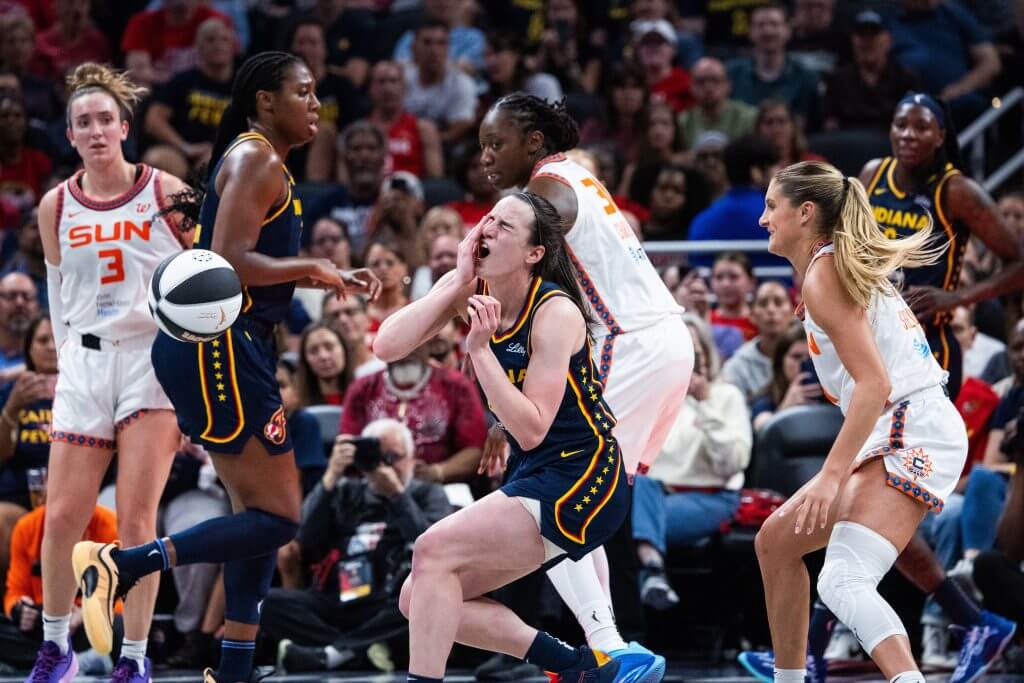
A fresh debate is sweeping through the WNBA after a national sports columnist argued that Indiana Fever star Caitlin Clark’s emotional reactions to officiating could contribute to online harassment aimed at other players. The opinion has sparked widespread discussion, with supporters and critics fiercely divided over whether Clark is being unfairly blamed for the behavior of strangers online.
The controversy centers on a recent opinion column that criticized Clark’s on-court conduct, particularly her visible frustration with referees during games. The writer argued that repeated complaints and dramatic reactions after physical plays could influence public perception of opponents, especially Black and LGBTQ+ players, and potentially fuel abusive messages directed toward them on social media.
Clark has not been accused of encouraging harassment. In fact, the Fever guard has repeatedly spoken out against abusive behavior from fans and social media users. Earlier in her WNBA career, she publicly condemned racist, sexist and hateful comments made in her name, saying there is “no place” for that kind of behavior in sports.
The latest criticism comes after several highly physical games involving Clark, who has often found herself at the center of controversial foul calls. During recent matchups, the All-Star guard appeared visibly frustrated after hard contact went uncalled, leading to animated conversations with officials and reactions that quickly spread across social media.
One incident involved Las Vegas Aces veteran Chelsea Gray, while another came during Indiana’s game against the Golden State Valkyries involving center Kiah Stokes. Both plays generated intense debate among basketball fans, with some believing Clark exaggerated the contact while others argued she had every reason to be upset by the officiating.
Clark later explained that she suffered a thigh contusion after one collision and continued playing despite the injury. The sequence became another example of how every moment involving the WNBA’s biggest star is dissected frame by frame across television, online platforms and fan communities.
Supporters of Clark argue that passionate reactions toward officials are common throughout professional basketball. NBA and WNBA stars regularly question calls, gesture toward referees and express frustration during emotional games. They believe Clark is receiving a level of scrutiny rarely applied to other elite players.
Critics, however, believe athletes with enormous platforms have an added responsibility to recognize how their actions may be interpreted by millions of viewers. That disagreement has become one of the league’s biggest off-court talking points this season.
The debate also arrives as Clark continues to face significant physical attention from opposing defenses. Since entering the WNBA, she has been involved in several high-profile collisions, hard fouls and controversial plays that have generated headlines and fueled discussions about whether officials are doing enough to protect one of the league’s marquee attractions.
Despite the controversy, Clark’s own public message has remained consistent. She has repeatedly urged fans not to direct hate toward opponents, teammates, coaches or officials. During one media availability earlier this season, she emphasized that harassment and personal attacks have no place in basketball, regardless of disagreements during games.
That stance has become central to the conversation, with many observers pointing out that Clark has publicly rejected attempts to use her popularity to justify abusive behavior online. Supporters argue it is unfair to hold athletes personally responsible for offensive messages sent by people they have never met or interacted with.
The latest debate highlights just how much attention follows Clark every time she steps onto the court. Whether the discussion involves officiating, physical defense, television ratings or social media, the Fever guard remains the most talked-about player in women’s basketball.
For the WNBA, the situation reflects both the benefits and challenges of unprecedented popularity. Record television audiences, sold-out arenas and increased media coverage have brought greater exposure to the league, but they have also intensified scrutiny of players and every controversial moment.
As Indiana continues its season, Clark’s performances will likely remain the primary focus. Yet the conversation surrounding her influence extends well beyond points, assists and three-pointers. Every reaction, every foul call and every postgame comment now carries a level of attention rarely seen in women’s basketball.
Whether fans agree with the criticism or believe Clark is being unfairly targeted, one thing is clear: the latest opinion piece has reignited one of the WNBA’s most polarizing debates, ensuring that the spotlight on Caitlin Clark and the discussions surrounding her impact on the league isn’t fading anytime soon.
