


The WNBA is once again facing intense scrutiny after another physical incident involving Indiana Fever star Caitlin Clark reignited debate over player safety, officiating, and league discipline. Critics argue that the latest confrontation involving Phoenix Mercury veteran Alyssa Thomas is part of a growing pattern of aggressive play directed at the league’s biggest attraction, leaving many questioning whether enough is being done to protect one of basketball’s brightest stars.
The controversy erupted just days after Clark had already found herself at the center of another officiating debate. During an earlier game, Clark received a technical foul following an exchange with officials, a decision that she later joked about by saying she might soon be suspended simply for “breathing too loudly” or clapping. While similar technical fouls have reportedly been rescinded for other players this season, Clark’s appeal was denied, fueling accusations of inconsistent officiating.
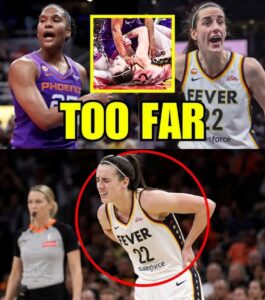
The debate intensified further after a separate incident involving Alyssa Thomas. According to critics reviewing game footage, Thomas made forceful contact with Clark during a physical sequence that quickly spread across social media. Different camera angles appeared to show Thomas driving her forearm and fist into Clark’s upper body before making additional lower-body contact, leading many viewers to argue the play crossed the line from hard basketball into unnecessary physicality.
What made the incident even more controversial was that no foul was immediately called on the floor. Officials allowed play to continue without a whistle or video review, a decision that sparked widespread criticism from fans and basketball commentators who believed the contact deserved closer examination.
Clark eventually exited the game after reportedly dealing with back discomfort, adding even more attention to the physical nature of the contest. While the Indiana Fever did not publicly attribute her condition solely to that sequence, many observers connected the injury concerns to the repeated hard contact she has experienced throughout the season.
The criticism did not stop there.
Following another review of officiating decisions involving Clark, many questioned why certain physical plays against her have resulted in little or no punishment, while comparatively minor actions by Clark herself have drawn immediate whistles. One earlier play saw officials rule that Clark initiated illegal contact after video review, despite many fans believing she had been the player on the receiving end of the collision.
The incident involving Alyssa Thomas ultimately resulted in disciplinary action from the WNBA, with the veteran forward receiving a one-game suspension. However, that punishment has divided opinion across the basketball world.
Many critics argue the suspension does not go far enough, describing it as an inadequate response to what they believe was dangerous conduct. Others believe the league followed its disciplinary procedures appropriately and that isolated incidents should not be used to suggest systemic problems.
The latest controversy has also revived discussion surrounding previous physical confrontations involving Clark. Earlier this season, hard fouls involving players such as Chennedy Carter and Marina Mabrey generated national headlines and prompted renewed conversations about how the league protects high-profile players.
Supporters of Clark argue that repeated physical play against the rookie-turned-superstar has become an ongoing issue that officials have failed to address consistently. They point to multiple games in which Clark has absorbed heavy contact while continuing to produce at an elite level, insisting stronger enforcement is necessary before a more serious injury occurs.
Former player and broadcaster Renee Montgomery White also entered the broader discussion by criticizing what she described as “absolutely egregious” officiating decisions and calling some missed calls “utterly disrespectful.” Her comments reflected growing concern from several voices around women’s basketball that officiating consistency must improve.
Beyond individual plays, many analysts believe the league now faces a broader challenge. Caitlin Clark has transformed the WNBA’s popularity, helping drive television ratings, attendance records, merchandise sales and unprecedented national attention. As the league continues to capitalize on that momentum, pressure is mounting to ensure its biggest stars are protected while maintaining the game’s physical competitiveness.
League executives now face increasing calls to review officiating standards, expand replay procedures for dangerous contact and consider stronger disciplinary measures for flagrant or targeted fouls. Advocates argue that clearer enforcement would benefit every player not just Clark by creating a safer and more consistent playing environment.
For now, the debate shows no signs of slowing down. Every whistle, replay review and disciplinary decision involving Clark continues to attract enormous attention, reflecting both her impact on the sport and the intense expectations placed on WNBA officials. Whether the league chooses to make significant changes in response to the latest controversy could shape public perception for the remainder of the season.
