

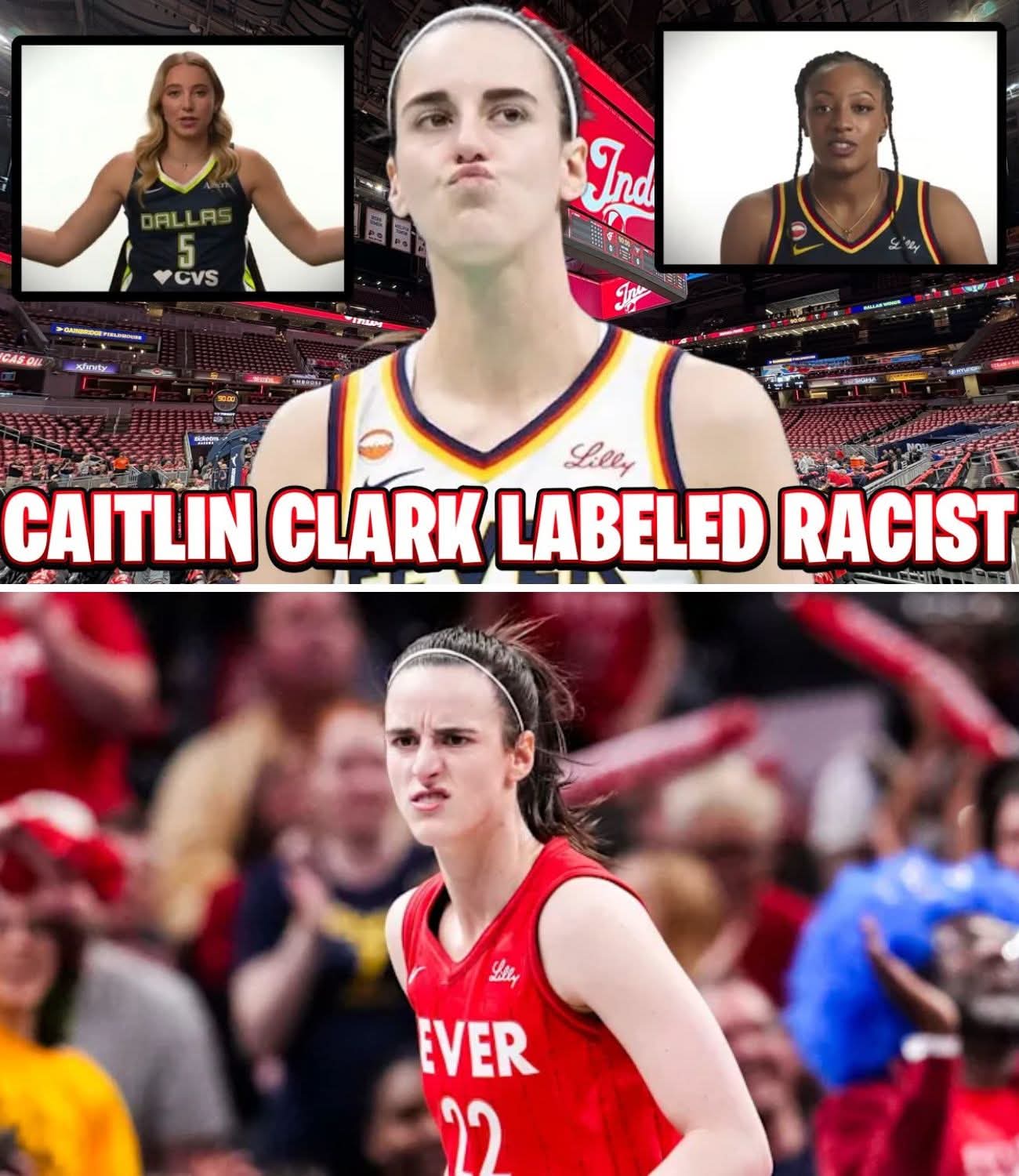
Caitlin Clark is once again dominating headlines but this time, it’s not just because of her deep shooting range or highlight-reel assists. The Indiana Fever superstar has suddenly become the center of two separate controversies that have ignited fierce debate across the WNBA world, turning social media into a nonstop battleground over fame, marketing, race, and celebrity culture.
The first controversy exploded after USA Network unveiled a dramatic new WNBA promotional campaign built almost entirely around Clark’s rising stardom. The cinematic ad featured Dallas Wings rookie Paige Bueckers and Fever guard Kelsey Mitchell discussing Clark’s impact on the game, with powerful narration layered over clips of Clark drilling long-range three-pointers and taking over games.
One line from the ad immediately grabbed fans’ attention: when Clark gets hot, “the basket becomes an ocean.” Another described the “explosion” she brings every time she steps onto the floor. The network clearly intended to showcase Clark as the face of the league’s new era but not everyone appreciated the approach.
Critics quickly accused USA Network of reducing elite players like Bueckers and Mitchell into supporting characters for Clark’s brand. On X and Instagram, fans argued the ad crossed a line by using fellow stars’ voices and images to elevate one player above the rest of the league.
The timing only intensified the discussion.
Just days before the ad surfaced, Paige Bueckers and the Dallas Wings defeated the Fever in a highly anticipated showdown that drew massive attention around the league. Clark struggled offensively in the opening half before erupting after halftime and nearly leading Indiana back into the game. Even in defeat, her second-half surge reminded everyone why she remains the most talked-about athlete in women’s basketball.
Still, many fans felt the ad ignored the depth of talent throughout the WNBA.
Some supporters defended USA Network’s strategy, arguing the network is simply leaning into the reality of modern sports marketing. Clark’s arrival has shattered attendance records, boosted television ratings, and driven unprecedented national attention toward the league. To them, building campaigns around her isn’t disrespectful it’s smart business.
But before the debate over the commercial could cool down, another controversy pushed Clark back into the spotlight.
This past weekend, Clark attended a concert by country music superstar Morgan Wallen, instantly triggering another wave of backlash online. Wallen remains a polarizing figure following a 2021 incident in which he was recorded using a racial slur, a controversy that temporarily derailed his career despite his later apology and continued commercial success.
Photos and videos of Clark at the concert spread rapidly across social media, and criticism followed almost immediately.
Some fans questioned whether appearing publicly with Wallen conflicted with the values many associate with the WNBA, a league known for outspoken social activism and a player base largely made up of Black women. Several posts accused Clark of sending “mixed signals” by supporting an artist whose past controversy still sparks strong reactions.
Others, however, argued the outrage toward Clark revealed a glaring double standard.
Supporters pointed out that major sports figures like Peyton Manning and Nick Saban have also publicly appeared alongside Wallen without facing nearly the same level of criticism. They also noted Wallen has collaborated musically with artists including Lil Durk and has recently been seen with former NFL star Marshawn Lynch.
That divide has only added fuel to an already emotional conversation surrounding Clark’s role inside the league.
Since entering the WNBA, Clark has lived under a microscope unlike almost any player before her. Every performance, every interview, every social media interaction and now even her music choices instantly become national discussion points.
Her influence has been impossible to ignore.
Clark’s games routinely draw sellout crowds. Television ratings spike whenever the Fever play. Merchandise sales continue soaring. Even opposing arenas have experienced attendance jumps simply because Clark is in town.
For supporters, the phenomenon is simple: fans are captivated by her fearless style of play. Her logo-range shooting, fast-paced decision-making, and willingness to take high-risk shots have made her must-watch entertainment in a way women’s basketball has rarely experienced before.
But critics argue the nonstop spotlight on Clark has created imbalance within league coverage, often overshadowing veteran stars and other emerging talents.
That tension now appears to be growing louder as the WNBA enters one of the most commercially successful periods in its history.
The USA Network campaign highlighted exactly how heavily media companies are investing in Clark as a transformational figure capable of driving mainstream attention. Yet the reaction also showed how sensitive fans remain about narratives that appear to place one player above the collective success of the league.
Meanwhile, the Morgan Wallen backlash proved something equally important: Clark’s celebrity status now stretches far beyond basketball.
She’s no longer simply a rookie guard trying to lead the Indiana Fever back into contention. She has become a full-scale cultural figure whose off-court appearances can dominate headlines just as much as her stat lines.
That reality brings enormous pressure.
Clark now faces the challenge of balancing superstar visibility with the expectations that come from representing one of the fastest-growing leagues in sports. Every endorsement, friendship, appearance, and comment carries amplified scrutiny because of the audience surrounding her.
And despite the controversies, the basketball world remains locked in on what comes next.
Can Clark continue delivering the jaw-dropping performances that transformed women’s basketball ratings? Will the Fever turn the attention into playoff success? And can the league navigate the growing tensions surrounding fame, identity, and marketing as its popularity explodes?
Those questions aren’t disappearing anytime soon.
One thing, however, is already clear: Caitlin Clark’s impact has grown far beyond points and assists. Whether praised or criticized, she continues driving conversations unlike anyone else in the sport and the WNBA’s spotlight has never been brighter.
